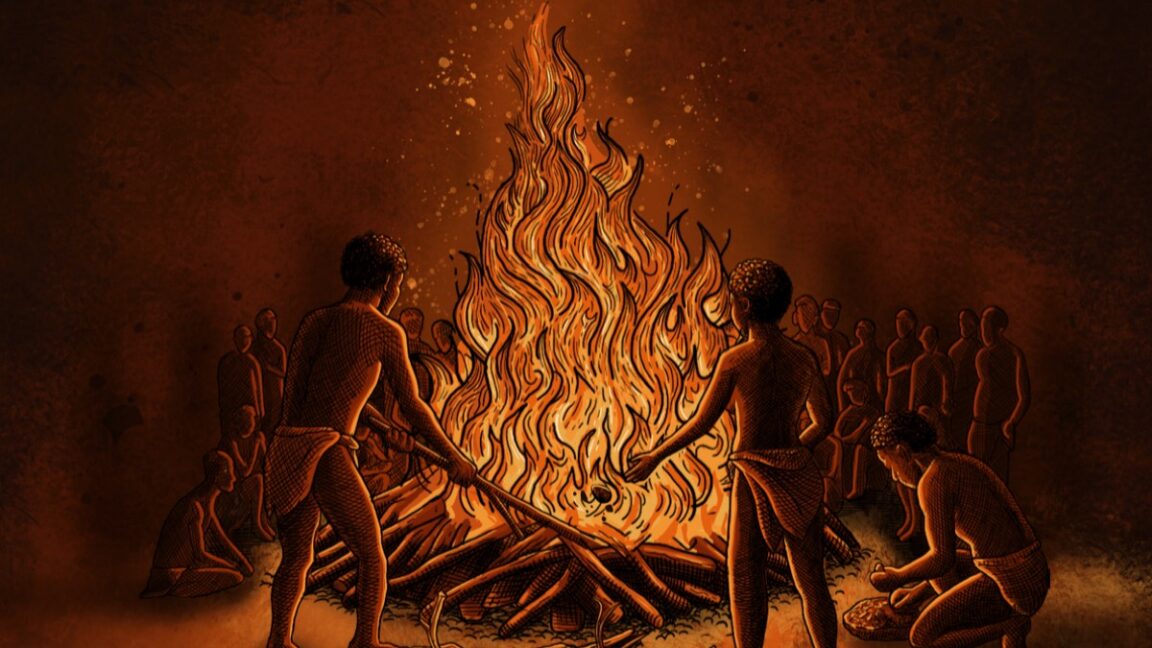
"Archaeologists have discovered Africa's oldest known cremation pyre at the base of Mount Hora in Malawi. According to a paper published in the journal Science Advances, radiocarbon testing dates the site to about 9500 years ago, prompting a rethinking of group labor and ritual in such ancient hunter-gatherer communities. Many cultures have practiced some form of cremation. There is a Viking cremation site known as Kalvestene on the small island of Hjarnø in Denmark, for instance."
"But the practice was extremely rare among hunter-gatherer societies, since building a pyre is labor intensive and requires a great deal of communal resources. There is very little evidence of cremation predating the mid-Holocene (between 5,000 and 7,000 years ago). According to the authors of this latest paper, the earliest known concentration of burnt humans remains was found at Lake Mungo in Australia and date back 40,000 years, but there is no evidence of a pyre, making it challenging to determine specific details."
An intact hunter-gatherer cremation pyre containing the remains of an adult woman was found at the base of Mount Hora in Malawi, beneath a granite overhang. Radiocarbon testing dates the site to about 9,500 years ago. The discovery indicates substantial communal labor and ritual investment in burial practices among ancient hunter-gatherers. Cremation evidence predating the mid-Holocene is scarce because pyre construction is labor intensive and resource demanding. Comparable data points include burnt human concentrations at Lake Mungo without pyres and the Xaasaa Na' pyre in Alaska (~11,500 years). Hora-1 was first excavated in the 1950s and identified as a burial ground.
Read at Ars Technica
Unable to calculate read time
Collection
[
|
...
]