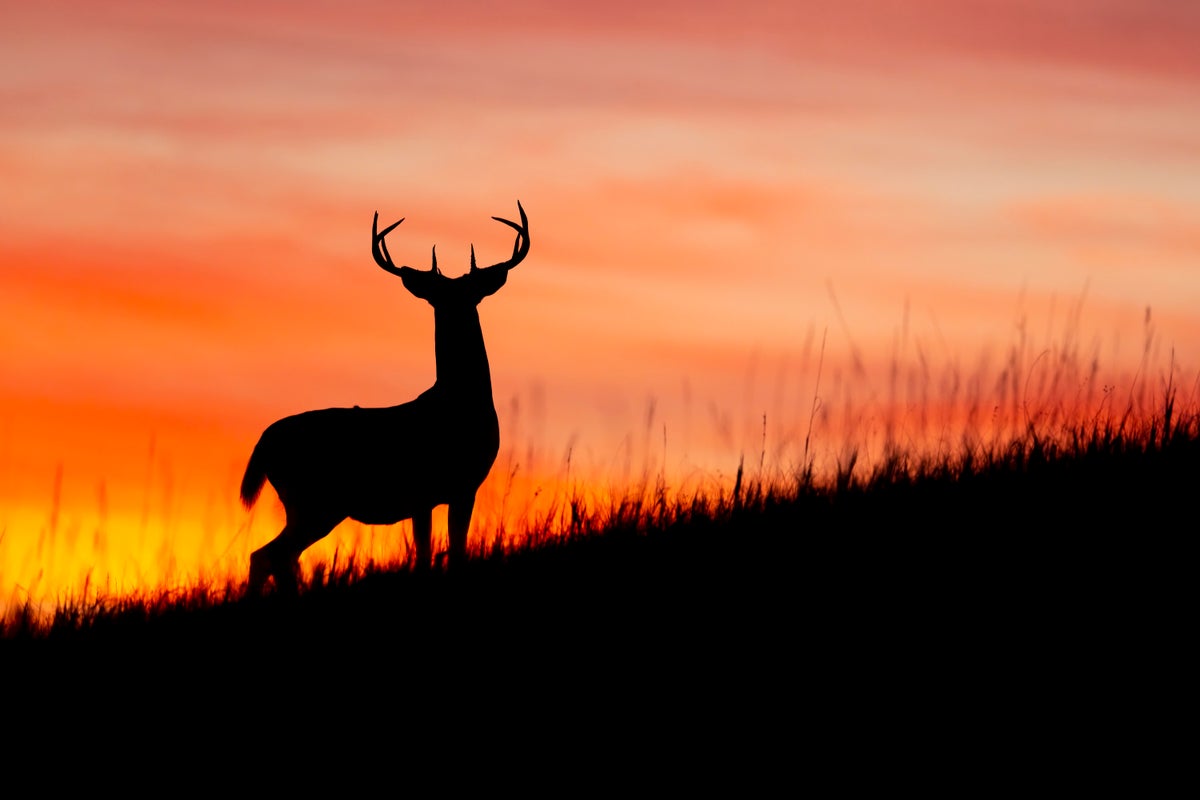
"At dawn and dusk, forests often appear muted and nearly monochromatic to human eyes. But white-tailed deer might see a very different landscape: to them, the forest could be aglow. Since the 1970s, biologists have understood that deer leave signpostsspots where they have rubbed their antlers on trees or left urine on ground that they scraped with their hoovesfor scent-based communication."
"The researchers scanned and analyzed 146 such signposts in Whitehall Forest in the state of Georgia using ultraviolet lights. They found that although the signposts look unremarkable in daytime lighting, they reemit blue-green light that deer can see when exposed to ultraviolet wavelengths common at dawn and dusk. This might happen because antler rubs strip bark away, revealing lignin-rich inner wood that reemits the longer wavelengths in a way bark does not."
Signposts where deer rub antlers or scrape urine-scented ground reemit blue-green light when illuminated with ultraviolet wavelengths common at dawn and dusk. Scans of 146 signposts in a Georgia forest revealed that these marks appear unremarkable in daylight but fluoresce, likely because rubs remove bark and expose lignin-rich inner wood that reemits longer wavelengths. Brightness of marks increases during the breeding season as antlers harden and gland activity rises, potentially enhancing visual communication to deer with ultraviolet-sensitive vision.
Read at www.scientificamerican.com
Unable to calculate read time
Collection
[
|
...
]