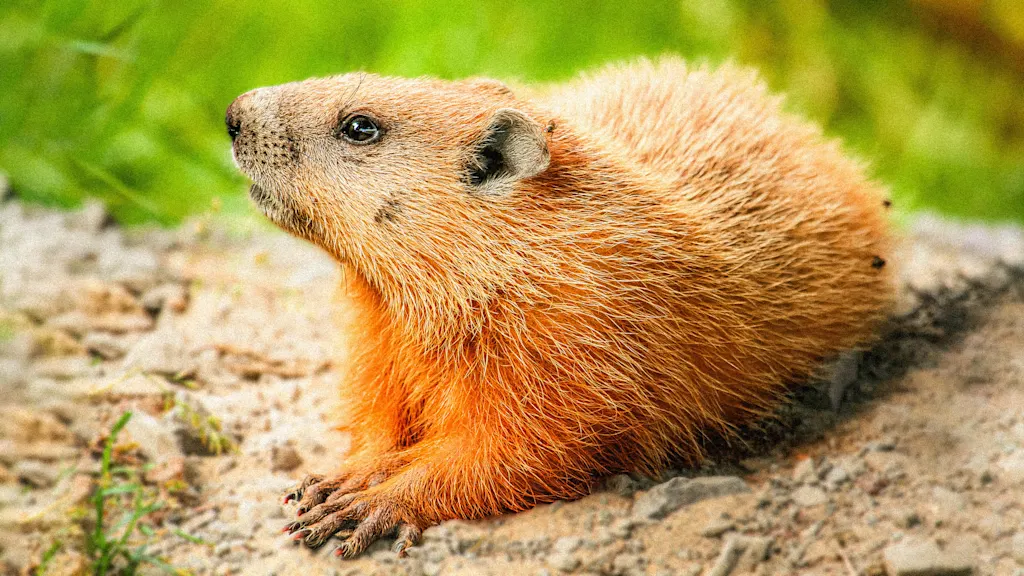
"Whether you call him groundhog, woodchuck, or whistle-pig, or use the full genus and species name, Marmota monax, the nation's premier animal weather forecaster has been making headlines as Punxsutawney Phil for decades. The largest ground squirrel in its range, groundhogs like Phil are found throughout the midwestern United States, most of Canada, and into southern Alaska. M. monax is the most widespread marmot, while the Vancouver Island marmot ( M. vancouverensis) is found only on one island in British Columbia."
"Aging seems to nearly stop during hibernation, as the marmot heart rate drops from nearly 200 beats per minute when active to about nine during hibernation. Similarly, their active body temperature can be 104 degrees Fahrenheit (40 degrees Celsius)-about the same as a dog or cat-but plummet to 41° F (5° C) when hibernating. Humans, in comparison, become hypothermic at a core temperature of 95° F (35° C)."
Marmots (genus Marmota) include 15 species distributed across North America, Europe, and Asia, from New Mexico and the Pyrenees to Siberia and Alaska. Marmota monax, the groundhog, ranges across the Midwestern United States, most of Canada, and southern Alaska; the Vancouver Island marmot ( M. vancouverensis) is restricted to one island. Marmots are the largest true hibernators, entering torpor that dramatically reduces biological functions. Heart rate can fall from nearly 200 beats per minute to about nine and body temperature can drop from about 104°F (40°C) to near 41°F (5°C). Marmot physiology supports research into obesity, cardiovascular disease, infectious diseases, cancer, osteoporosis, and organ transplantation.
Read at Fast Company
Unable to calculate read time
Collection
[
|
...
]