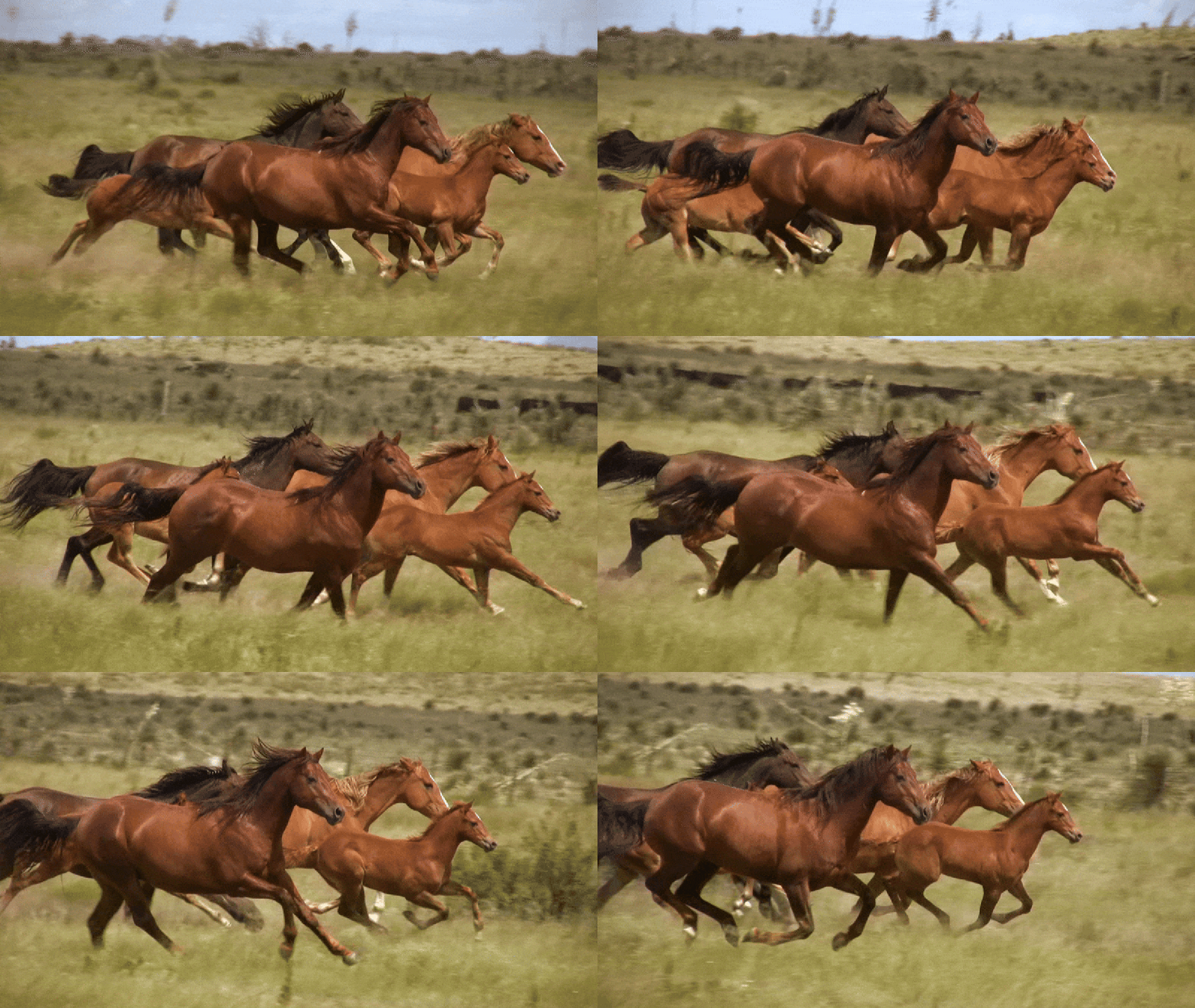
"The new moon on February 17 marks the start of the Lunar New Year, which is celebrated in many Southeast and East Asian countries. According to the Chinese zodiac, it's also the start of the Year of the Horse, offering a perfect excuse to whinny about the science of horses and their animal relatives. Domestic horses are the most famous members of the genus Equus, which also includes a wild relative called the Przewalski's horse,"
"in addition to three species of asses and three species of zebras. All trace their roots to North America, which was home to the very oldest known horse relatives up to 55 million years ago. But horses went extinct on the continent at the end of the last ice age; modern equids all hail from Africa and Eurasia, where domestication also occurred. That development changed history for humans and horses alike."
Horses and their equid relatives belong to the genus Equus and include domestic horses, Przewalski's horse, asses and zebras. All equids trace their evolutionary roots to North America, with the oldest relatives appearing up to 55 million years ago, but horses went extinct in North America at the end of the last ice age. Modern equids originate from Africa and Eurasia where domestication occurred. Domestication profoundly altered human and equine history, elevating civilizations while rendering horses increasingly anachronistic in modern societies. Scientific investigation into horse behavior is only a few decades old. Domestic horses have three essential needs: freedom, forage and companionship with other horses.
Read at www.scientificamerican.com
Unable to calculate read time
Collection
[
|
...
]