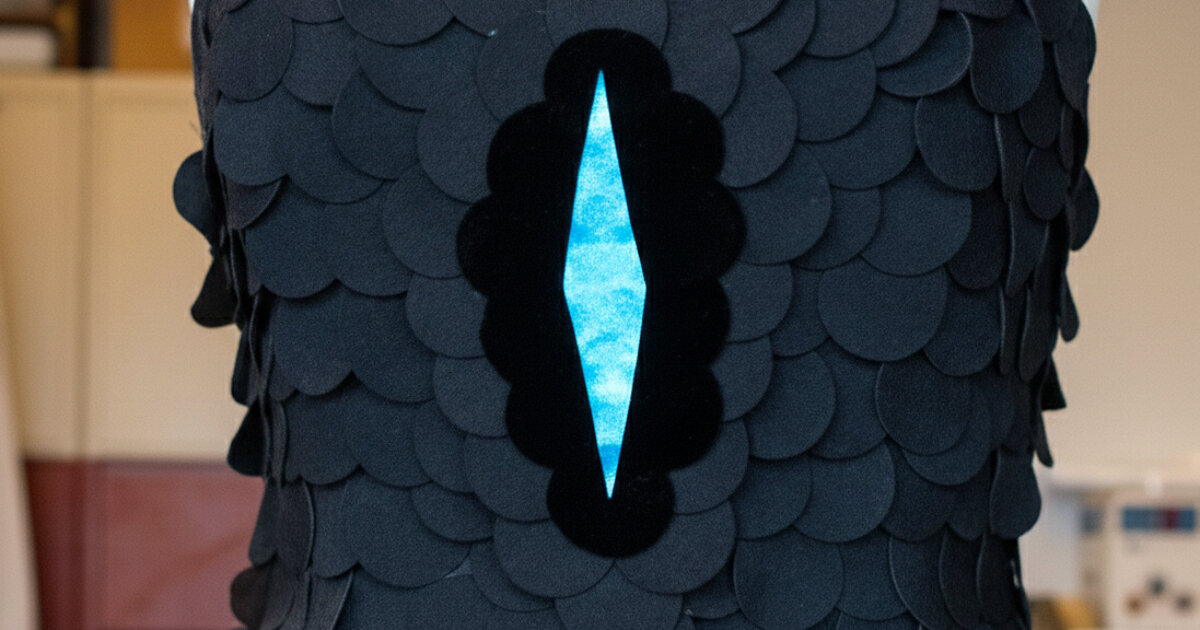
"Researchers at Cornell University have developed a method that allows them to create the darkest fabric ever made, inspired by the ultrablack feathers of the magnificent riflebird. In the study, the group says that material can be used to improve solar thermal systems as well as camouflage clothing designed for thermal control. It is because the bird's feathers can absorb almost all light with their complex physical structure and the melanin inside them."
"Ultrablack in this context means a surface that reflects less than 0.5 percent of incoming light, and the group has been able to make the textile using a method based on natural structures found in the feathers of the fowl. The project began in the Responsive Apparel Design Lab, which is part of the College of Human Ecology at the university. The team used white merino wool knit fabric as the base material and applied a two-step process."
"First, they dyed the wool with polydopamine, which is a synthetic form of melanin. They chose this dye because melanin is the pigment that helps many animals produce ultrablack surfaces. For the process, the dye went deep into the fibers of the wool, coating every section of the textile and making it hold the dark color. The second step in creating the darkest fabric ever made was plasma etching."
A two-step method transforms white merino wool into ultrablack fabric by dyeing with polydopamine and using plasma etching to create light-trapping nanofibrils. Polydopamine, a synthetic melanin, penetrates and coats fibers to produce deep coloration. Plasma etching removes tiny amounts of surface material, generating nanofibrils that make incoming light bounce repeatedly and prevent reflection. The resulting textile reflects less than 0.5% of incoming light. Potential applications include improved solar thermal systems and thermal-control camouflage clothing owing to the fabric's extreme light absorption. The technique mimics the complex physical structures and pigments found in ultrablack bird feathers.
Read at designboom | architecture & design magazine
Unable to calculate read time
Collection
[
|
...
]