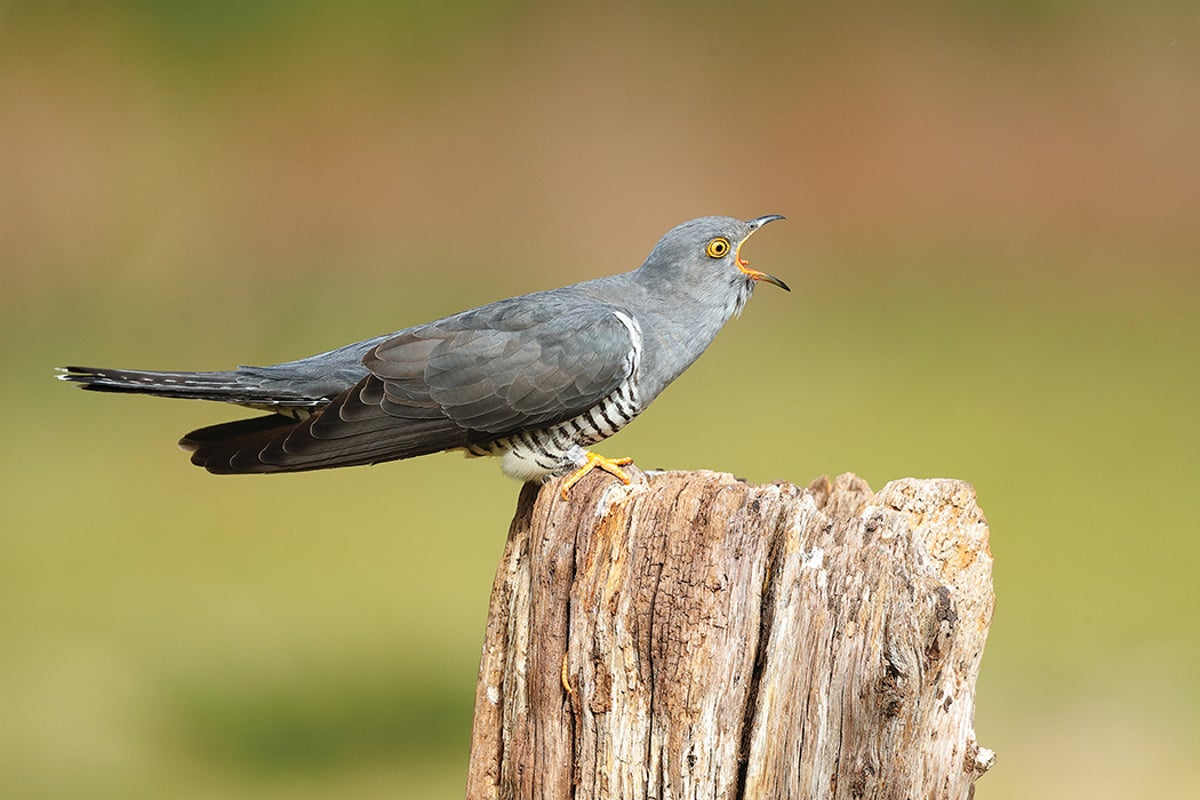
"Researchers have recently been finding subtle ways that animals communicate with other species in this kind of cooperative defense pact. For example, a recent study in Nature Ecology & Evolution documented more than 20 bird species on four continents that emit virtually identical whining calls when they spot brood parasites such as cuckoos. That call is essentially the word for cuckoo,' says study co-lead author James Kennerley, an ornithologist at Cornell University."
"Brood parasites lay eggs in other birds' nests, manipulating the host parents into raising their chicks for them. At a field site in Australia, Kennerley has witnessed individuals from a dozen or more species mob a cuckoo in response to a chorus of whining calls. These mobs can be so ferocious that Kennerley and his colleagues need to cage the taxidermy cuckoo used in their experiments to protect it. Otherwise the attacking birds would have just completely shredded it to pieces, Kennerley says."
"Many birds also share a common vocabulary for predators. Research by wildlife ecologist Erick Greene, an emeritus professor at the University of Montana, and others shows that various songbirdsand even red squirrelsproduce recognizable seet calls to warn of a raptor in flight. The calls are too high-pitched for raptors to hear well, so the predators remain oblivious as info about their arrival shoots through the forest. If the raptor perches, songbirds switch to mobbing calls"
Many animal species use shared vocalizations to warn other species and recruit cooperative defense against predators and brood parasites. More than 20 bird species on four continents emit virtually identical whining calls when they spot brood parasites such as cuckoos; the call functions like the word 'cuckoo' and draws multiple species into mobbing. Brood parasites lay eggs in other birds' nests and manipulate hosts into raising their chicks. Mixed-species mobs can be so ferocious that experiments caged a taxidermy cuckoo to protect it. Songbirds and red squirrels produce high-pitched seet calls to warn of raptors; perched raptors prompt louder mobbing calls.
Read at www.scientificamerican.com
Unable to calculate read time
Collection
[
|
...
]