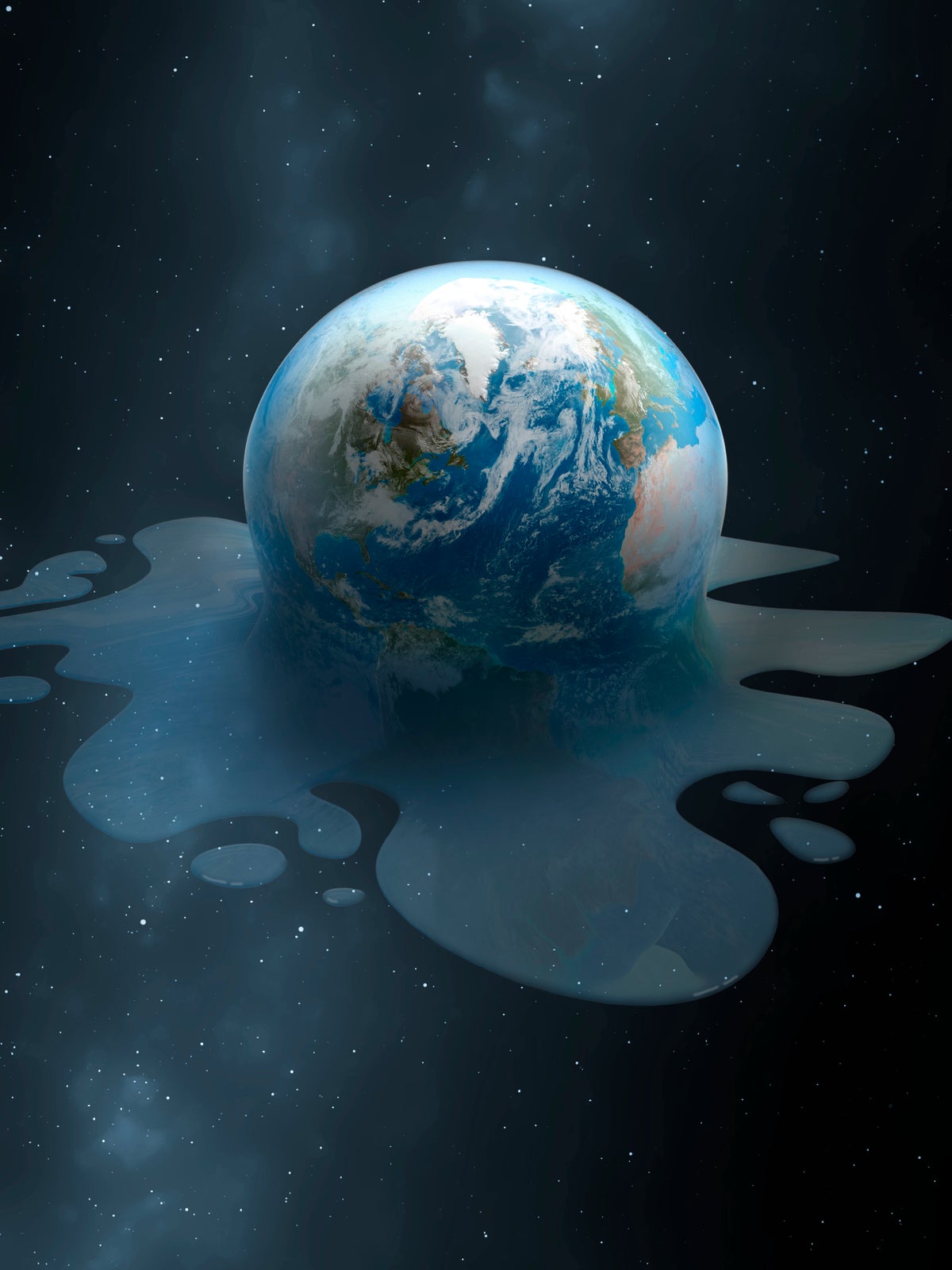
A pop‑song lyric proposes stopping Earth's rotation would melt the planet. The critical factor is the rotational kinetic energy of Earth and how much energy would be required to halt that motion. Kinetic energy quantifies the energy of motion and depends on mass and velocity; familiar linear examples illustrate the concept. Comparing energy needed for different objects shows higher speeds require exponentially more energy. Applying the concept to Earth's rotation allows estimating catastrophic consequences if that rotational energy were removed or redistributed.
"I'll stop the world and melt with youYou've seen the differenceAnd it's getting better all the timeThere's nothing you and I won't do I'll stop the world and melt with you So is it right? If we stop the planet (let's assume this means halting Earth's spin), will it melt? Amazingly, we can figure this out. The key here is the amount of energy it would take to literally stop the world."
"The energy of motion is called kinetic energy. You can think of it as how much energy must be imparted to a massive object to get it moving at a certain speed. You already have an intuitive feel for this when it comes to familiar objects; throwing a baseball at 100 kilometers per hour is a lot easier (takes less energy) than getting a car up to that same speed."
Read at www.scientificamerican.com
Unable to calculate read time
Collection
[
|
...
]