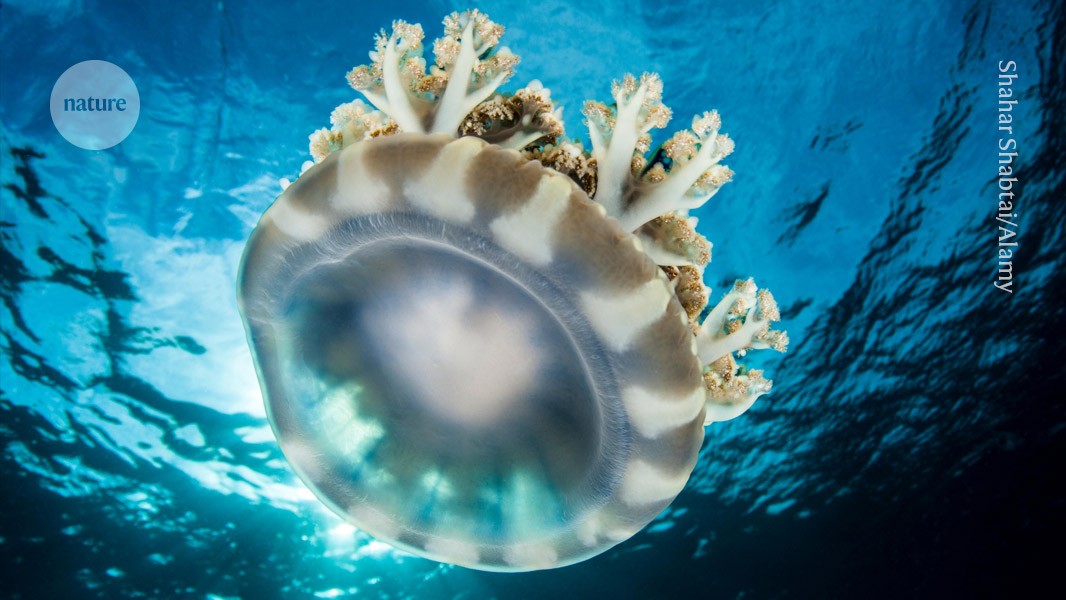
Jellyfish and sea anemones lack brains but enter sleep-like states resembling human sleep. Sleep appears to protect DNA in individual nerve cells, facilitating repair of damage accumulated during wakefulness. Neurons seldom divide, making maintenance of their DNA integrity especially important. Sleep carries risks such as increased predation and lost time for foraging, mating, or caregiving, implying a fundamental biological purpose conserved across animals with nervous systems. Evidence indicates sleep emerged with neurons and that species have adapted sleep to their specific needs. Detailed characterization in jellyfish and sea anemones connects behavioral sleep patterns to cellular-level restorative processes.
"Neither jellyfish nor sea anemones have brains. But these animals sleep in ways strikingly similar to humans, according to a study published today in Nature Communications. The findings bolster a theory that sleep evolved, at least in part, to protect the DNA in individual nerve cells, helping to repair damage that builds up while animals are awake."
"'Neurons are very precious,' says study co-author Lior Appelbaum, a molecular neuroscientist at Bar-Ilan University in Ramat Gan, Israel. 'They don't divide, so you need to keep them intact.'"
"Sleep is a risky state for animals. It leaves them vulnerable to predators and environmental hazards, and it cuts into time that could otherwise be spent foraging, mating or caring for offspring. Scientists broadly agree that sleep must serve a fundamental biological function, because evolution has preserved it across all animals with nervous systems studied so far."
Read at Nature
Unable to calculate read time
Collection
[
|
...
]