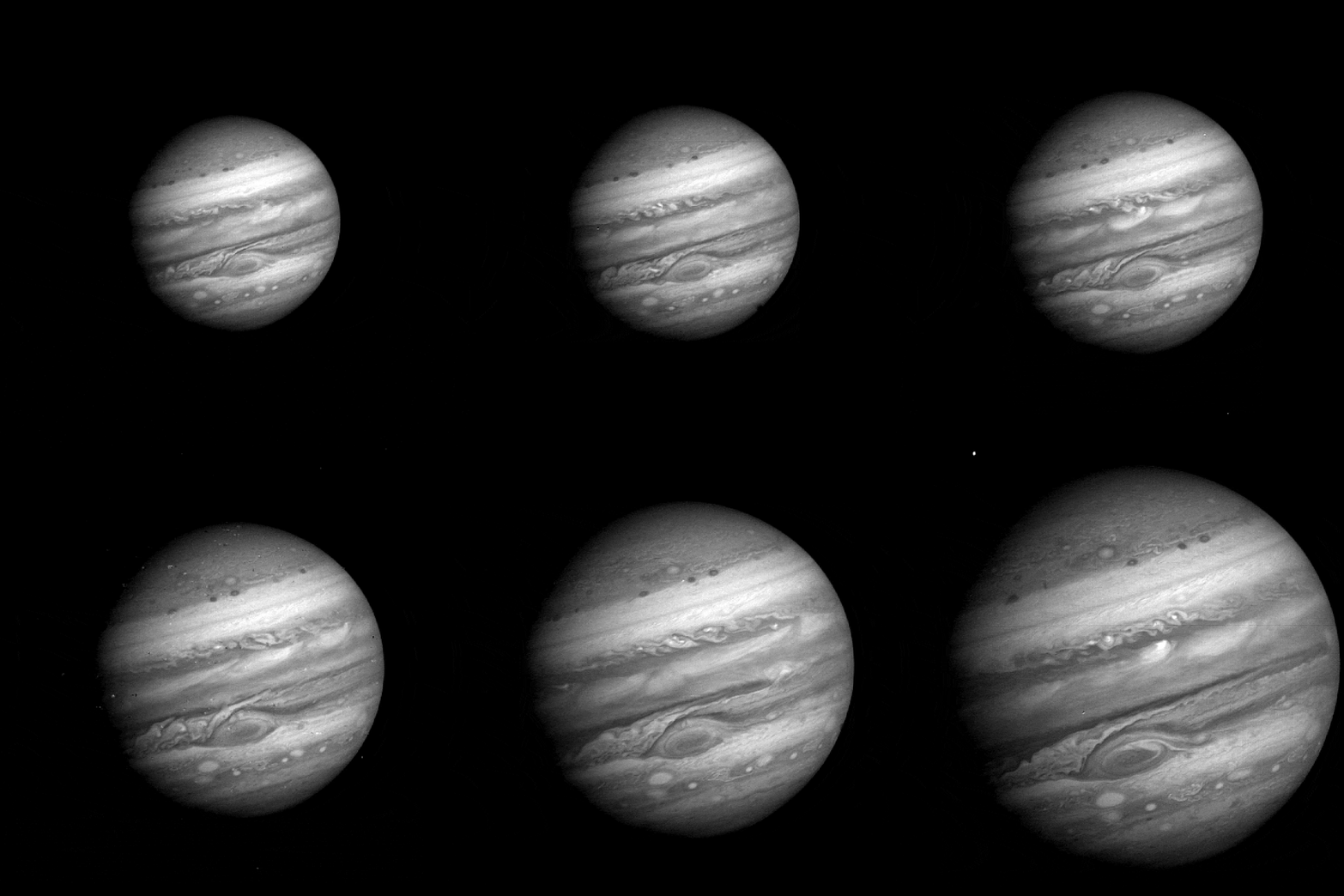
New measurements show Jupiter's equatorial width is eight kilometers smaller and its polar diameter is twenty-four kilometers smaller than earlier estimates. Prior size estimates relied on Voyager and Pioneer spacecraft observations from the 1970s. NASA's Juno mission passed behind Jupiter, enabling clearer measurements that revised the planet's dimensions. The updated dimensions require adjustments to planetary models and will affect studies of Jupiter's atmosphere, internal structure, and features. Revising these models will influence theories of gas giant formation. Jupiter likely formed early in the solar system, so improved knowledge of its interior informs understanding of solar system formation and terrestrial planet origins.
"The solar system's most giant planet is slightly less of a giant than scientists once thought. Jupiter, a world that is so huge that it could hold 1,000 Earths, is eight kilometers narrower in width at its equator and 24 kilometers flatter at its poles than had been previously estimated, according to a new study. Textbooks will need to be updated, said Yohai Kaspi, a professor at the Weizmann Institute of Science in Rehovot, Israel, and senior author of the study, in a statement."
"Previously, scientists relied on observations by the Voyager and Pioneer spacecraft, which were launched by NASA in the 1970s. But NASA's Juno mission, which launched in 2011 and reached Jupiter in 2016, has proved to be a game changer: By passing behind the planet for the first time, it allowed for clearer observations of Jupiter's size. The research means scientists have to adjust their models of Jupiter, a change that will have resounding implications for both studying the planet's features,"
Read at www.scientificamerican.com
Unable to calculate read time
Collection
[
|
...
]