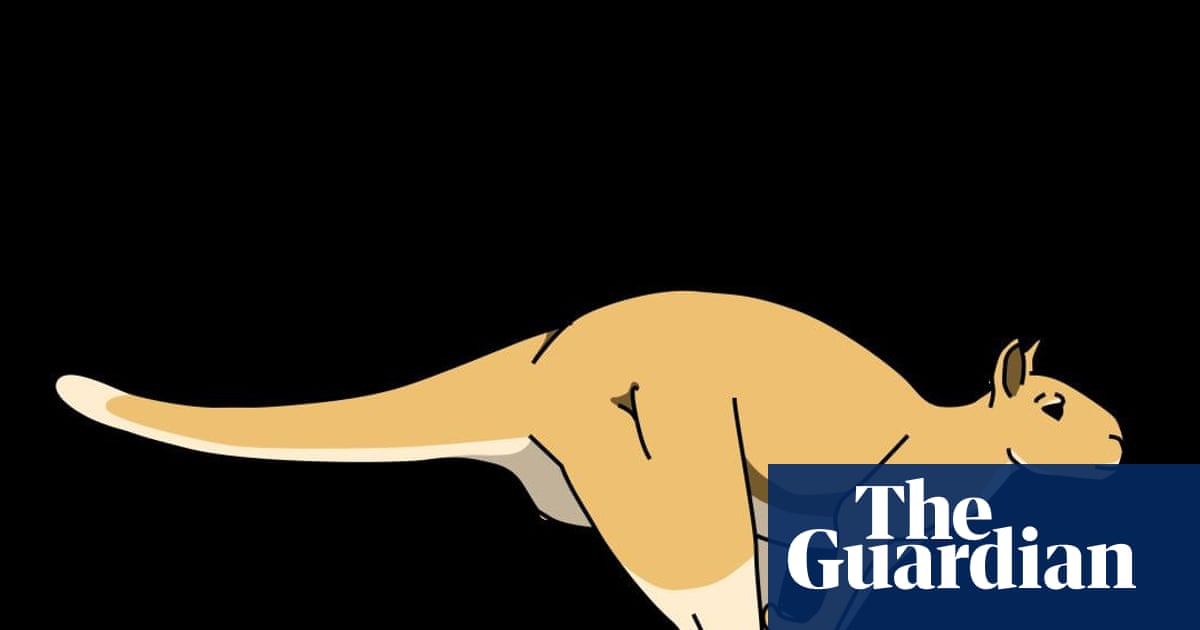
"When [modern kangaroos] hop, the achilles tendon gets really, really pulled and stressed, said Dr Megan Jones of the University of Manchester, the lead researcher on the study. And that's great because it stores a lot of energy so when they go to the next hop, it's quite energetically efficient. But it does imply that if [kangaroos] get bigger and they don't change anything else, then you will get to the point where you just snap that tendon."
"Unlike many previous studies, which have explored whether giant kangaroos might have hopped by extrapolating from the anatomy of today's species, Jones and colleagues took a different approach. Writing in the journal Scientific Reports the team describe how they studied fossils from a range of giant kangaroos including species of sthenurine short-nosed, browsing kangaroos that lived between 13m and 30,000 years ago."
Giant kangaroos reached up to about 250 kg, far exceeding modern red kangaroos that reach roughly 90 kg. Modern kangaroos use an Achilles tendon that stores elastic energy to make hopping energetically efficient, but simple scaling without anatomical change risks tendon or bone failure. Fossils from sthenurine short‑nosed browsing kangaroos (13 million to 30,000 years ago), Protemnodon (5 million to 40,000 years ago), and giant Macropus were examined. For each species estimates were made of Achilles tendon strength and fourth metatarsal bone strength to evaluate whether tendon capacity and bone robustness could permit hopping without catastrophic structural failure.
Read at www.theguardian.com
Unable to calculate read time
Collection
[
|
...
]