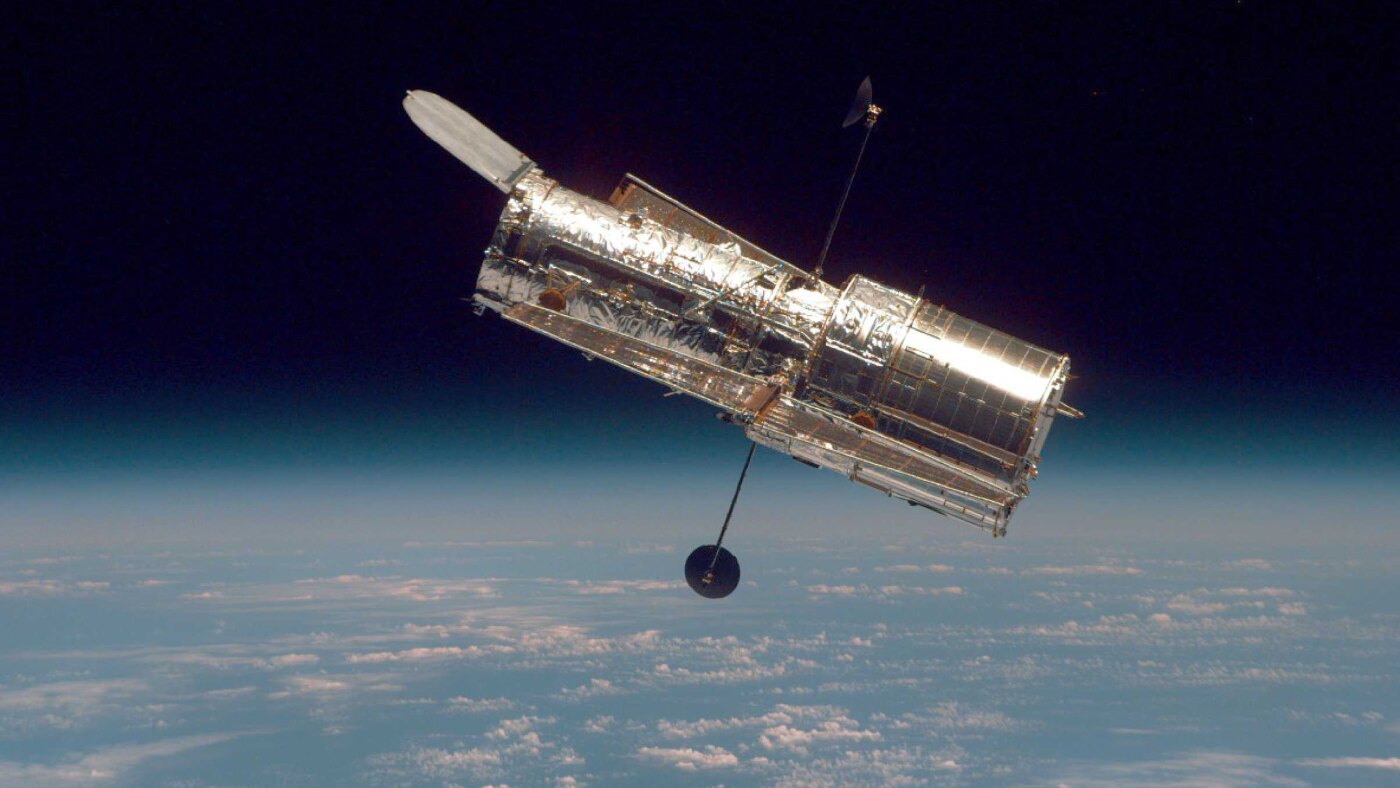
"Reflections cast by a growing number of satellites orbiting the Earth could ruin more than 95% of images taken by some space telescopes in the next decade, according to a NASA-led study. The reflected light shows up as streaks called satellite trails. It's been seen in images taken by NASA's Hubble Space Telescope. The situation is only getting worse as more satellites accumulate in orbit, according to researchers."
"More than 10,000 active satellites are in orbit as of Dec. 1, according to data from Jonathan McDowell, an astrophysicist at the Harvard-Smithsonian Center for Astrophysics. Most of them are owned by SpaceX the company has more than 7,800 Starlink satellites in orbit. The International Telecommunication Union (ITU), which oversees applications for proposed satellites in space, says there are "thousands more satellites" planned to be launched into orbit."
"A prized image could come when "you are observing a galaxy and then suddenly a star far, far away explodes," says Alejandro S. Borlaff, the lead author of the study and NASA scientist. But "if you happen to have a satellite crossing, you will lose that information forever," he told Nature in a podcast interview. The problem has grown in recent years: More satellites have been launched within the last four years "than in the previous 70 years of space flight combined," Borlaff said."
Reflections from thousands of satellites produce bright streaks that contaminate images taken by space telescopes, already appearing in Hubble observations. More than 10,000 active satellites orbit Earth, with SpaceX operating over 7,800 Starlink units and thousands more planned. Upcoming or recently launched missions affected include SPHEREx, ARRAKIHS and Xuntian. Historical data showed about 4% of Hubble images had satellite streaks between 2018 and 2021; contamination could increase to at least one in three images and could render over 95% of images unusable for some telescopes within a decade. Transient astronomical events can be lost when satellites cross observations.
Read at www.npr.org
Unable to calculate read time
Collection
[
|
...
]