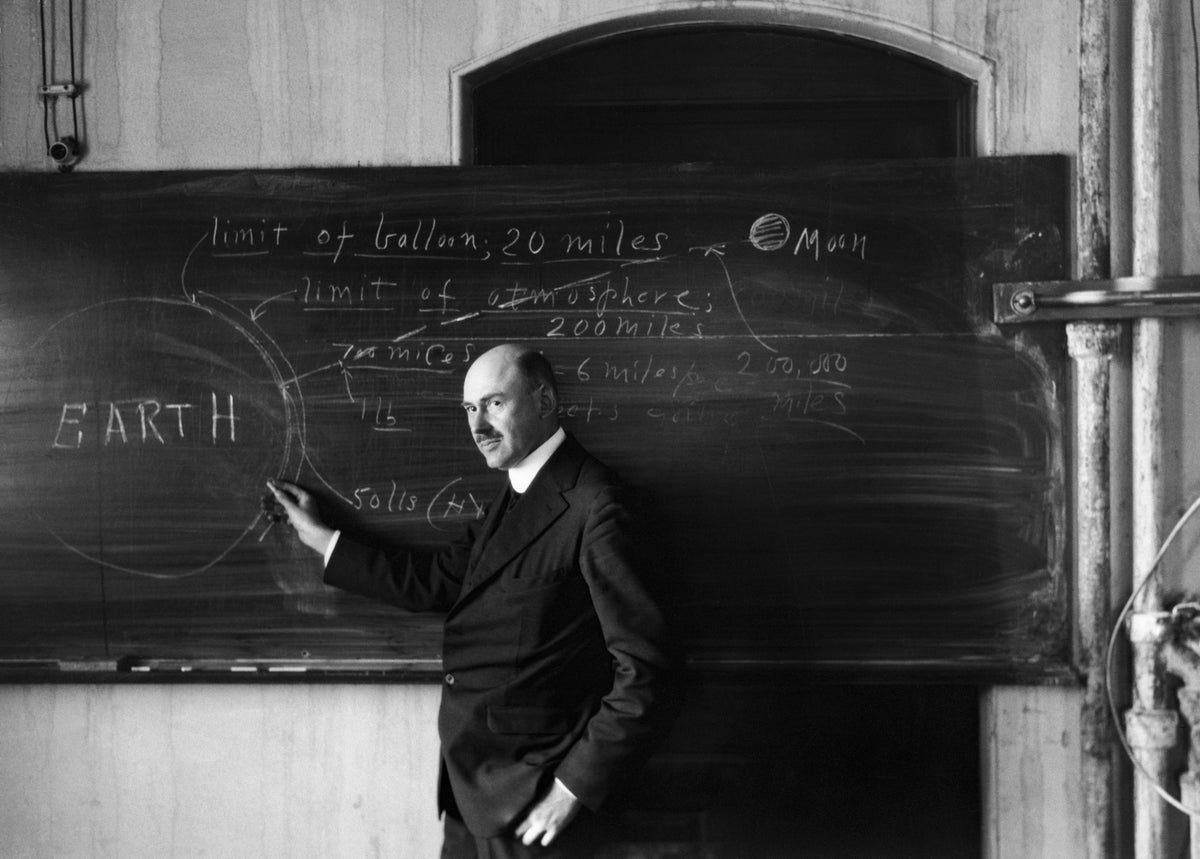
"Liquid fuels imbued rockets with a more powerful thrust and, thanks to their variable flow, also offered more control—precisely what would be needed for any serious attempt at spaceflight. Other early visionaries—Russia's Konstantin Tsiolkovsky and Germany's Hermann Oberth—had also realized the transformative potential of liquid-fueled rockets, but Goddard was the first to prove it."
"Before that moment among the cabbages, solid fuel was used in all previous rockets, dating all the way back to the gunpowder-filled fire arrows that were employed to fight invading Mongols in 13th-century China. Nell was airborne for just a few seconds, but its flight was a milestone—the first-ever liftoff of a liquid-fueled rocket."
Modern space exploration, including orbital stations, satellites, Mars rovers, and lunar missions, traces its foundation to Robert Goddard's March 16, 1926 launch of Nell, a liquid-fueled rocket prototype in Auburn, Massachusetts. This 11-foot, 10-pound rocket achieved only seconds of flight but represented a critical milestone—the first successful liquid-fueled rocket launch. Prior to this achievement, all rockets used solid fuel, a technology dating back to 13th-century gunpowder-filled fire arrows. Liquid fuels offered transformative advantages: greater thrust and variable flow control essential for spaceflight. While other visionaries like Konstantin Tsiolkovsky and Hermann Oberth recognized liquid fuel's potential, Goddard was the first to demonstrate its practical viability, fundamentally changing rocketry's trajectory.
Read at www.scientificamerican.com
Unable to calculate read time
Collection
[
|
...
]