"The Webb telescope, launched in 2021 at a cost of more than $10 billion, has the sensitivity to peer into distant planetary systems and detect the telltale chemical fingerprints of molecules critical to or indicative of potential life, like water vapor, carbon dioxide, and methane. Webb can do this while also observing the oldest observable galaxies in the Universe and studying planets, moons, and smaller objects within our own Solar System."
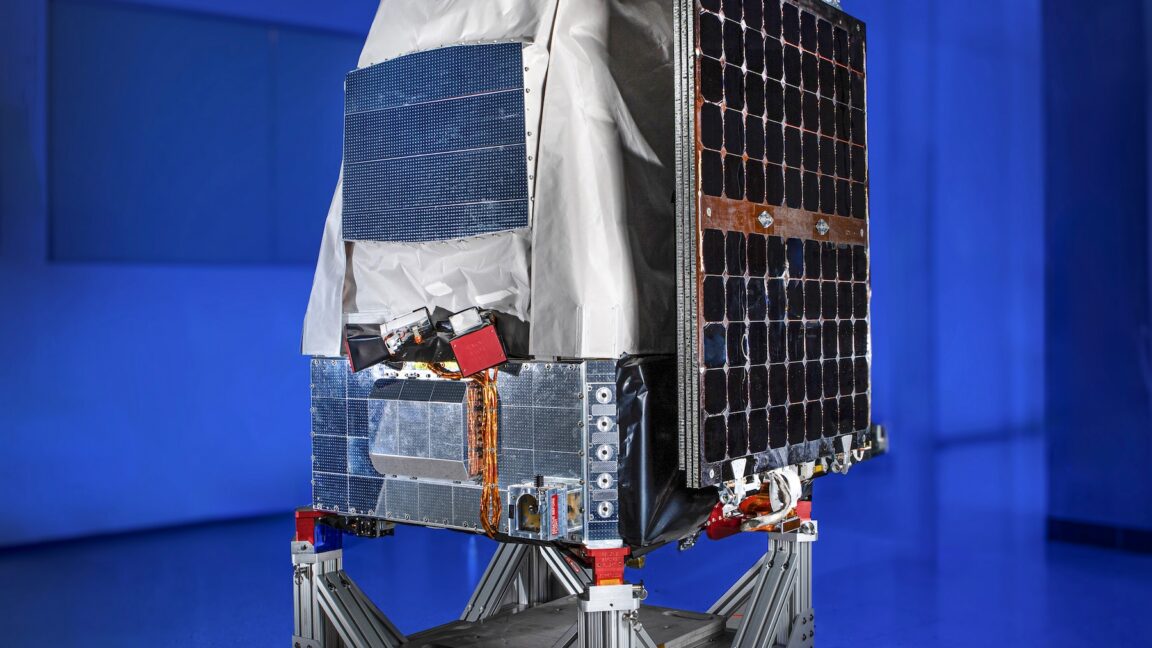
"The Pandora satellite rocketed into orbit early Sunday from Vandenberg Space Force Base, California. It hitched a ride with around 40 other small payloads aboard a SpaceX Falcon 9 rocket, launching into a polar Sun-synchronous orbit before deploying at an altitude of roughly 380 miles (613 kilometers). Over the next few weeks, ground controllers will put Pandora through a series of commissioning and calibration steps before turning its eyes toward deep space."
Webb's gold-coated mirror at one million miles from Earth collects more light than any other space telescope. The telescope launched in 2021 cost more than $10 billion and can peer into distant planetary systems to detect chemical fingerprints of molecules linked to potential life, including water vapor, carbon dioxide, and methane. Webb can also observe the oldest galaxies and study Solar System bodies. NASA launched Pandora into a polar Sun-synchronous orbit to complement Webb. Pandora is far smaller, has a primary mirror comparable to large amateur telescopes, and cost-capped at $20 million. Ground controllers will commission and calibrate Pandora over several weeks before science observations begin.
Read at Ars Technica
Unable to calculate read time
Collection
[
|
...
]