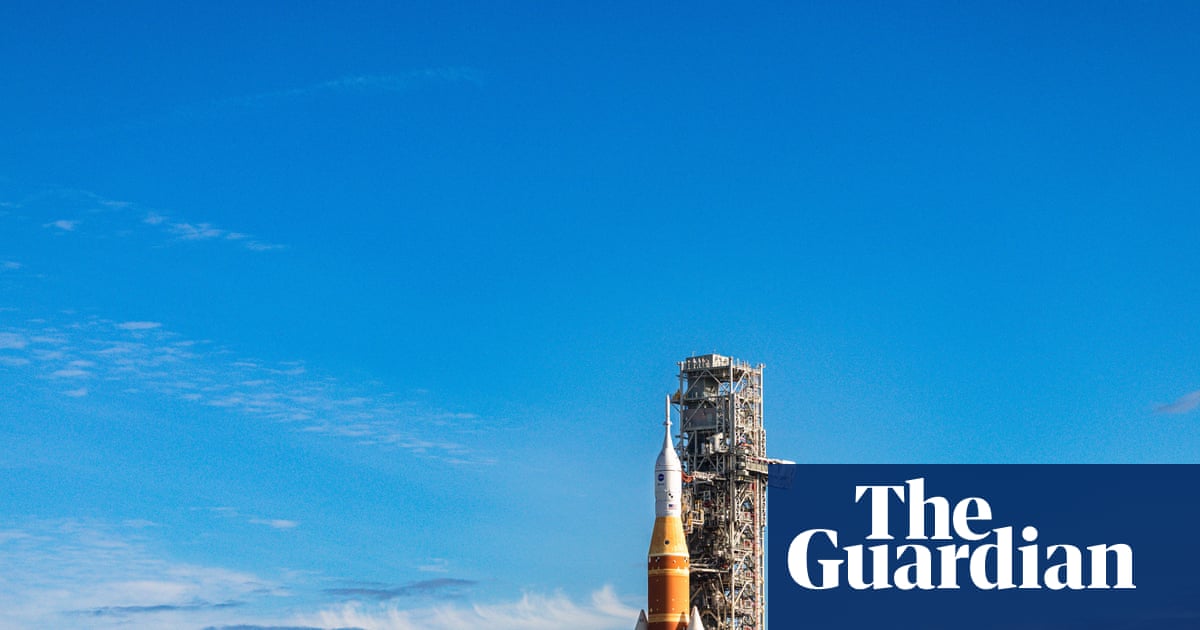
"The 98-metre (322ft) rocket began its 1 mph (1.6 km/h) creep from Kennedy Space Center's vehicle assembly building at daybreak. The trek of 4 miles took until nightfall. Thousands of space centre workers and their families gathered in the pre-dawn chill to witness the long-awaited event, delayed for years. They huddled together before the Space Launch System (SLS) rocket's exit from the building, built in the 1960s to accommodate the Saturn V rockets that sent 24 astronauts to the moon during the Apollo programme."
"Footage of the rocket moving into position What a great day to be here, said Reid Wiseman, the crew commander. It is awe-inspiring. Weighing in at 5m kg, the rocket and Orion crew capsule on top made the move aboard a massive transporter that was used during the Apollo and shuttle eras. It was upgraded for the SLS rocket's extra heft."
"The Nasa administrator, Jared Isaacman, at a press conference with the Artemis II mission specialist Jeremy Hansen, Christina Koch, pilot Victor Glover, and Commander Reid Wiseman. Photograph: Mauricio Paiz/NurPhoto/Shutterstock Heat shield damage and other capsule problems during the initial test flight required extensive analyses and tests, pushing back this first crew moonshot until now. The astronauts will not orbit the moon or even land on it."
NASA's 98-metre Space Launch System (SLS) and Orion crew capsule moved from Kennedy Space Center's vehicle assembly building to the launch pad, completing a four-mile transfer at about 1 mph. Thousands of workers and families watched as the 5 million kg stack rode an upgraded transporter once used in Apollo and shuttle eras. Artemis II will carry four astronauts on a lunar fly-around, not an orbital insertion or landing; the earliest launch window could be February. Earlier heat shield damage and capsule problems during the uncrewed 2022 test flight necessitated extensive analyses and repairs, delaying the crewed mission.
Read at www.theguardian.com
Unable to calculate read time
Collection
[
|
...
]