Long-chain alkanes were detected in mudstone from a suspected ancient Martian lakebed and could originate from fatty acids used in cell membranes. Carbon-rich dust and meteorites can deposit organics, but accumulation under an ancient atmosphere appears insufficient. Accounting for 80 million years of surface radiation indicates that pre-atmospheric-loss alkane concentrations were likely much higher than previously estimated. Considering known non-biological processes together still fails to reproduce the inferred original abundance. Biological production analogous to processes on Earth remains a leading explanation for the high inferred concentrations of these organics.
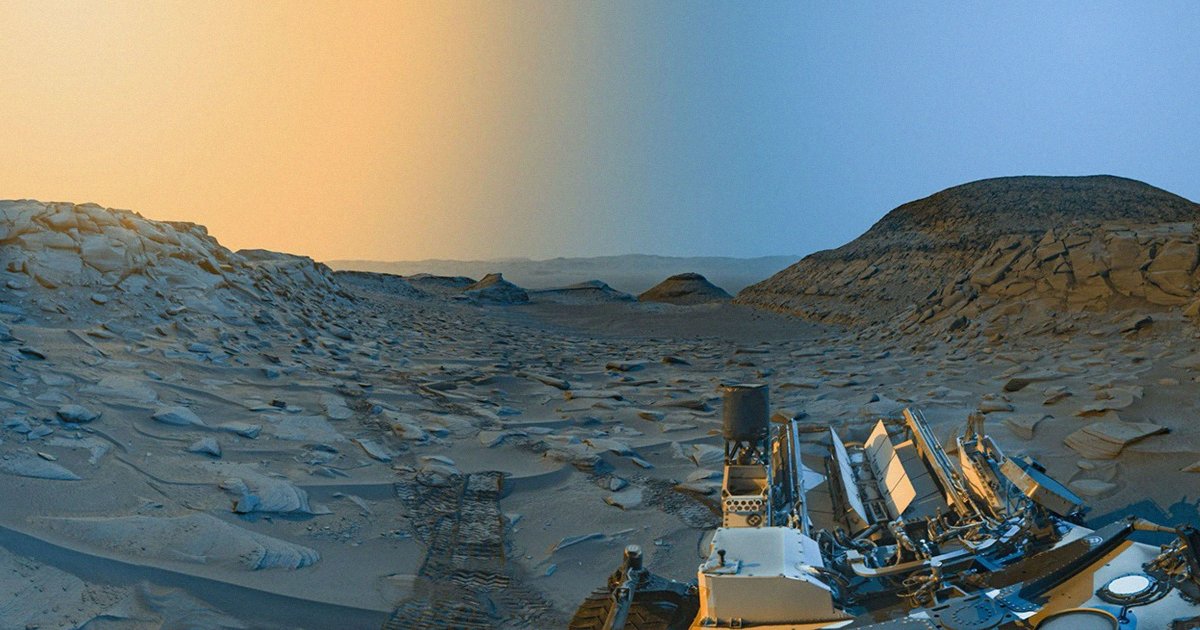
"Last year, NASA's Curiosity rover made a fascinating discovery after boring into a suspected ancient lake bed on Mars: long-chain organic molecules, called alkanes, that could serve as a potential chemical relic of ancient life on the Red Planet. The molecules, researchers suggested at the time, could have derived from fatty acids, which are common building blocks of cell membranes on Earth, once again strengthening the case that Mars could've been teeming with life billions of years ago."
"However, Pavlov and his colleagues aren't convinced. After studying how 80 million years' worth of pelting radiation could have affected these molecules, they concluded that prior to the loss of the planet's atmosphere, the concentration of these alkanes was likely much higher than previously thought. To help explain their findings, they took into account other non-biological processes in an attempt to arrive at their inferred original abundance - but couldn't, even after combining all of them."
Read at Futurism
Unable to calculate read time
Collection
[
|
...
]