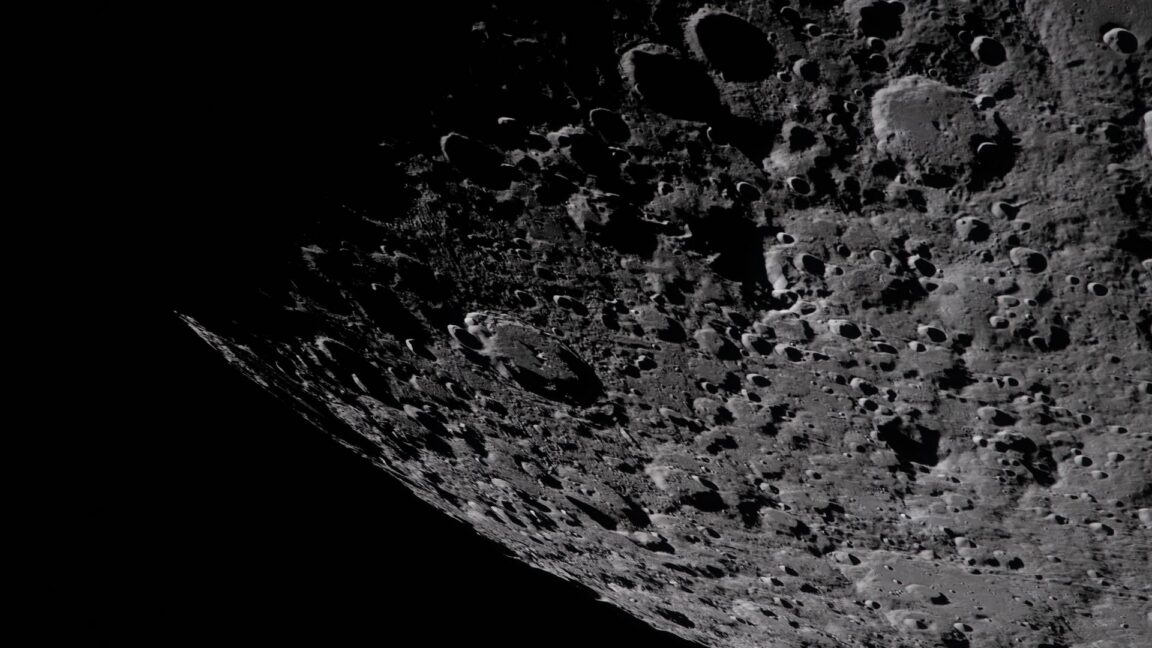
The Moon Base program includes development of the MoonFall drone system. The plan calls for three or four drones, each about 1 meter tall and about 225 kg including propellant. NASA’s Jet Propulsion Laboratory leads drone development, and Firefly Aerospace will deliver the drones to the lunar surface. The drones are intended to arrive before the Artemis IV lunar landing mission, targeted for no earlier than 2028, to collect high-resolution imagery. Current lunar imagery is about 1 meter resolution, with a goal of improving it to 1 cm. The drones will scout for water ice in permanently shadowed regions, identify scientific targets, and provide detailed landing-site information including soil mechanics, lighting, and terrain. After their flying lifetime, the drones will help establish a Moon Base perimeter and may act as beacons with retro-reflectors or early cell towers.
"“What we are embarking upon is extremely challenging,” Isaacman said. “We know so little from what is a combined 80 hours of lunar astronaut EVA time across the Apollo missions, and that was more than a half century ago.”"
"The goal is to get these spacecraft to the Moon before the Artemis IV lunar landing mission, scheduled for no earlier than 2028, to provide high-resolution imagery of the lunar surface. For most of the Moon, the current imagery resolution is 1 meter, and NASA wants to improve it to 1 cm, Garcia-Galan said."
"These drones will perform a number of functions, including scouting for water ice in permanently shadowed regions, identifying areas of scientific interest, and providing detailed information about landing sites, including soil mechanics, lighting conditions, and the terrain. At the end of their flying lifetime, the drones would then be used to set a boundary for the Moon Base."
"“We're hoping to ... establish a Moon Base perimeter with four or three lunar drones,” Garcia-Galan said. “We're going to be able to basically put them at the corners of the areas where we think we have either key scientific objectives, or we want to build up the Moon Base.” In these positions, he added, the retired drones could also provide a beacon with retro-reflectors, or even perhaps serve as the first lunar cell towers."
Read at Ars Technica
Unable to calculate read time
Collection
[
|
...
]