""At Monte Albán alone, more than 200 tombs of varying size and decoration reflect social, political and economic differences among the ancient Zapotecs," Javier Urcid, an anthropology professor at Brandeis University in Massachusetts, tells The Art Newspaper. "Built beneath residences, tombs were reused over generations-with additional burials and occasional changes to offerings or decoration. The inscribed genealogies verified membership in family lineages.""
""Etla Valley tombs feature lizards, serpents and jaguars with monkey or bird heads in their jaws, referring to identity and status," says Fernando Berrojalbiz, a researcher at the Institute of Aesthetic Research at the National Autonomous University of Mexico (UNAM). "The discovered tomb adds the owl-linked to the underworld and death-a symbol also seen in a later tomb of the Postclassic period, pointing to continuity.""
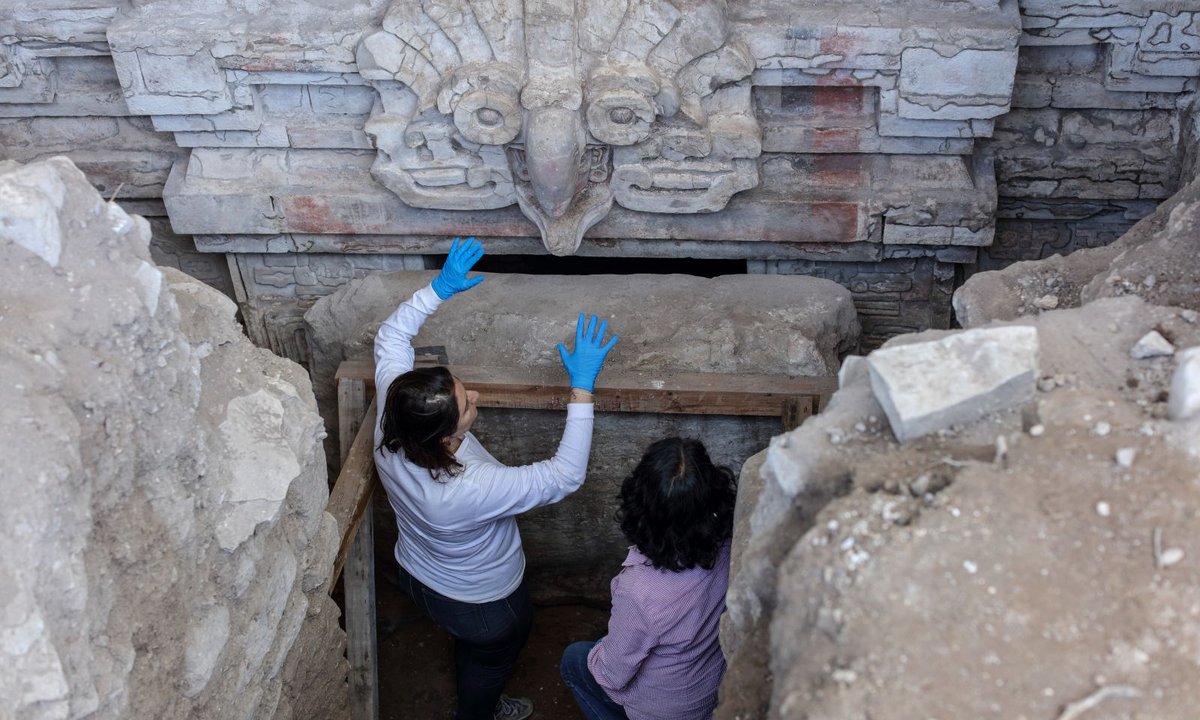
The Zapotec practiced complex funerary rituals reflected in more than 200 tombs at Monte Albán, with tombs built beneath residences and reused across generations. Tombs varied in size and decoration, signaling social, political and economic differences, and inscribed genealogies verified family membership. The recently excavated Tomb 10 at Cerro de la Campana is the second-largest known and features an owl-shaped entrance with a human head emerging from its beak, pottery and human remains. Etla Valley tomb imagery includes lizards, serpents and jaguars; offerings often included pottery, jewellery and ritual bone objects, and some significant bones were removed when communities relocated. Tomb 10 also shows a unique stepped vault formed by overlapping stone layers.
#zapotec-funerary-practices #monte-alban-tombs #tomb-10-cerro-de-la-campana #ritual-offerings-and-iconography
Read at The Art Newspaper - International art news and events
Unable to calculate read time
Collection
[
|
...
]