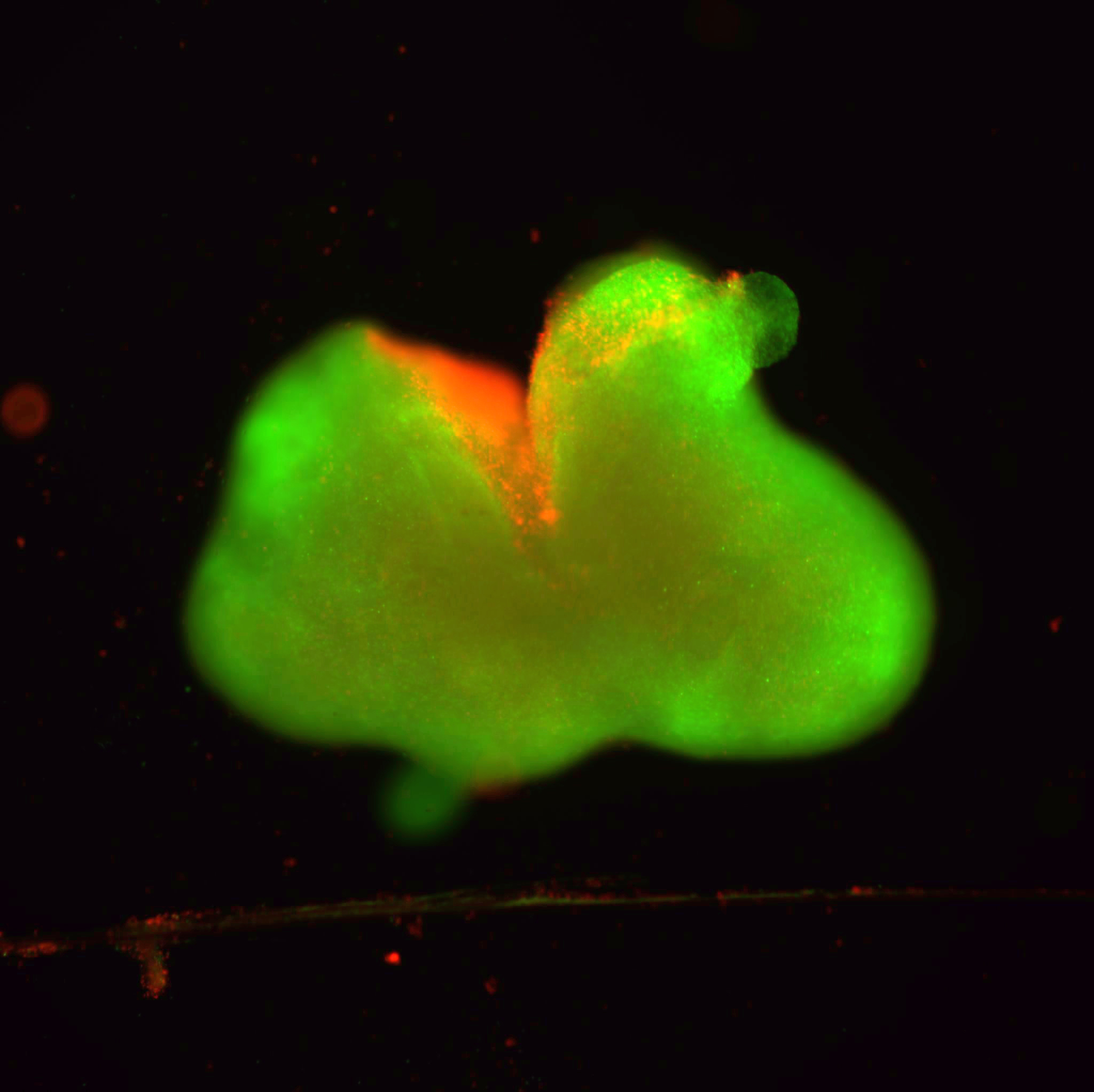
"When treated with "dancing molecules" - a new therapy that reversed paralysis and repaired tissues in a previous animal study - the injured organoids showed significant outgrowth of neurites, the long extensions of neurons that connect the cells to one another. The glial scar-like tissues of treated injured organoids also significantly diminished. These results give scientists further hope that the treatment, which recently earned an Orphan Drug Designation from the U.S. Food and Drug Administration (FDA), should improve outcomes for patients with spinal cord injuries."
""Short of a clinical trial, it's the only way you can achieve this objective. We decided to develop two different injury models in a human spinal cord organoid and test our therapy to see if the results resembled what we previously saw in the animal model. After applying our therapy, the glial scar faded significantly to become barely detectable, and we saw neurites growing, resembling the axon regeneration we saw in animals.""
Lab-grown human spinal cord organoids modeled various types of spinal cord injuries and reproduced cell death, inflammation, and glial scarring that blocks nerve regeneration. Application of dancing molecules produced significant neurite outgrowth and markedly reduced glial scar-like tissue in injured organoids. The therapy previously reversed paralysis and repaired tissues in animal studies and recently received FDA Orphan Drug Designation. Organoids provide a human-tissue platform to evaluate regenerative therapies and to develop two distinct injury models that replicate axon degeneration and scarring. Treatment resulted in barely detectable glial scar and observable neurite growth resembling axon regeneration seen in animal experiments.
Read at News Center
Unable to calculate read time
Collection
[
|
...
]