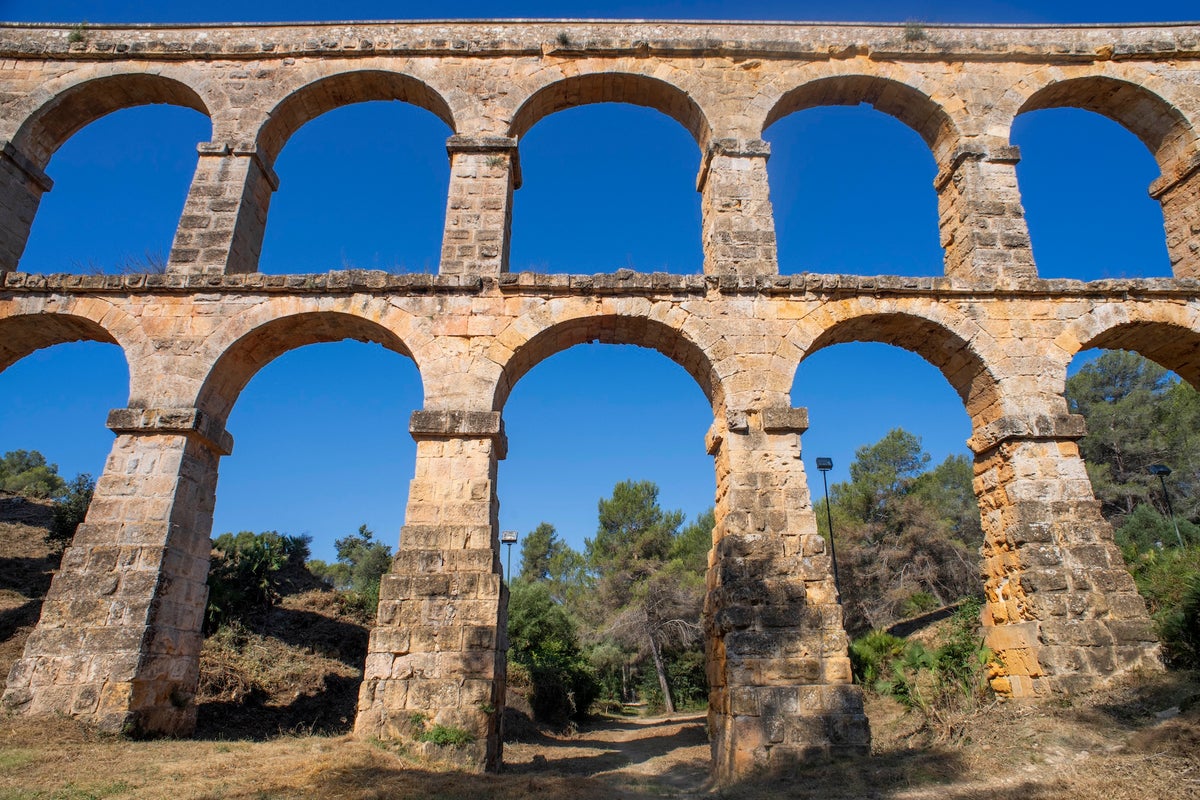
"Ancient Romans built arched bridges, waterproof port infrastructure and aqueducts that enabled the rise of their empire and that are still standingand often still used. They did so with a type of cement that is far sturdier than what is used today, but exactly how Roman cement was made was something of a mystery. Now researchers have found proof of an explanation they had proposed in 2023 that could offer insights into how to build longer-lasting concrete today."
"In his first-century B.C.E. work De Architectura, Vitruvius, one of the most famous architects of the Roman Empire, described Roman cement as being made with what we today call slaked lime, or hydrated, heated limestone. But based on the discovery of the makeup of chunks called lime clasts found at a previous excavation in Pompeii, Massachusetts Institute of Technology environmental engineer Admir Masic and his colleagues proposed in a 2023 paper that ancient builders instead used a process called hot mixing."
Romans produced exceptionally durable cement by combining quicklime, volcanic ash, and water in a hot-mixing method that triggers an exothermic reaction and imparts self-healing properties. Vitruvius described slaked lime historically, but material evidence from Pompeii shows dry premixed mortar ingredients—volcanic ash and granules of quicklime—stockpiled and waiting to be hydrated and applied. Chemical analysis of lime clasts supported the hot-mix mechanism over the slaked-lime interpretation. The hot reaction during mixing would have enhanced binding and longevity. Field observations at a Pompeii house preserved by the eruption provided direct contextual evidence of the prepared materials. Understanding this method offers practical insights for designing longer-lasting modern concrete and infrastructure.
Read at www.scientificamerican.com
Unable to calculate read time
Collection
[
|
...
]