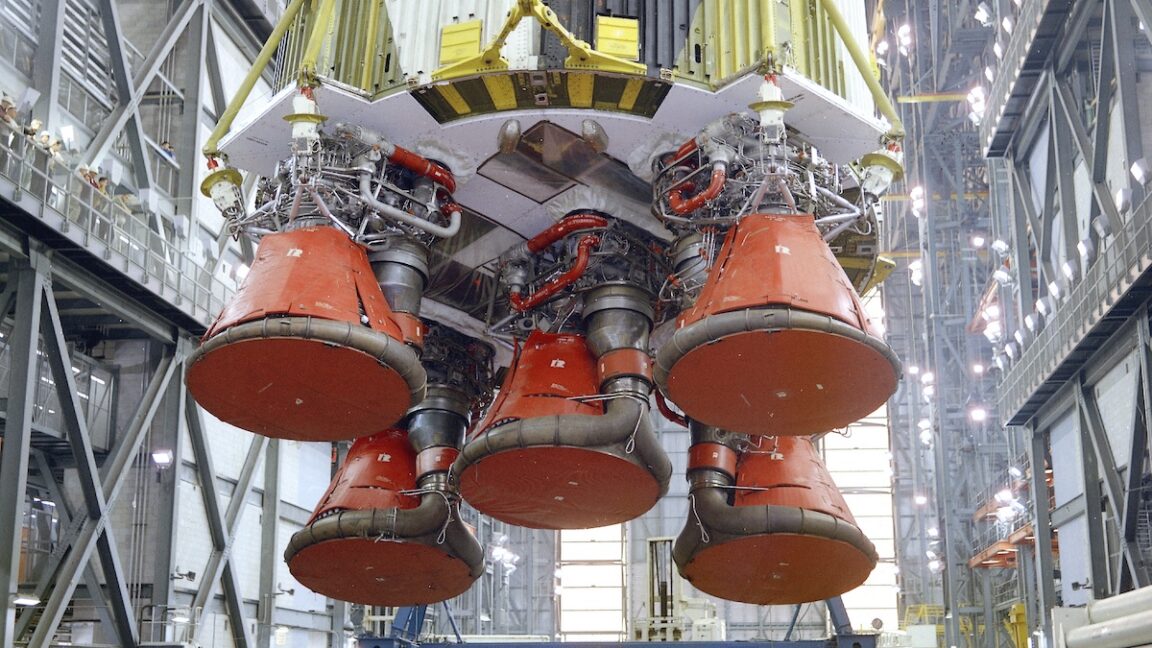
"The RS-25 engine, by far the largest in L3Harris' portfolio and a former Rocketdyne product, is not part of the sale. The RS-25 was initially known as the Space Shuttle Main Engine and was designed for reusability. The expendable heavy-lift SLS rocket uses four of the engines, and NASA is burning through the 16 leftover shuttle-era RS-25 engines on the first four SLS flights for the agency's Artemis Moon program."
"L3Harris will retain total ownership of the RS-25 program. The company has a contract with NASA to build new RS-25 engines for SLS flights beyond Artemis IV. But the new RS-25s will come at an expense of about $100 million per engine, significantly more than SpaceX sells an entire launch on a Falcon 9 rocket. The engine contract is structured as a cost-plus contract with award and incentive fees paid by the government to L3Harris."
"So, what is AE Industrial getting in its deal with L3Harris? Aside from the Rocketdyne name, the private equity firm will have a majority stake in the production of the liquid-fueled RL10 upper stage engine used on United Launch Alliance's Vulcan rocket. AE Industrial's Rocketdyne will also continue the legacy company's work in nuclear propulsion, electric propulsion, and smaller in-space maneuvering thrusters used on satellites."
L3Harris retains full ownership of the RS-25 engine program and related solid-fueled propulsion, missile interceptors, tactical missiles, and other military munitions work. The RS-25, originally the Space Shuttle Main Engine, powers the expendable SLS rocket with four engines, and NASA is using 16 shuttle-era RS-25s for the first four Artemis flights. L3Harris holds a cost-plus contract to build new RS-25s beyond Artemis IV at roughly $100 million per engine. The SLS program faces criticism for high costs and uncertain prospects beyond 2030. AE Industrial acquires the Rocketdyne name, a majority stake in RL10 production, and will continue nuclear, electric, and in-space thruster work.
Read at Ars Technica
Unable to calculate read time
Collection
[
|
...
]