"Immune defences across all domains of life counteract viral infections by clearing the invader or disabling host processes that are essential for viral replication. One growing theme associated with innate immune systems is the inactivation of tRNAs1,2,3,4,5. tRNAs have a critical role in translation, serving as the bridge between mRNAs and nascent proteins. Accordingly, inactivating a portion of the tRNA pool can impair the synthesis of viral proteins or drive systematic cellular shutdown to block viral replication1,2,4,6,7."
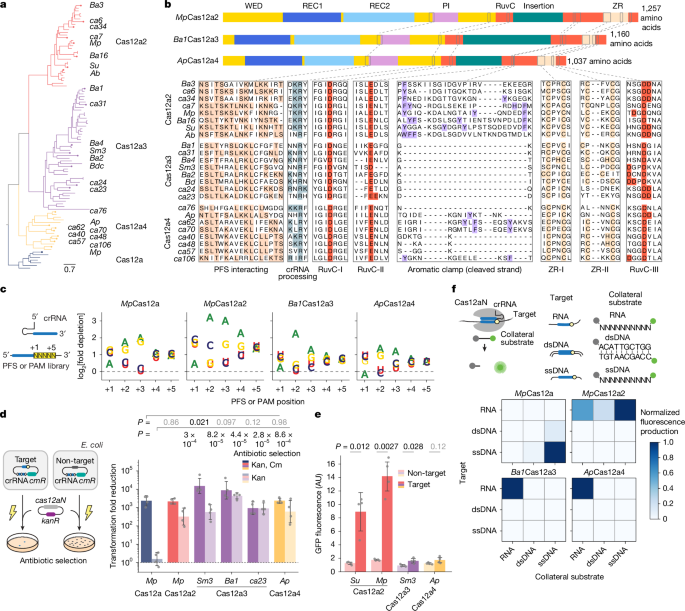
"Conspicuously absent from the set of immune defences that specifically use tRNA inactivation are CRISPR-Cas systems, the only known source of adaptive immunity in bacteria and archaea14. These widespread systems immunize against future infection by acquiring snippets of viral sequences expressed as CRISPR RNAs (crRNAs) that pair with CRISPR-associated (Cas) effector nucleases. The complex then searches for complementary target RNA or DNA that match the originating virus and, after target recognition, cleaves the bound nucleic acid targets to clear viral genomes or transcripts15,16,17."
Immune defences across bacteria, archaea and animals counteract viral infections by clearing invaders or disabling host processes essential for viral replication. A growing innate immune strategy involves inactivation of tRNAs, which bridge mRNAs and nascent proteins, thereby impairing viral protein synthesis or triggering cellular shutdown. Bacterial effectors such as PrrC, VapC, colicin E5 and PARIS cleave specific tRNA anticodon loops, while animal effectors SLFN11 and SAMD9 target tRNA acceptor stems and anticodon loops. CRISPR-Cas systems provide adaptive immunity by acquiring viral sequence snippets as crRNAs that guide Cas nucleases to complementary DNA or RNA targets; some activated Cas nucleases also perform collateral, non-specific cleavage to arrest cellular processes.
Read at Nature
Unable to calculate read time
Collection
[
|
...
]