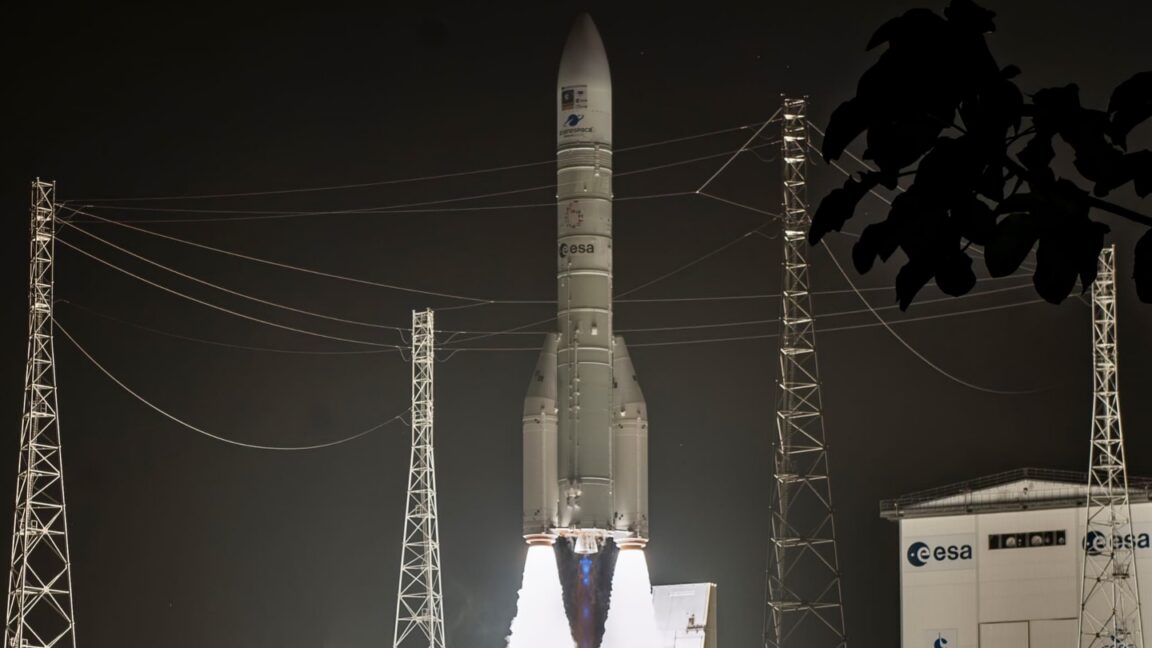
"Several new rockets made their first flights this year. Blue Origin's New Glenn was the most notable debut, with a successful inaugural launch in January followed by an impressive second flight in November, culminating in the booster's first landing on an offshore platform. Second on the list is China's Zhuque-3, a partially reusable methane-fueled rocket developed by the quasi-commercial launch company LandSpace. The medium-lift Zhuque-3 successfully reached orbit on its first flight earlier this month, and its booster narrowly missed landing downrange."
"Four small satellites rode a Rocket Lab Electron launch vehicle into orbit from Virginia early Thursday, beginning a government-funded technology demonstration mission to test the performance of a new spacecraft design, Ars reports. The satellites were nestled inside a cylindrical dispenser on top of the 59-foot-tall (18-meter) Electron rocket when it lifted off from NASA's Wallops Flight Facility. A little more than an hour later, the rocket's upper stage released the satellites one at a time at an altitude of about 340 miles (550 kilometers)."
South Korean rocket startup Innospace will debut a new nano-launcher. Several new rockets made first flights this year, led by Blue Origin’s New Glenn, which had a successful inaugural launch in January and a second flight in November that ended with the booster’s first landing on an offshore platform. LandSpace’s partially reusable, methane-fueled Zhuque-3 reached orbit on its first flight, with its booster narrowly missing a downrange landing. China’s Long March 12A may fly before year’s end. Rocket Lab launched four small satellites from NASA’s Wallops on an Electron, carrying DiskSats inside a cylindrical dispenser and releasing them at about 340 miles altitude.
Read at Ars Technica
Unable to calculate read time
Collection
[
|
...
]