"Blurry streaks of light created by fast-moving artificial satellites are already known to mar images taken by ground-based observatories. Today, researchers report in Nature that space-based telescopes will not escape such interference as fleets of private satellites proliferate. The researchers found that in the next decade, satellite trails could taint roughly 96% of the images taken by some space-based telescopes, and a single image could contain as many as 92 streaks."
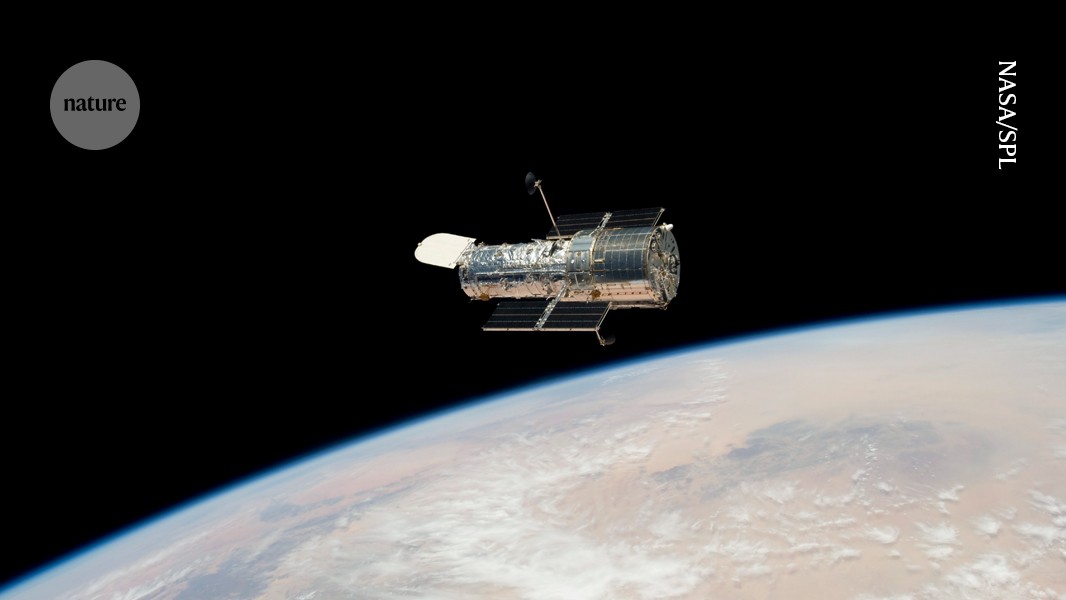
"To work out what effects these satellites will have, Alejandro Borlaff, an astrophysicist at NASA's Ames Research Center in Moffett Field, California, and his team conducted computer simulations of the view from four low-Earth-orbit telescopes, which either currently occupy space or are soon planned to. They include the iconic Hubble Space Telescope; NASA's SPHEREx Observatory, which launched in March; China's Xuntian Space Telescope, set to launch as early as next year; and the European Space Agency's ARRAKIHS mission, set to launch in 2030."
Space-based telescopes will experience significant contamination from trails left by large numbers of commercial satellites. Blurry streaks from fast-moving artificial satellites already affect ground-based observations and will also afflict telescopes in low Earth orbit. Current and planned megaconstellations could increase orbital counts to hundreds of thousands, producing frequent streaks. Simulations of four low-Earth-orbit observatories including Hubble, SPHEREx, Xuntian and ARRAKIHS over about 18 months indicate that with planned satellite numbers many scientific images could be tainted, with roughly 96% of images affected and individual frames containing as many as 92 streaks.
Read at Nature
Unable to calculate read time
Collection
[
|
...
]