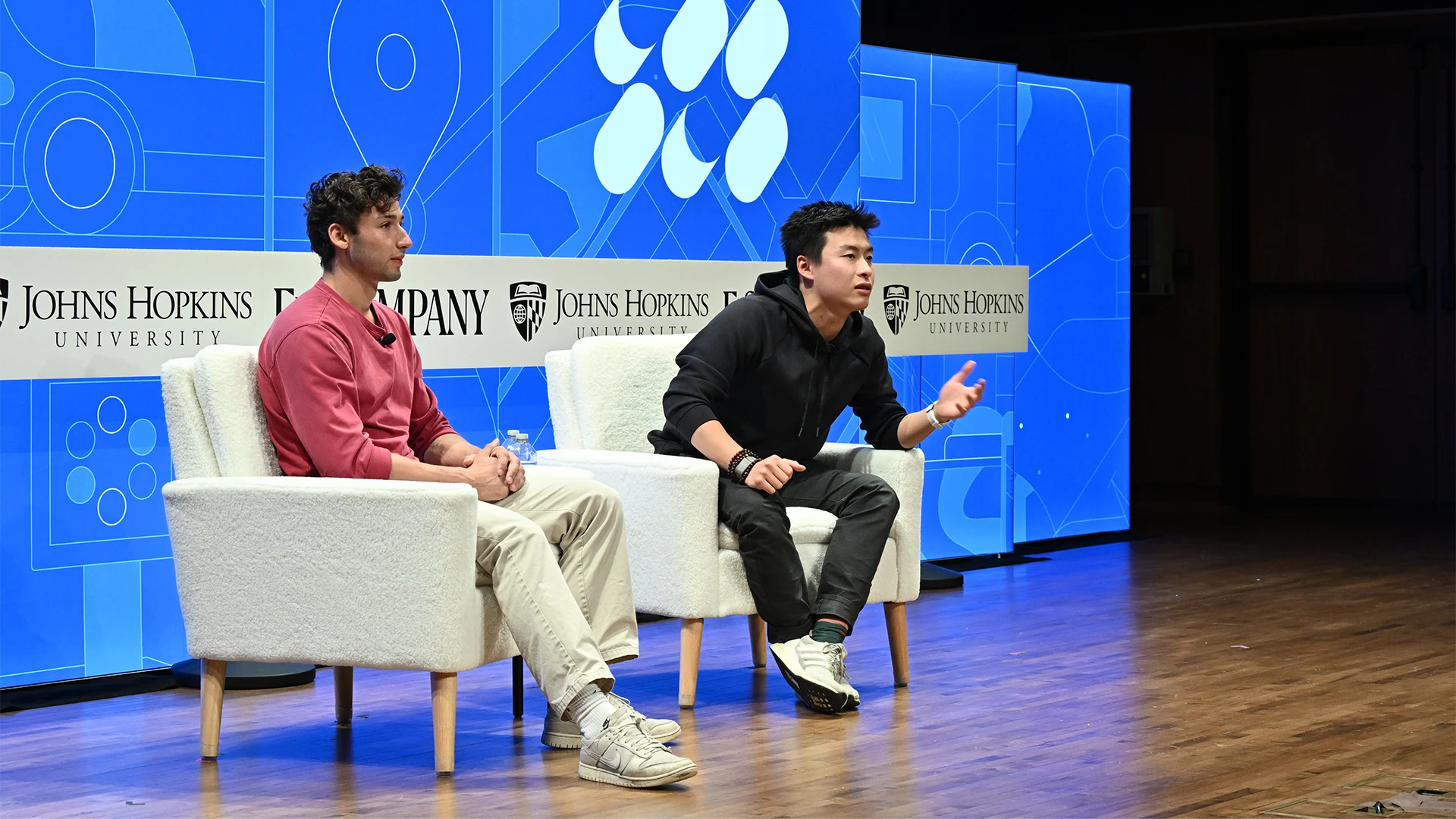
"Technological advancements in various fields of science are shattering what some scientists once deemed impossible. In recent years, researchers have mitigated the existential threat of asteroids, unlocked the power of immunotherapy to treat cancer tumors, and achieved unprecedented control over the human vestibular system. These scientific innovations have been fostered by new types of cross-disciplinary collaboration and the use of artificial intelligence tools."
"The DART mission of 2022 saw a team led by NASA intentionally crash a spacecraft into an asteroid and successfully change the asteroid's path through space, marking "a waterline for humanity," said Terik Daly, a planetary scientist at Johns Hopkins Applied Physics Laboratory, at the summit cohosted by Fast Company and Johns Hopkins University in Washington, D.C. Researchers are better prepared, he added, for the "real threat" of asteroids-which is a medium-size asteroid, roughly the size of an Olympic swimming pool or half a football field,"
"But with appropriate investments, we can be ready to stop an asteroid if we find one coming our way." New mapping tools for cancer research And finding new ways to treat cancer is getting an assist from a perhaps unlikely discipline: astronomy. That's the idea behind AstroPath, which uses decades-old learnings about organizing spatial data to help researchers figure out how the immune system interfaces with cancer, said Janis Taube, a pathologist and a professor of dermatology"
The 2022 DART mission intentionally collided a spacecraft with an asteroid and altered its trajectory, demonstrating feasible planetary defense. Medium-size asteroids roughly the size of an Olympic swimming pool or half a football field pose a real threat to metropolitan areas. New analytical tools adapted from astronomy, such as AstroPath, organize spatial data to reveal how the immune system interfaces with tumors and improve immunotherapy strategies. Advances in vestibular system control offer unprecedented influence over balance and perception. Cross-disciplinary collaboration and artificial intelligence are accelerating these diverse scientific achievements toward improving human safety and health.
Read at Fast Company
Unable to calculate read time
Collection
[
|
...
]