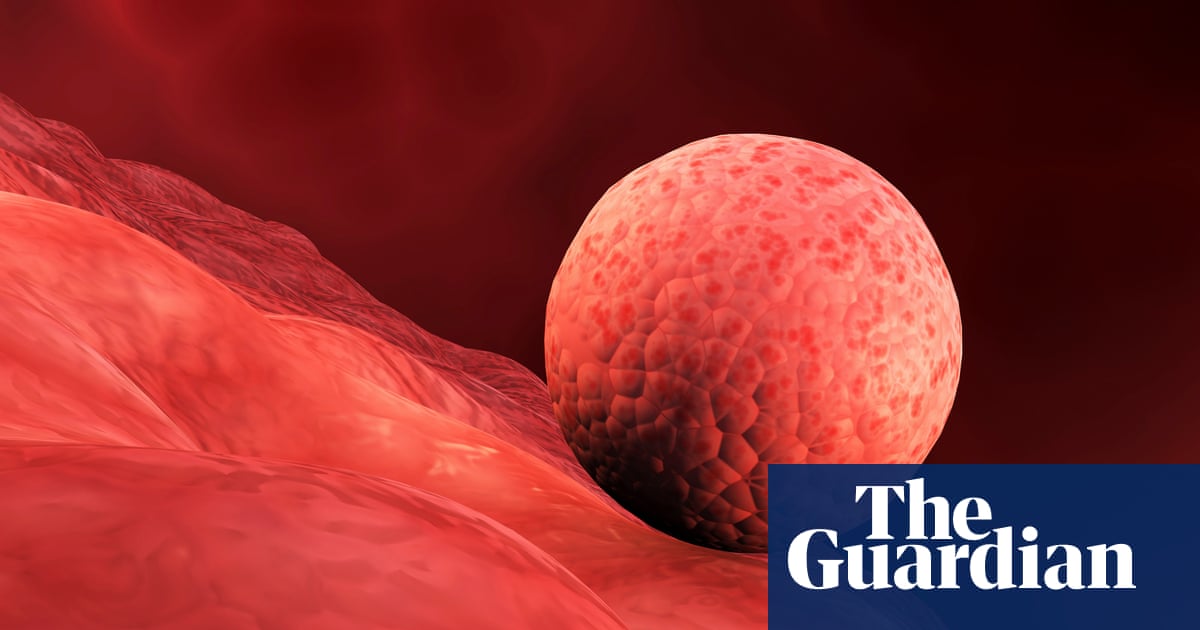
"In laboratory experiments, early-stage human embryos donated from couples after IVF treatment successfully implanted into the engineered lining and began to churn out key compounds, such as the hormone that results in a blue line on positive pregnancy tests. The approach allowed scientists to eavesdrop on the chemical chatter that arises between the embryo and the womb lining as it embeds and begins to be nourished in the first weeks of gestation."
"To build the replica womb lining, Rugg-Gunn and his colleagues obtained uterine tissue from healthy women who donated biopsy samples. From this, the scientists isolated two different types of cells: stromal cells that give structural support to the womb lining, and epithelial cells, which form the lining's surface. They encapsulated the stromal cells in a biodegradable material called a hydrogel and put the epithelial cells on top."
"The approach allowed scientists to eavesdrop on the chemical chatter that arises between the embryo and the womb lining as it embeds and begins to be nourished in the first weeks of gestation. It's incredible to see it, said Dr Peter Rugg-Gunn, a senior author on the study and group leader at the Babraham Institute in Cambridge. Previously we've only had snapshots of this critical stage of pregnancy. This opens up a lot of new directions for us."
An engineered human uterine lining grown from donated biopsy cells enables observation of embryo implantation and early gestation interactions. Early-stage IVF embryos attached to and implanted into the engineered lining and began secreting key compounds, including the hormone that produces a positive pregnancy test line. The model reproduces the chemical signaling between embryo and endometrium as implantation proceeds in the first weeks after fertilisation. The system was created by isolating stromal and epithelial uterine cells, embedding stromal cells in a biodegradable hydrogel and layering epithelial cells on top. The platform offers new experimental access to a previously hard-to-observe phase of pregnancy.
Read at www.theguardian.com
Unable to calculate read time
Collection
[
|
...
]