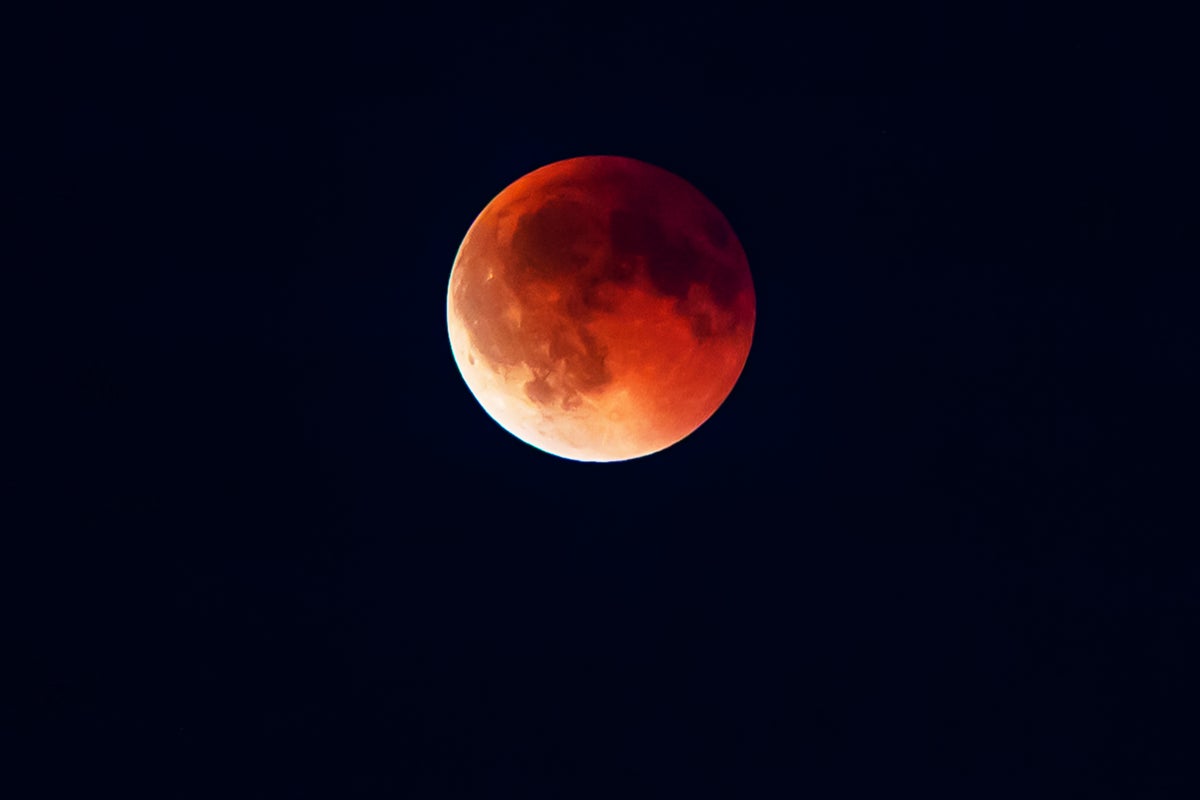
"Earth will be positioned directly between the sun and the full moon, casting a shadow over our natural satellite. While Earth blocks some of the sun's light, stray beams will pass around and through our atmosphere, turning the moon's usually pearlescent surface red."
"The lunar eclipse will be visible across the Americas early in the morning of March 3, as well as to stargazers in Australia and eastern Asia on Tuesday night. The moment of totality—when Earth fully covers the moon in its shadow—will begin at 6:04 A.M. EST and end at 7:03 A.M. EST."
"This upcoming eclipse is particularly special because it will be the last total lunar eclipse until December 2028. Sky watchers hoping to glimpse Tuesday's event will require no special equipment to see the eclipse."
A total lunar eclipse will occur on Tuesday, March 3, when Earth positions itself directly between the sun and the full moon, casting a shadow across the lunar surface. Stray sunbeams passing through Earth's atmosphere will refract and illuminate the moon, creating its distinctive blood-red appearance. The total eclipse phase will last from 6:04 A.M. to 7:03 A.M. EST. Visibility extends across the Americas in early morning hours, Australia, and eastern Asia on Tuesday night, but remains invisible to observers in Africa and Europe. This eclipse follows a solar eclipse from February 17 and represents the last total lunar eclipse until December 2028. No special equipment is required to observe the event; viewers need only clear skies and a direct view of the night sky.
Read at www.scientificamerican.com
Unable to calculate read time
Collection
[
|
...
]