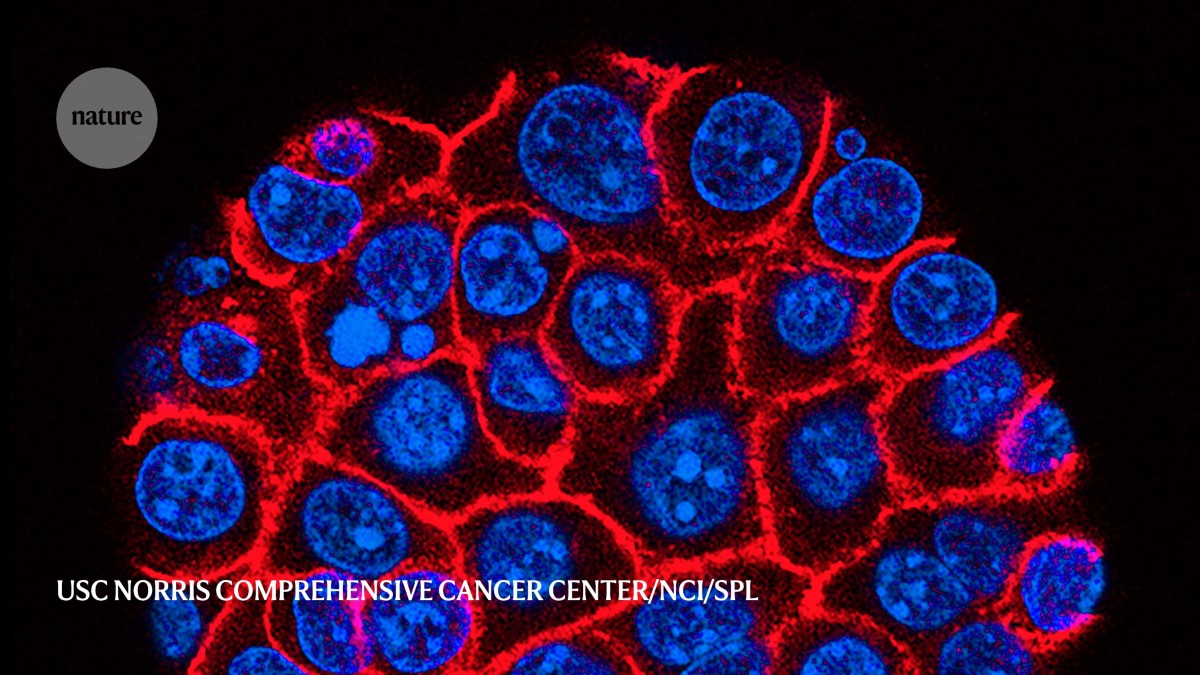
"Pancreatic cancer is extremely aggressive. One reason for this is the dense physical barrier that surrounds the tumour, known as the stroma. This is composed of tumour cells, and a network of proteins and other cell types, such as fibroblasts. The stroma protects cancer cells from the body's immune response and from drugs intended to treat the malignancy. Nature Outlook: Pancreatic cancer"
"Stroma fibroblasts were known to secrete galectin-1 (Gal-1), a sugar-binding protein that helps cancer cells to grow. But an international team led by Pilar Navarro at the Institute of Biomedical Research of Barcelona, Spain, has now identified Gal-1 inside the nuclei of fibroblasts, in which it regulates the expression of several cancer-associated genes, including KRAS. Because Gal-1 fuels the production of KRAS protein inside fibroblasts, these cells stay activated, promoting tumour growth and spread."
"The newly-discovered location of Gal-1 expands the focus of therapies that inhibit it. Researchers say that targeting Gal-1, both in and outside cells, is a promising strategy that might help to improve outcomes for people with pancreatic cancer. Therapies that can enter tumour-associated fibroblasts and block Gal-1 in the nucleus might help to reprogram the cells into a less aggressive and activated state, potentially diminishing their role in tumour development and aggression."
Pancreatic tumours are surrounded by a dense stroma that includes fibroblasts and a protein network, which shields cancer cells from immune responses and drugs. Galectin-1 (Gal-1), known as a secreted sugar-binding protein, is also located in fibroblast nuclei where it regulates cancer-associated genes including KRAS, and increases KRAS protein production to keep fibroblasts activated, promoting tumour growth and spread. Targeting Gal-1 both outside and inside cells, particularly blocking nuclear Gal-1 in tumour-associated fibroblasts, could reprogram these cells toward a less aggressive state and potentially improve outcomes. The dark genome produces cryptic peptides, hundreds specific to pancreatic tumours.
Read at Nature
Unable to calculate read time
Collection
[
|
...
]