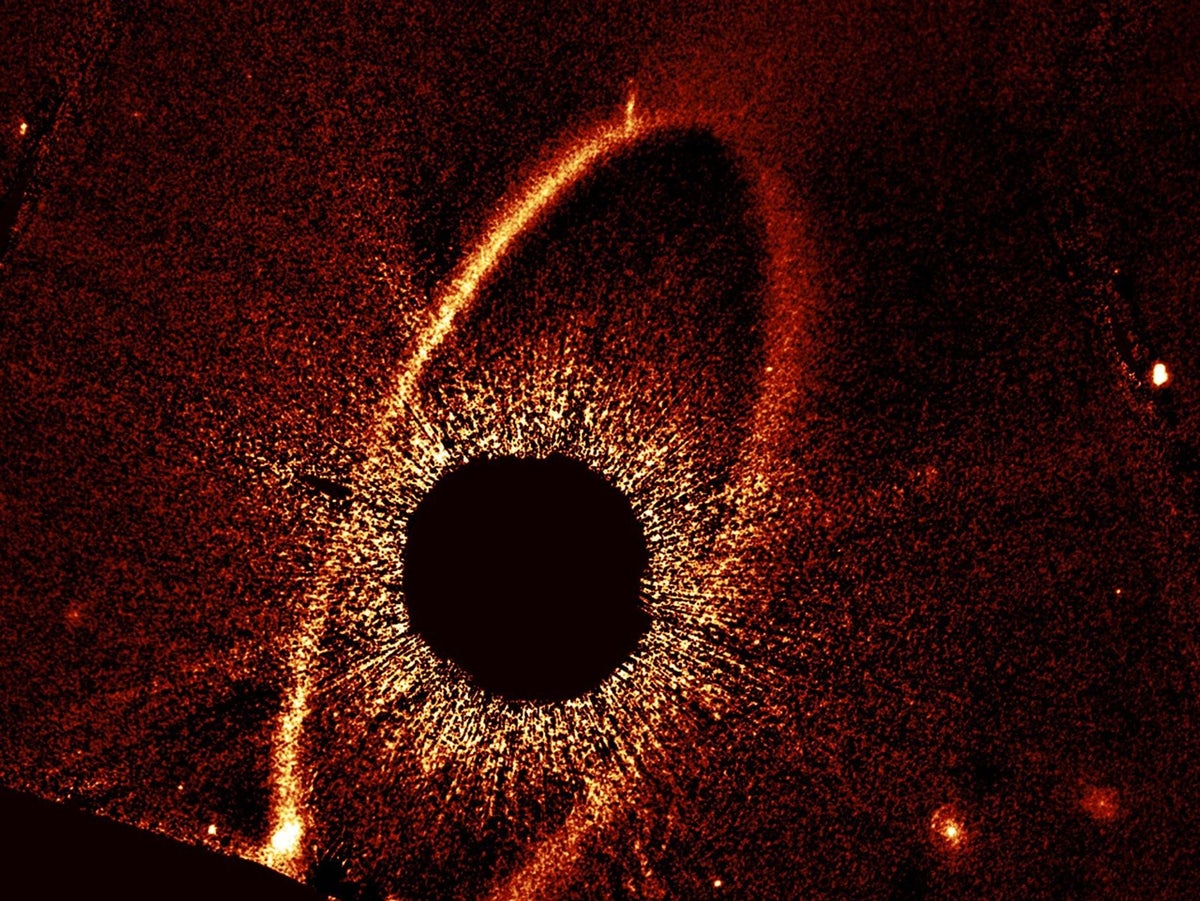
NASA's Hubble Space Telescope observed violent collisions among rocky bodies in the planetary system around Fomalhaut, about 25 light-years away. Bright dust and debris surround Fomalhaut, and a point of light first noted in 2008 faded and disappeared by 2014. In 2023 a different point of light resembling the earlier object appeared. The sudden appearance and disappearance of these points of light indicate they are likely collision remnants rather than stable planets. The timing of these events — two events within about 20 years — challenges earlier estimates that such collisions occur only every 100,000 years or longer.
"When the solar system began to form, everything was chaos. A slew of rocky material was smashing together in a maelstrom that would eventually become the baby protoplanets, comets and asteroids that make up our cosmic neighborhood. And now NASA's Hubble Space Telescope has captured a similar violent clash occurring around another star some 25 light-years away. The star, Fomalhaut, stands out as one of the brightest in the night sky and is known to be shrouded in bands of dust and debris."
"Back in 2008 astronomers examining Fomalhaut discovered a potential planet orbiting the starsubsequent observations, however, showed that the orb was fading, leading some to question whether it was a planet or the debris left over from a collision between two smaller objects. By 2014 it had disappeared. And in a new study published in Science, astronomers describe how, in 2023, they found a different point of light that resembles the previously discovered object."
Read at www.scientificamerican.com
Unable to calculate read time
Collection
[
|
...
]