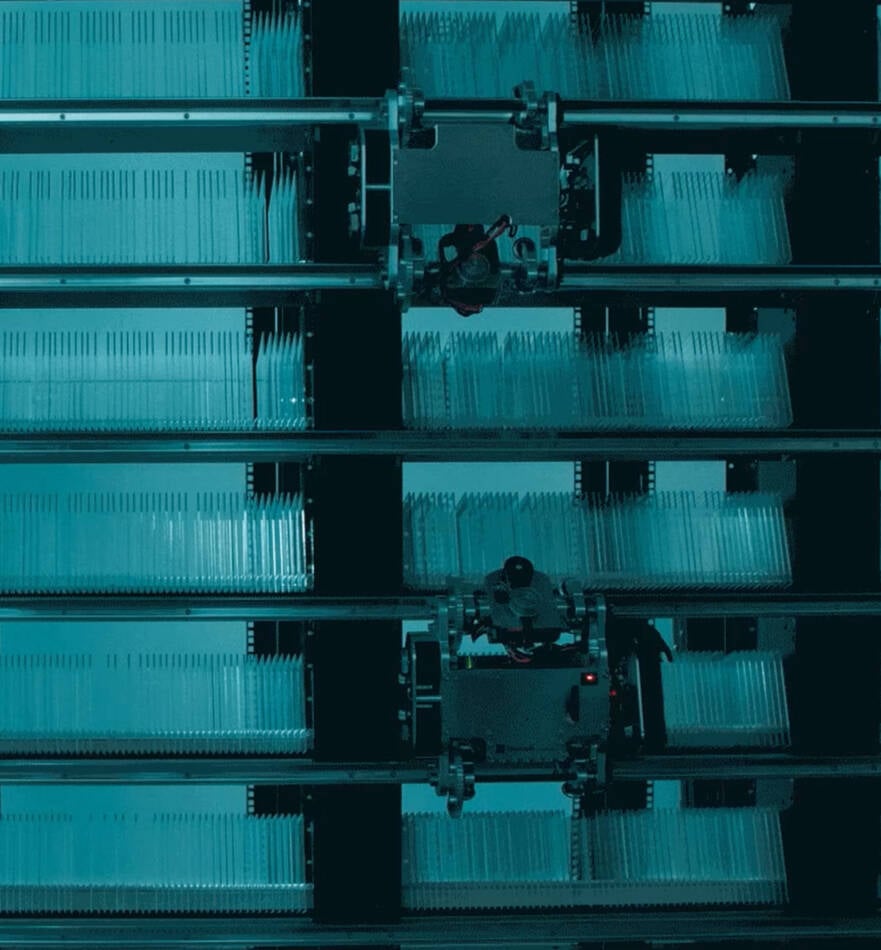
"Project Silica can now store 2 TB in hundreds of layers within a 2 mm thick borosilicate glass plate. There are femtosecond laser pulses and machine learning readers. Proper science-led engineering."
"As a digital culture, we are extraordinarily good at growing and using data, and extraordinarily bad at keeping it for any length of time. The most economical form of bulk storage remains tape, a stretchy mix of thin plastics, binding gloops and metal oxides, as durable as it sounds."
"Glass, on the other hand, is silica, also known as silicon dioxide, and that can last basically forever. Flint tools - also silica - have been found, good as new, after 2 million years. Mesopotamian clay tablets - silica again - containing the first records of daily data from any civilization are crisply readable from 3,000 years ago."
Project Silica represents genuine innovation in data storage by encoding information into glass matrices using femtosecond laser technology and machine learning readers. The technology stores 2TB across hundreds of layers within a 2mm thick borosilicate glass plate. This addresses a critical problem: while digital culture excels at generating and using data, it fails at long-term preservation. Current bulk storage relies on magnetic tape, which is fragile and requires complex retrieval techniques. Glass, composed of silica, offers superior durability—silica tools remain intact after 2 million years, and ancient clay tablets remain readable after 3,000 years. Borosilicate glass is inexpensive and potentially stable for 10,000 years or longer, making it an ideal archival medium for preserving digital culture at scale.
#data-storage-technology #glass-archival-media #digital-preservation #optical-storage-innovation #long-term-data-durability
Read at Theregister
Unable to calculate read time
Collection
[
|
...
]