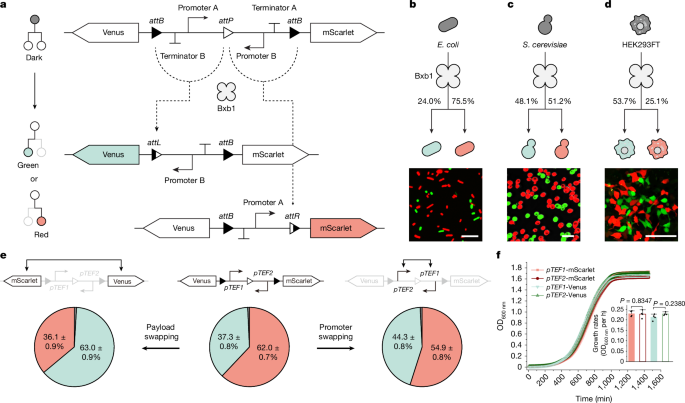
"By orchestrating complex gene-regulatory networks, eukaryotic stem cells differentiate into specialized cell lineages that form functional tissues or organs. This differentiation process reflects the genetic intricacy of multicellular eukaryotes, contributing to their evolutionary success."
"Parallel phenomena in microorganisms include asymmetric division in Caulobacter crescentus, which produces motile cells that lack reproductive capabilities and sessile cells that are capable of division but not motility. Similarly, under nitrogen-limiting conditions, the central cells in Anabaena filaments divide asymmetrically, generating progeny specialized in nitrogen fixation or photosynthesis."
"By mimicking the differentiation and cooperative division of labour that characterize natural selection, synthetic biology is unlocking the reprogramming of cellular functions, facilitating the emergence of diverse artificial cell states. A foundational milestone was the genetic toggle switch, which allowed reversible switching between two distinct states in Escherichia coli."
Asymmetric cell division in multicellular organisms and microorganisms produces specialized progeny with distinct functions, enabling complex tissue formation and survival under stress. Stem cells differentiate through gene-regulatory networks, while microorganisms like Caulobacter crescentus and Anabaena demonstrate similar specialization strategies. Synthetic biology harnesses these natural principles to reprogram cellular functions artificially. Key innovations include genetic toggle switches enabling reversible state switching in bacteria, chromosome partitioning systems inducing asymmetric division, and epigenetic tools like PopZ proteins controlling differentiation. Engineered systems such as MultiFate circuits successfully generate multiple stable phenotypes in eukaryotic cells, though scaling challenges persist.
Read at Nature
Unable to calculate read time
Collection
[
|
...
]