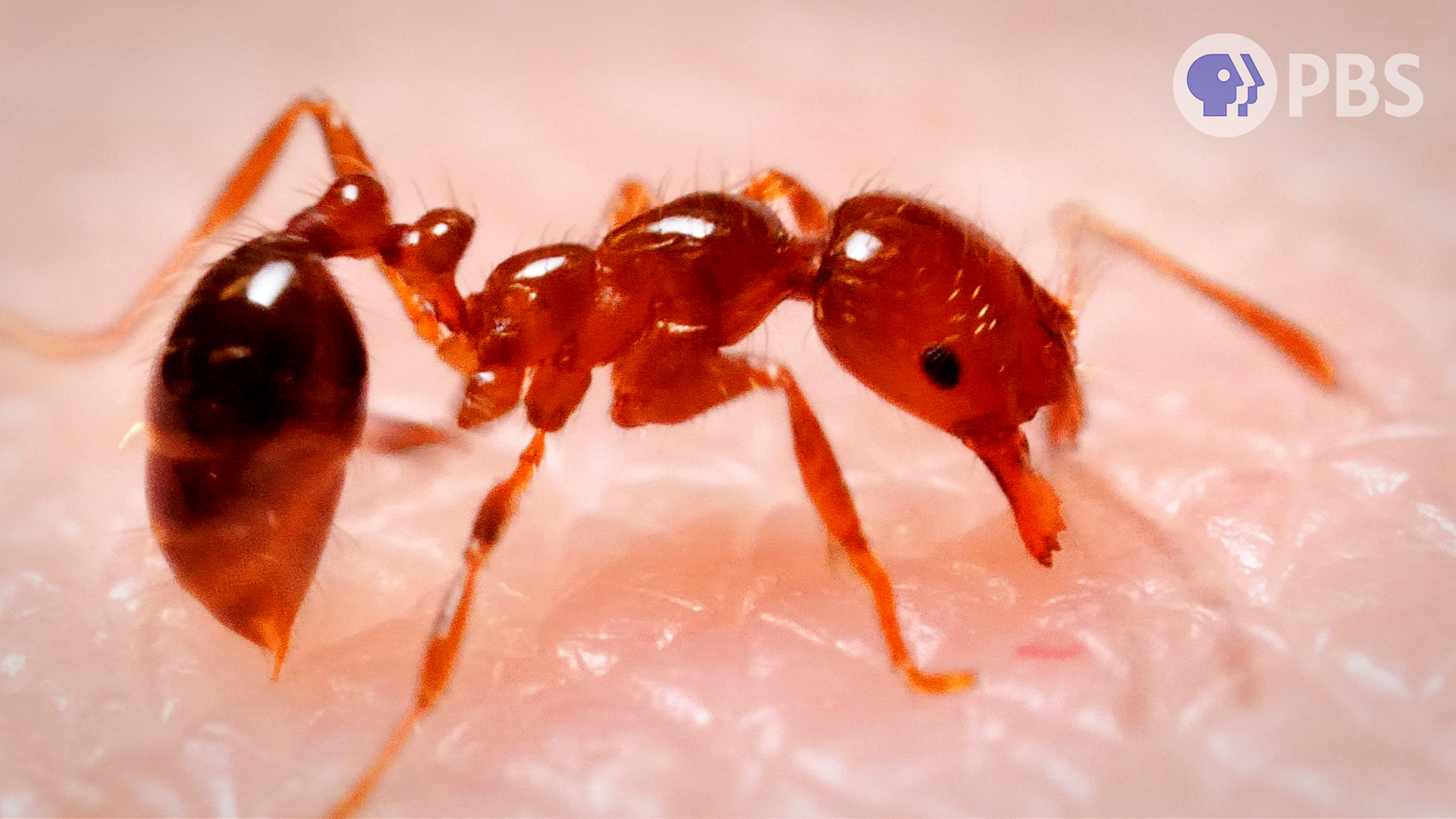
"As flood water trickles into the tunnels below their mound, fire ants start a rescue mission. They evacuate the colony's babies - these larvae and pupae - to the surface. But researchers at Louisiana State University found that instead of putting the babies on the top of the raft, where it's dry, they put them on the bottom. Listen, these ants have their reasons."
"See the halo of hairs on these larvae? If you look at the raft from below you'll see how those hairs trap air bubbles and hold the larvae together in clusters, you know, like giant floaties. Those same bubbles help everyone breathe through tiny holes on the sides of their bodies. And hey, don't feel bad for these ants with their heads dunked underwater. They'll get their turn on top of the raft eventually."
Fire ants inject venom that burns and causes itchy welts, and workers become extra aggressive during floods. During floods, colonies evacuate larvae and pupae to the surface and place them on the bottom of rafts. Larvae have halo-like hairs that trap air bubbles, which hold clusters together and provide buoyancy and breathing through tiny body holes. Workers clasp each other by tarsi and sometimes hold larvae, locking legs to form a cohesive raft scaffold. Rafts can assemble rapidly—around two minutes in trials—and can remain afloat for almost two weeks, sustained by food in workers' bellies. Rafts enabled red fire ants, which evolved near South American rivers, to spread across the world and rebuild nests when waters recede.
Read at Kqed
Unable to calculate read time
Collection
[
|
...
]