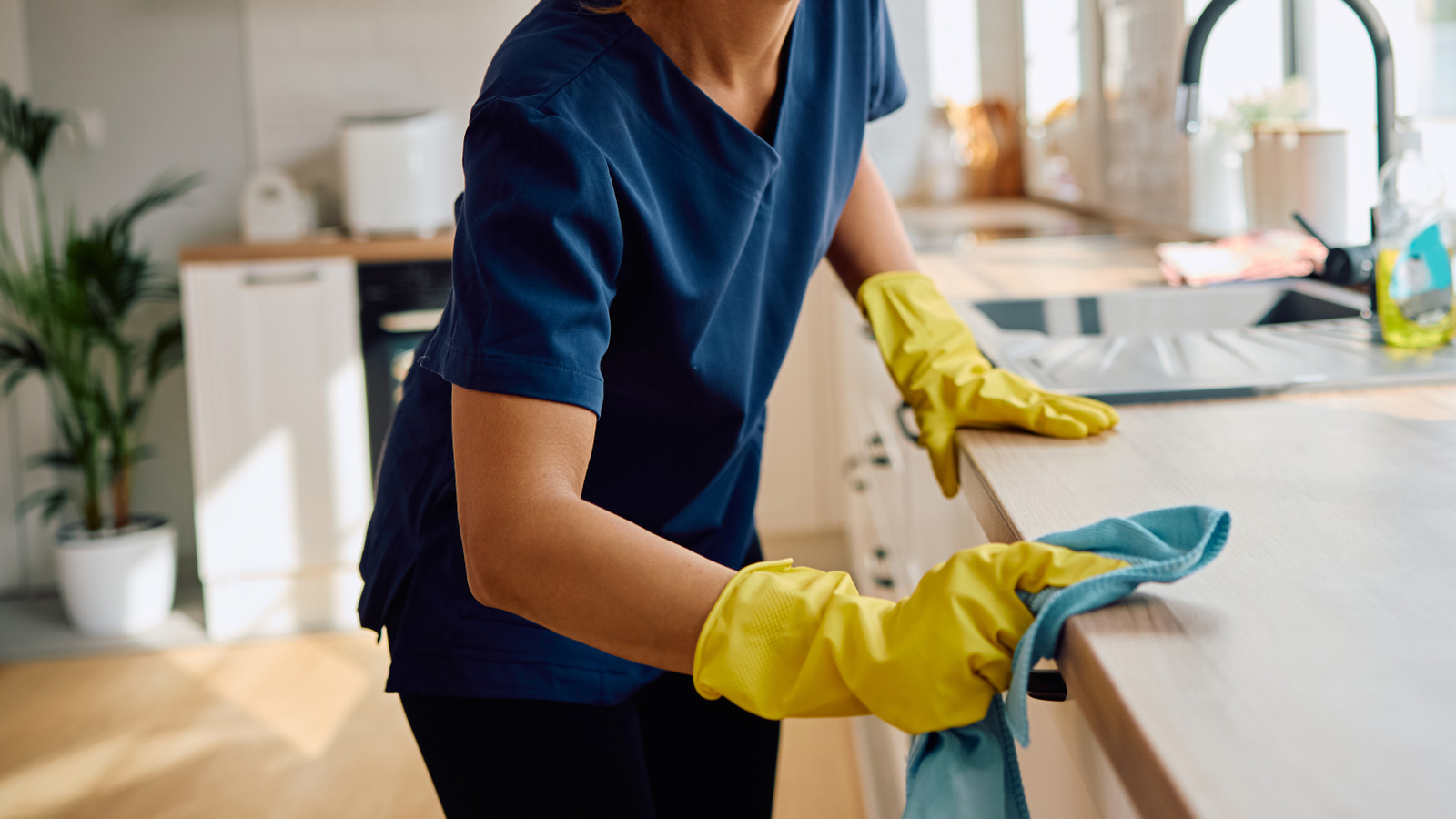
"There's nothing more frustrating than shelling out for a cleaning product that doesn't get the job done. Often, making your own household cleaner from things you already have in your pantry is not just free, but the result is much more effective. One of the most capable examples? Mixing hydrogen peroxide and dish soap. This powerful duo is strong enough to fight the toughest grime on dishes, banish the most stubborn stains, and disinfect all the different spots in your kitchen."
"The reason this makes such a great cleaning product is because of what each item brings to the table. Dish soap is what's known as a surfactant: It gets into and lifts out grease, grime, and dirt. Then, the hydrogen peroxide functions as a disinfectant, like a gentler kind of bleach. Together, the solution foams up and really gets into surfaces and materials to sanitize and clean."
"When you combine it with dish soap, however, it can completely erase grime in the grout between your tiles, kick stains on the sink and countertops to the curb, lift residue off of dishes with baked-on crud, degrease the stove, and even send mildew and mold packing. Depending on what you're cleaning, you can either mix two parts hydrogen peroxide with one part dish soap and apply with a sponge or brush, or pour the mixture into a spray bottle."
Mixing dish soap and 3% hydrogen peroxide produces a powerful household cleaner. Dish soap acts as a surfactant to lift grease, grime, and dirt, while hydrogen peroxide serves as a gentler disinfectant similar to bleach. The combination foams and penetrates surfaces and materials to sanitize and remove stains. The mixture works on grout, sinks, countertops, dishes with baked-on residue, stovetops, mildew, and mold. Typical ratios include two parts hydrogen peroxide to one part dish soap, applied with a sponge, brush, or in a spray bottle. Using the correct 3% solution and following safety limits is important.
Read at Tasting Table
Unable to calculate read time
Collection
[
|
...
]