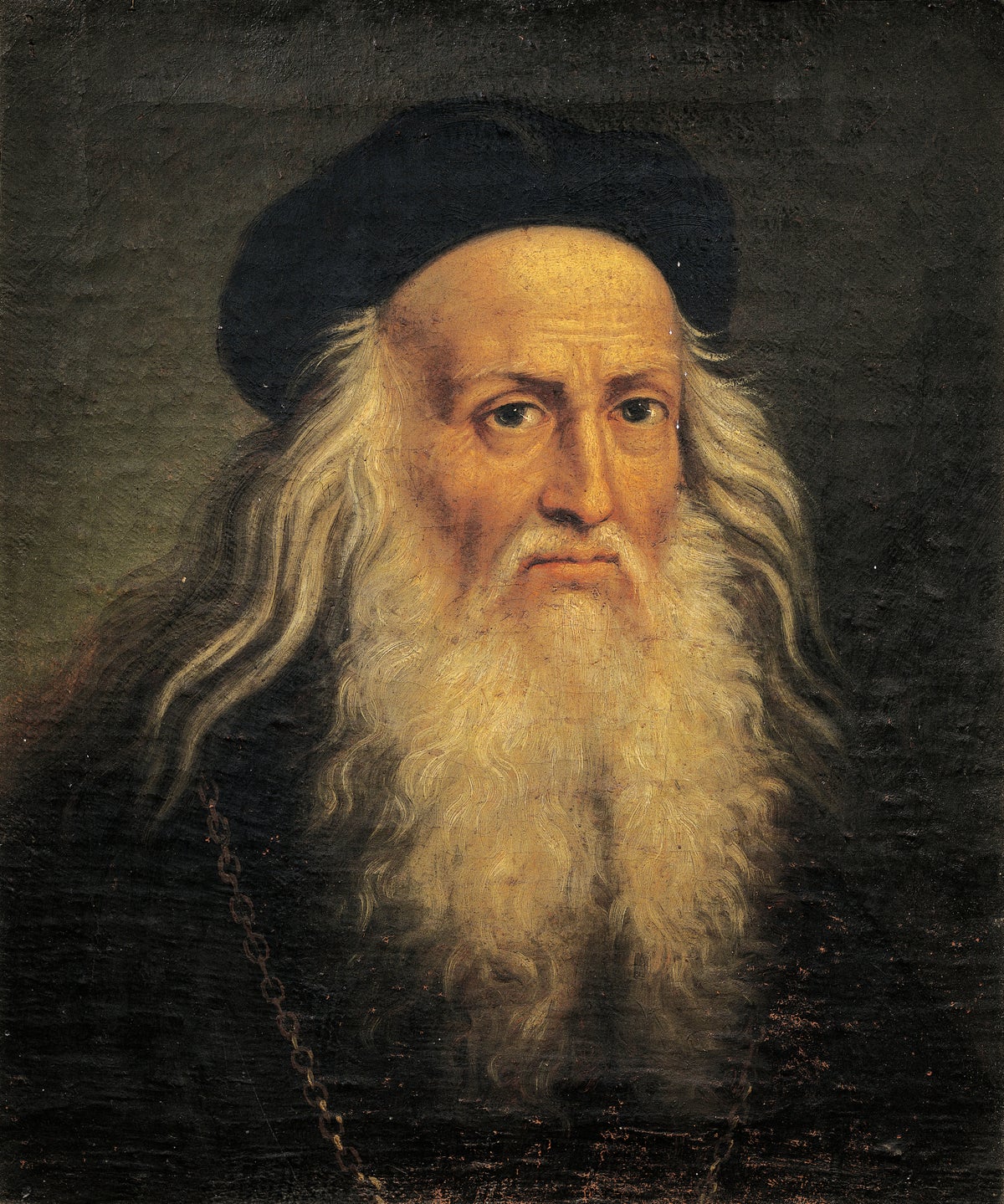
Researchers traced male DNA in samples taken from Holy Child, a chalk drawing attributed by some to Leonardo, and from other artifacts. The genetic data and environmental signatures were reported in a preliminary paper posted on bioRxiv and have not yet undergone peer review. Leonardo's genome is difficult to obtain because his remains were disturbed during the French Revolution, many relatives' remains remain under investigation, and he had no known children. Project scientists found plant and other environmental traces consistent with places and periods in Leonardo's life and detected male DNA with a Tuscan lineage that could potentially match him. Some experts caution that these results are not conclusive.
"Scientists hunting for the DNA of famed Renaissance artist and scientist Leonardo da Vinci say they've made a breakthroughbut some experts caution against interpreting the results as a smoking gun. As first reported by Science on Tuesday, researchers at the Leonardo da Vinci DNA Project, housed at the J. Craig Venter Institute in Rockville, Md., reported that they traced male DNA in samples taken from Holy Child, a chalk drawing attributed by some to Leonardo, as well as other artifacts."
"The findings are detailed in a preliminary paper posted on the preprint server bioRxiv, and they are yet to be peer-reviewed. Leonardo's genome is an elusive target. His remains couldn't be verified after they were disturbed during the French Revolution. Many of his direct relatives' remains are still being investigated, and he had no known children. All of that makes identifying his DNA extremely difficult, if not impossible."
"To try and get around these limitations, Norberto Gonzalez-Juarbe, an assistant professor of cell biology and molecular genetics at the University of Maryland, and his colleagues at the project analyzed several samples taken from various artifacts. They found traces of plants and other environmental signatures that lined up with times and places in the polymath's life, as well as male DNA with a Tuscan lineage that could, they speculate, point to Leonardo himself."
Read at www.scientificamerican.com
Unable to calculate read time
Collection
[
|
...
]