"You might not be familiar with Switzerland's now-melted Pizol glacier. Its disappearance didn't contribute significantly to sea level rise or the global climate, but it did affect the locals as if they had experienced the death of a loved one. In 2019 hundreds of mourners, many wearing black, attended a funeral for the glacier led by a priest and glaciologists."
"Scientists who study glaciers tend to focus on ice volume loss rather than individual glaciers, says glaciologist Lander Van Tricht, because that metric has the more dire global consequences. But individual glaciers, even small ones, carry cultural, spiritual, and economic importance for locals. They're the bedrock of many a ski resort, propping up winter tourism; the abode of gods for many Indigenous tribes; and the sites of rituals around the world, such as the Snow Star Festival pilgrimage in the Andes."
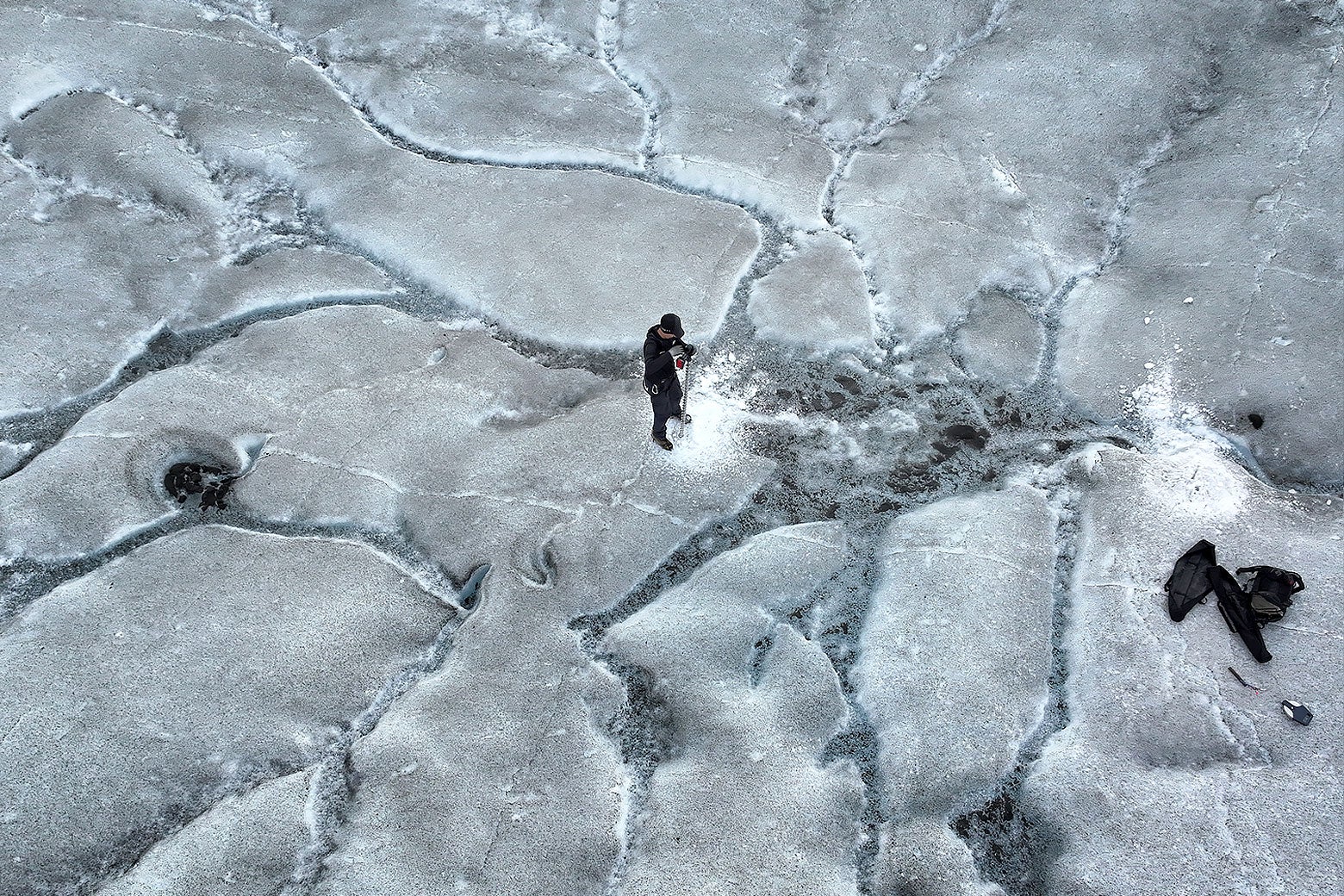
"Now, for the first time, scientists have quantified the number of glaciers we're losing -and it's staggering. They've discovered that we're already losing 1,000 glaciers a year. That rate is likely to climb. Glaciers are permanent ice bodies in the landscape that flow to lower elevations because of gravity or internal ice pressure. If it doesn't flow, we don't call it a glacier."
Local communities experience glacier disappearance as profound loss, exemplified by a funeral for Switzerland's Pizol glacier. Scientific focus often centers on aggregate ice volume because of global consequences, yet individual glaciers hold cultural, spiritual, and economic value for nearby populations, supporting tourism, religious practices, and rituals. Scientists have now quantified glacier loss and found about 1,000 glaciers vanish each year, with that rate expected to rise. A glacier is defined as a permanent ice body that flows to lower elevations under gravity or internal pressure, and must exceed 0.01 square kilometer to be classified as such.
Read at Slate Magazine
Unable to calculate read time
Collection
[
|
...
]