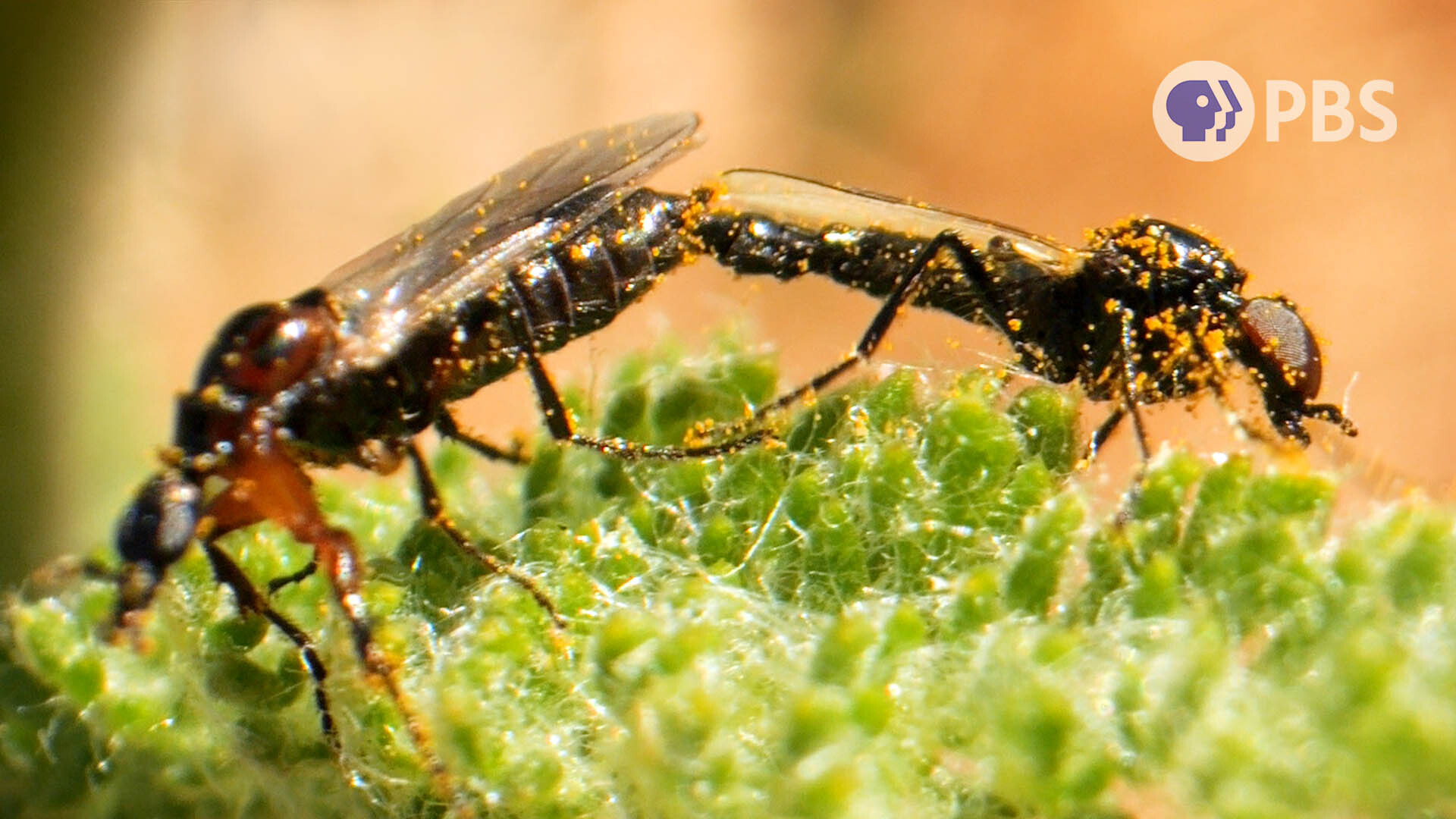
Mass emergences produce large mating swarms where individuals that developed as maggots underground take flight together in synchronous emergence, often in spring. Males and females show sexual dimorphism: males have holoptic eyes with near-360-degree vision to locate females in dense swarms, while females have smaller eyes and longer heads. Males compete within swarms or on flowers; winners ride piggyback and hook to copulate. Prolonged attachment serves as mate guarding and can last from a half-hour to several days. While feeding on nectar during or after mating, these flies transfer pollen and pollinate ornamental, crop, and wild plants.
"Their love story starts in a massive crowd. A raucous singles mixer. They're old friends. They grow up together as maggots underground. Then they take flight all at once, in what's called synchronous emergence. In some places this happens in spring, which is why they're also known as march flies. Males and females look pretty different. He has holoptic eyes. See how they meet at the top of his head?"
"She carries him around piggyback style. Hang on, buddy. There's no guarantee he won't be replaced by another male. The reigning champ curls his backside towards hers, and they hook onto each other. Then, he flips his body over and around. Wait, who's driving? Through this safe connection, he delivers his genetic material. The longer he stays attached to her, the longer he keeps her from mating with others. This increases his chances of passing on his genes."
Read at Kqed
Unable to calculate read time
Collection
[
|
...
]