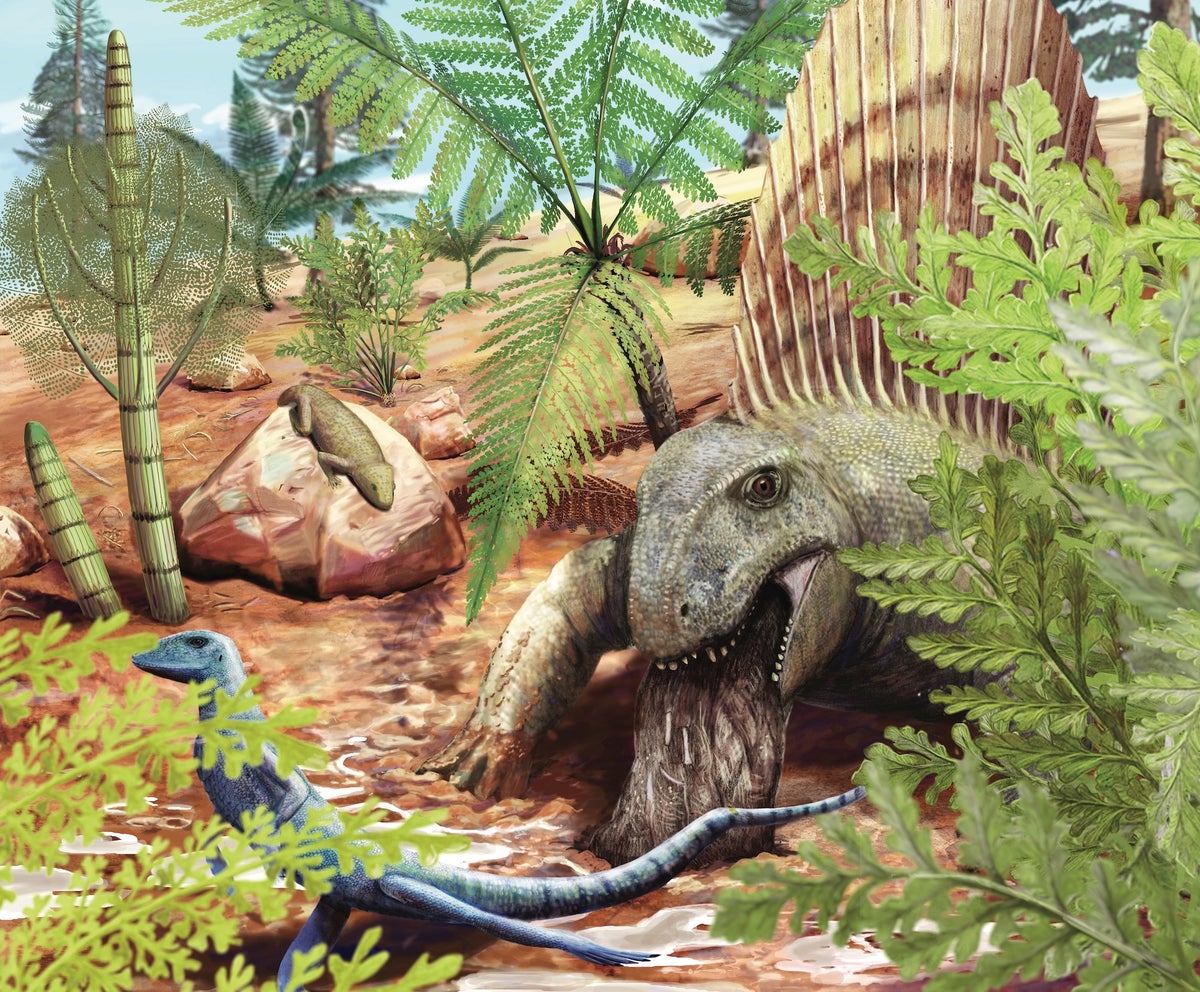
"Fossils are remarkable for their ability to viscerally connect us with long-lost life. The bulk of a Tyrannosaurus rex skull, the biting point of a shark tooth, the startling familiarity of a hominin footprintand then there's the charm inherent to any sample of regurgitalite, the paleontological term for fossilized vomit. Okay, charm might be a stretch, but to the right scientist, the rare finds are little treasures, says Arnaud Rebillard, a Ph.D. candidate in paleontology at the Natural History Museum of Berlin."
"Amid the loose fossils and remarkably preserved skeletons that characterize the site, the regurgitalite was uninspiringuntil, that is, the fossil cleaning process and a computed tomography (CT) scan offered a clearer view. That process digitally extracted a cluster of 41 small bones that turned out to belong to three separate species: two small reptiles and a larger reptilelike animal. This was clearly something that was eaten and then ejected from an animal, Rebillard says."
A regurgitalite, or fossilized vomit, was recovered from the Bromacker site in Germany and dated to about 290 million years ago. The Bromacker locality preserves a valley of conifers with abundant herbivorous fauna. Fossil preparation and computed tomography scanning digitally isolated a cluster of 41 small bones within the regurgitalite. The bones represent three distinct taxa: two small reptiles and one larger reptilelike animal. Imaging indicates the assemblage was ingested and subsequently ejected. The specimen constitutes the oldest known regurgitalite from a terrestrial ecosystem and provides direct evidence of ancient predator–prey interactions.
Read at www.scientificamerican.com
Unable to calculate read time
Collection
[
|
...
]