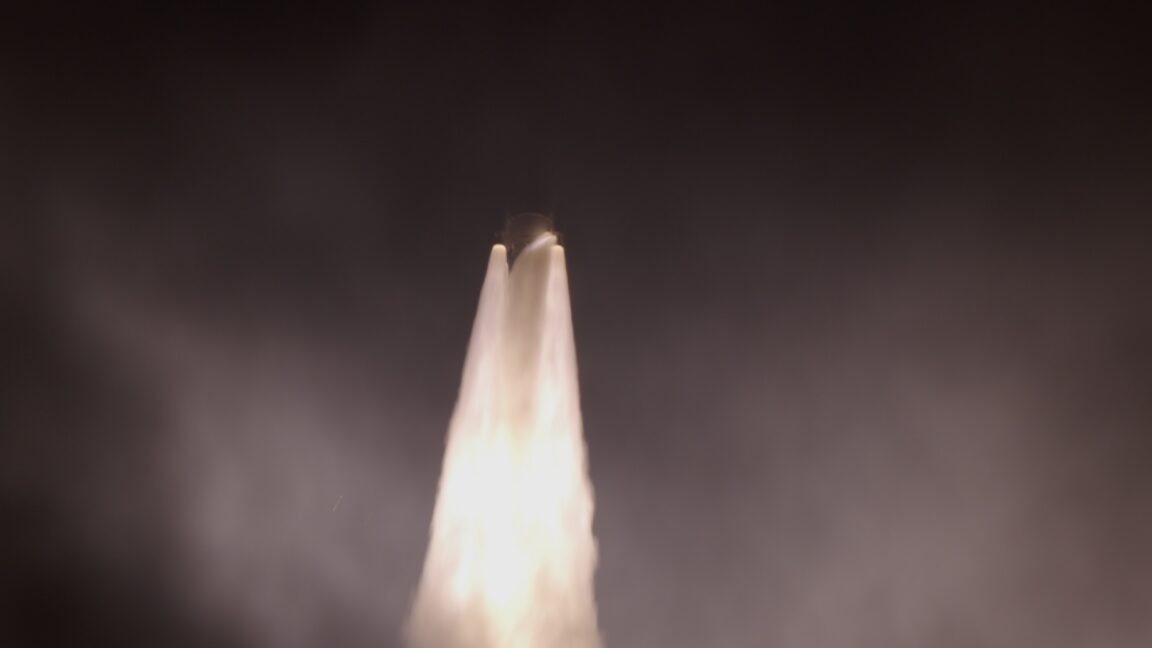
"The Vulcan's solid rocket boosters, or Graphite Epoxy Motors (GEMs), are built by Northrop Grumman. The 72-foot-long (22-meter) solid-fueled motor is a larger version of the booster used on ULA's Atlas V rocket, which Vulcan is replacing. The GEM 63XL variant used on the Vulcan rocket is designed to burn through more than 105,000 pounds of pre-packed propellant in less than 90 seconds."
"The 2024 booster malfunction occurred on the Vulcan rocket's second test flight. The rocket did not return to action for 10 months as engineers probed the nozzle failure. Investigators determined that a carbon composite insulator, or heat shield, inside the nozzle failed to protect the nozzle's metallic structure from the superheated exhaust coming from the booster. Engineers traced the cause of the failure to a "manufacturing defect" in one of the insulators, which led to the melting and burn-through of the booster nozzle."
"Despite the booster problem, the Vulcan rocket deployed multiple military satellites into an on-target geosynchronous orbit more than 22,000 miles (nearly 36,000 kilometers) over the equator. This mission, codenamed USSF-87, launched the Space Force's seventh and eighth GSSAP surveillance satellites, also manufactured by Northrop Grumman. The satellites will maneuver around geosynchronous orbit to monitor other spacecraft, such as the clandestine fleets operated by China and Russia."
Northrop Grumman builds the Vulcan rocket's Graphite Epoxy Motors (GEMs), including the 72-foot GEM 63XL variant that burns more than 105,000 pounds of propellant in under 90 seconds. A 2024 booster nozzle failure on Vulcan's second test flight was traced to a carbon composite insulator manufacturing defect that allowed melting and burn-through of the nozzle, reducing thrust while the BE-4 main engines compensated. ULA inspected other boosters but the recent flight's malfunction suggests the defect persisted or a separate issue exists. Despite the booster anomaly, the Vulcan successfully placed two GSSAP surveillance satellites into geosynchronous orbit to monitor other spacecraft.
Read at Ars Technica
Unable to calculate read time
Collection
[
|
...
]