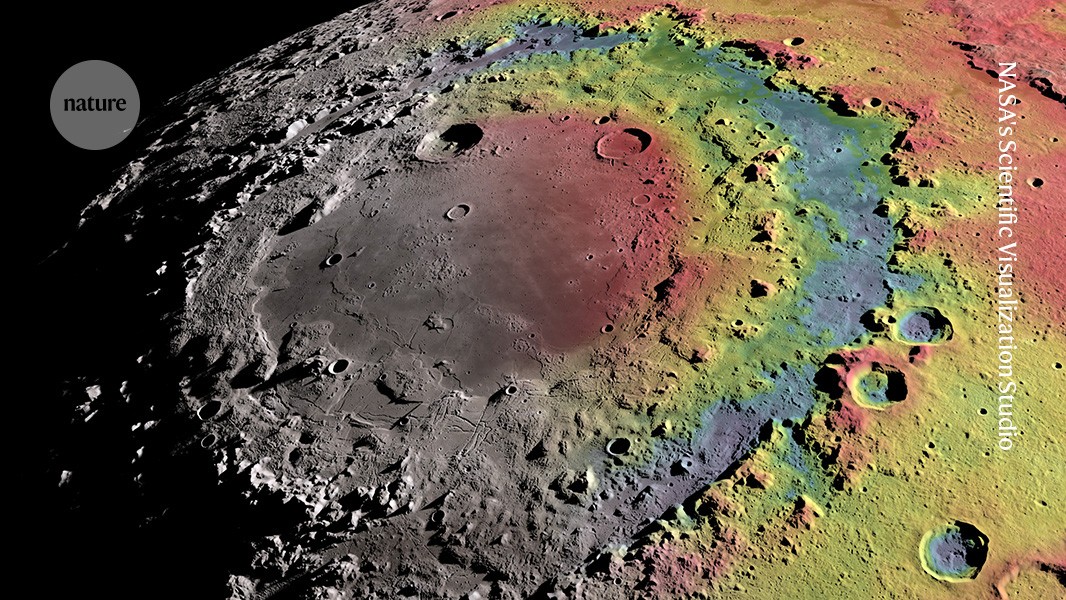
"The far side of the Moon is markedly different than its near side, which faces Earth; the far side has hardly any of the vast lava flows that mark the near side, but it has a thicker crust and many more impact craters."
"Only 20% of the lunar far side will be illuminated by sunlight when the astronauts fly by it, which is a disappointment for scientists hoping for a wider view."
"Top of many researchers' lists is the Orientale basin - a 930-kilometre-wide, multi-ringed impact basin in the Moon's southern hemisphere, the largest and youngest of many impact craters."
NASA's Artemis II mission is set for a fly-by of the Moon's far side on 6 April, marking the first human visit since 1972. The far side differs significantly from the near side, featuring a thicker crust and more impact craters. Only 20% of the far side will be illuminated during the fly-by, limiting visibility. Scientists are particularly interested in the Orientale basin, a large impact crater formed during the Late Heavy Bombardment, which is expected to be observed during the mission.
Read at Nature
Unable to calculate read time
Collection
[
|
...
]