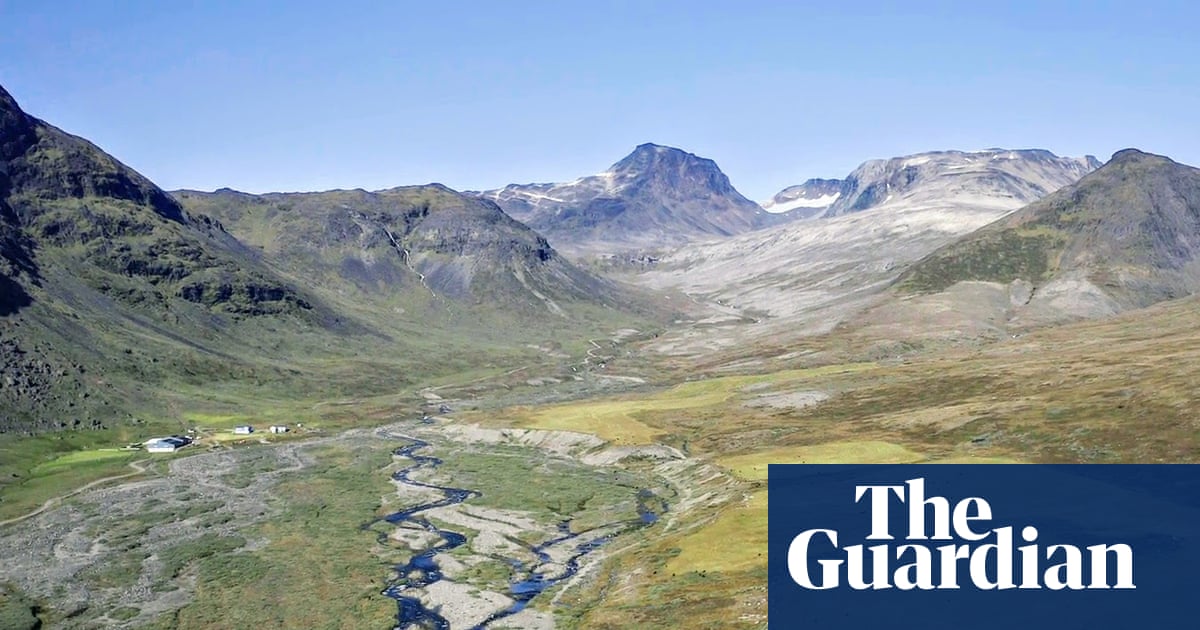
"As recent manoeuvres over Greenland have made plain, this mostly ice-covered island contains some of the greatest stores of natural resources in the world, with huge volumes of oil and gas, rich deposits of rare-earth elements and rocks bearing gems and gold. So why did all the planetary goodies end up here? Writing in The Conversation, the geologist Dr Jonathan Paul from Royal Holloway, University of London, explains how this mineral and resource wealth is tied to the country's geological history over the past 4bn years."
"Greenland is a bit of a geological anomaly, with land that has been pummelled in three different ways: mountain building, rifting and volcanism. Periods of mountain building have created a network of faults and fractures into which gold, diamonds, rubies and graphite have been deposited. Rifting associated with the creation of the Atlantic Ocean basin 200m years ago formed sedimentary basins capable of storing oil and gas."
"And throughout time volcanic episodes have deposited the rare-earth elements, upon which so many hi-tech items depend. About 80% of Greenland is blanketed in a thick sheet of ice, but a warming world will start to make resources more accessible. Arguments will be made as to why these resources should be plundered, but such a move would cost Greenland dear."
About 80% of Greenland is ice-covered, yet the island contains vast stores of oil, gas, rare-earth elements, gems and gold. Four billion years of geological activity—mountain building, rifting and volcanism—created the conditions for those resources. Mountain building produced faults and fractures that concentrated gold, diamonds, rubies and graphite. Rifting during Atlantic Ocean formation around 200 million years ago formed sedimentary basins capable of storing oil and gas. Volcanic episodes emplaced rare-earth elements used in hi‑tech devices. Climate warming will expose more of these deposits, while extraction would impose significant economic, environmental and political costs on Greenland.
Read at www.theguardian.com
Unable to calculate read time
Collection
[
|
...
]