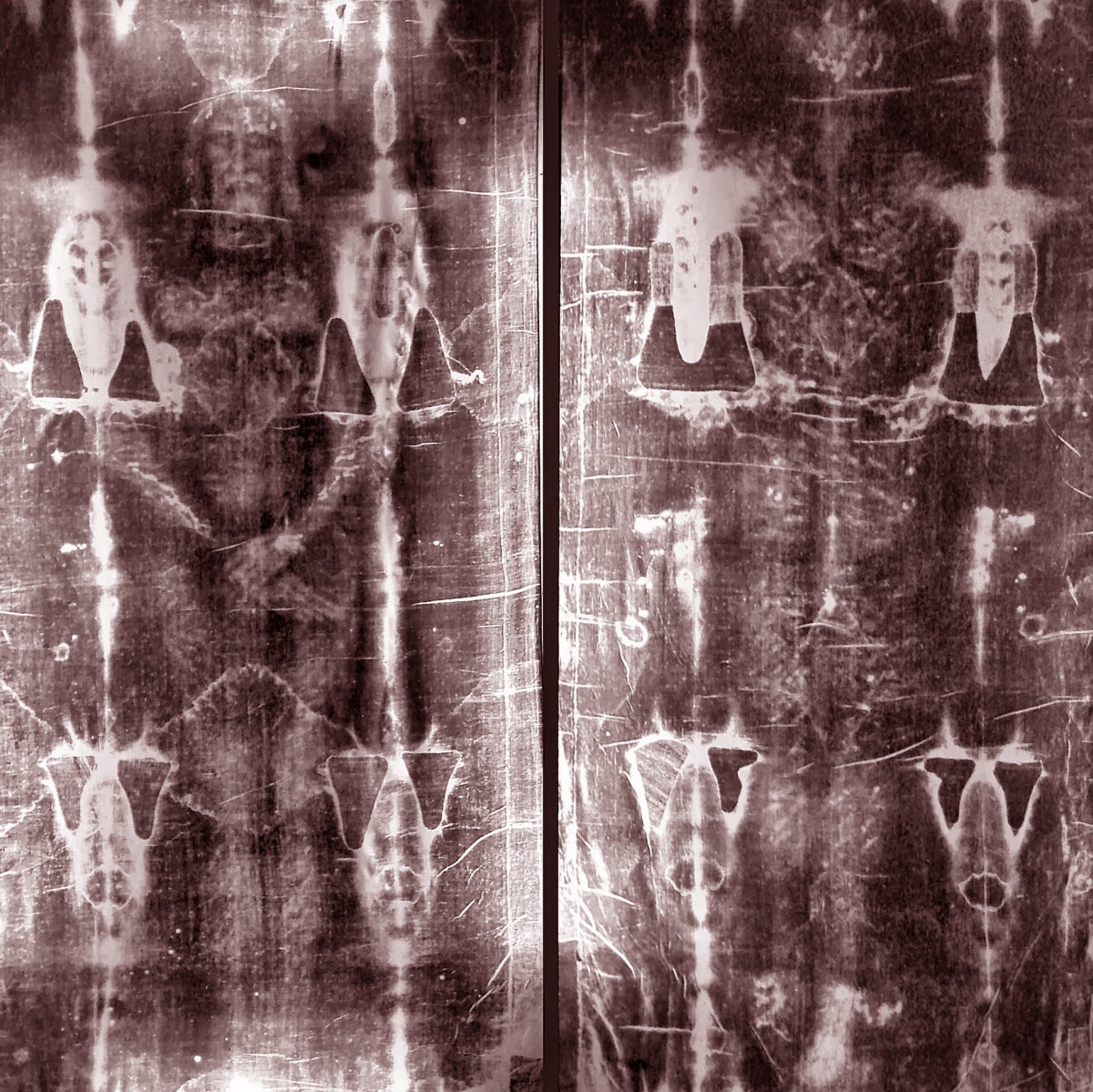
Recent research indicates that the Shroud of Turin, believed to have wrapped Jesus' body, may have been made from Indian yarn and traveled through the Mediterranean. If validated, these findings could suggest the shroud's origins in the Levant, a significant area in Christianity's history. However, the study has not undergone peer review and faces criticism for its methodological weaknesses, which could lead to false positives in genetic matching. The shroud, housed in Turin, Italy, features a negative image resembling a bearded man.
"The researchers used preliminary methods to match genetic sequences found on the cloth to species of plants and animals, but those methods are prone to false positives."
"The shroud holds a sepia-toned negative image that resembles the front and back of a bearded man with his eyes closed and his arms crossed."
"The cloth first appears in the historical record in the 1350s, when a Catholic Church official displayed it in a church in Lirey, France."
"There is a lot of legwork that needs to be done to actually convince me of any of these results, says Allison Mann, a biological anthropologist."
Read at www.scientificamerican.com
Unable to calculate read time
Collection
[
|
...
]