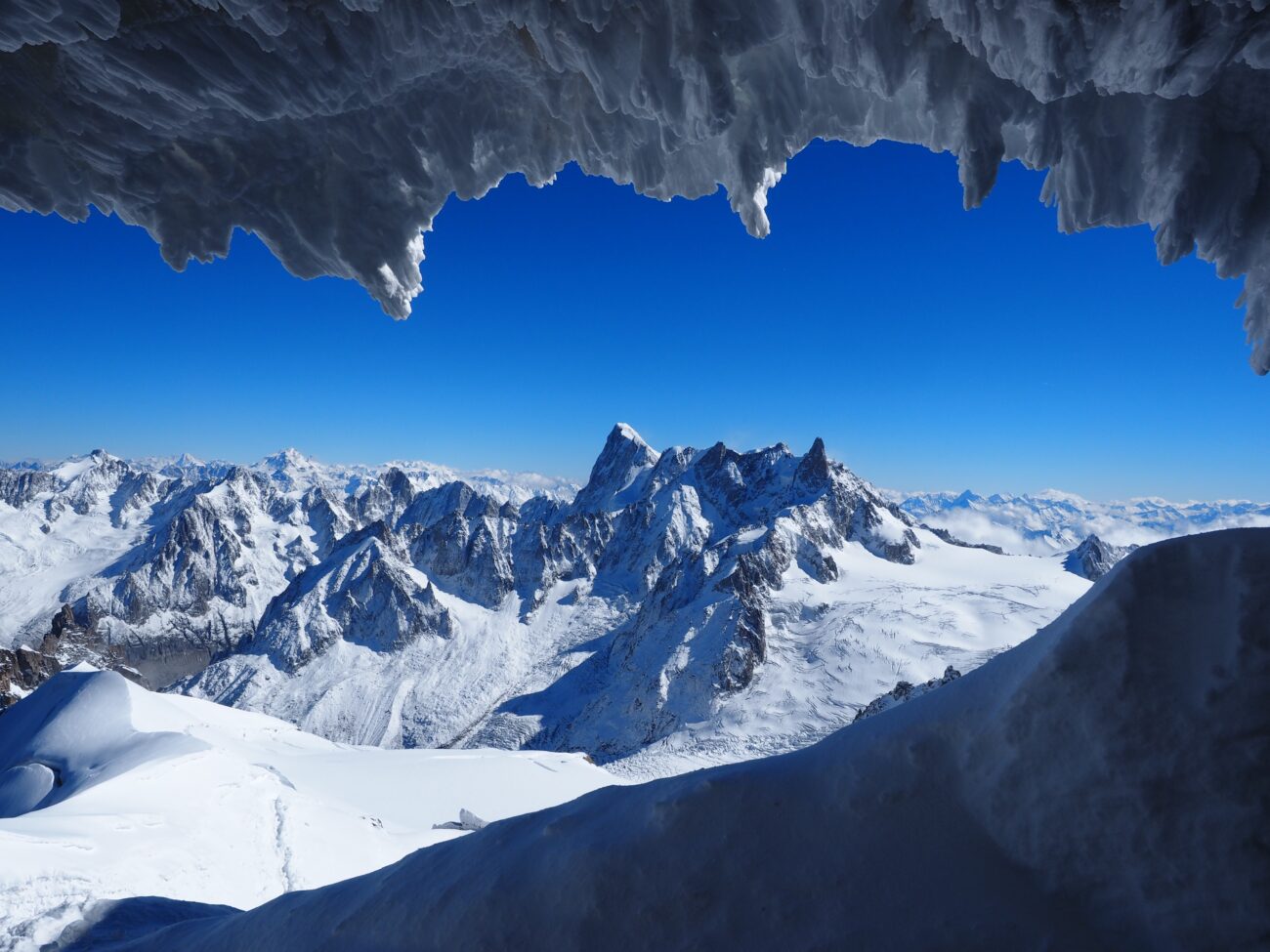
"A recent study from Earth and Planetary Science Letters is the first to directly link earthquakes to climate change-induced glacial melt. Scientists analyzed 15 years of seismic activity in the Grandes Jorasses-a peak that is part of the Mont Blanc massif between Italy and France-to better understand this association. This massif is one of the more seismologically active areas in the region, and examining how climate change may affect earthquakes there could prove useful in preparing for them."
""Fluids of various types are very much involved in fault motions," said John Mutter, a seismologist at Columbia University's Lamont-Doherty Earth Observatory, which is part of the Columbia Climate School. "Where two chunks of rock meet one another, is a fault plane. That fault plane usually contains something called gouge, which is soft material that has been caused by the milling of one crystal rock against the other. If there is fluid in those gouge sediments, that facilitates the motion.""
"Additionally, water that percolates through porous rock can also increase pressures between tectonic plates, leading to slip. Picture a melting glacier on the surface of the Earth with meltwater running downstream. Some of this water will seep into the rock below it, trickling downward through the Earth's crust. As it descends, it fills pores in the rock, changing the pressures between plates. Mutter explained it is possible that if "you change the stress regime, that could trigger a fault," though he was uncertai"
Fifteen years of seismic activity in the Grandes Jorasses of the Mont Blanc massif were analyzed to link earthquakes to climate-driven glacial melt. The massif ranks among the region's most seismologically active areas. Seasonal fluctuations in earthquake activity have been observed, with proposed external drivers including snow and ice load changes, intense rainfall, and atmospheric-pressure variations. Fluids in fault gouge and percolating meltwater can increase pore pressures in rocks, facilitating fault motion. Meltwater descending through the crust fills pore spaces and alters pressures between plates, and such changes in the stress regime can potentially trigger fault slip and earthquakes.
Read at State of the Planet
Unable to calculate read time
Collection
[
|
...
]