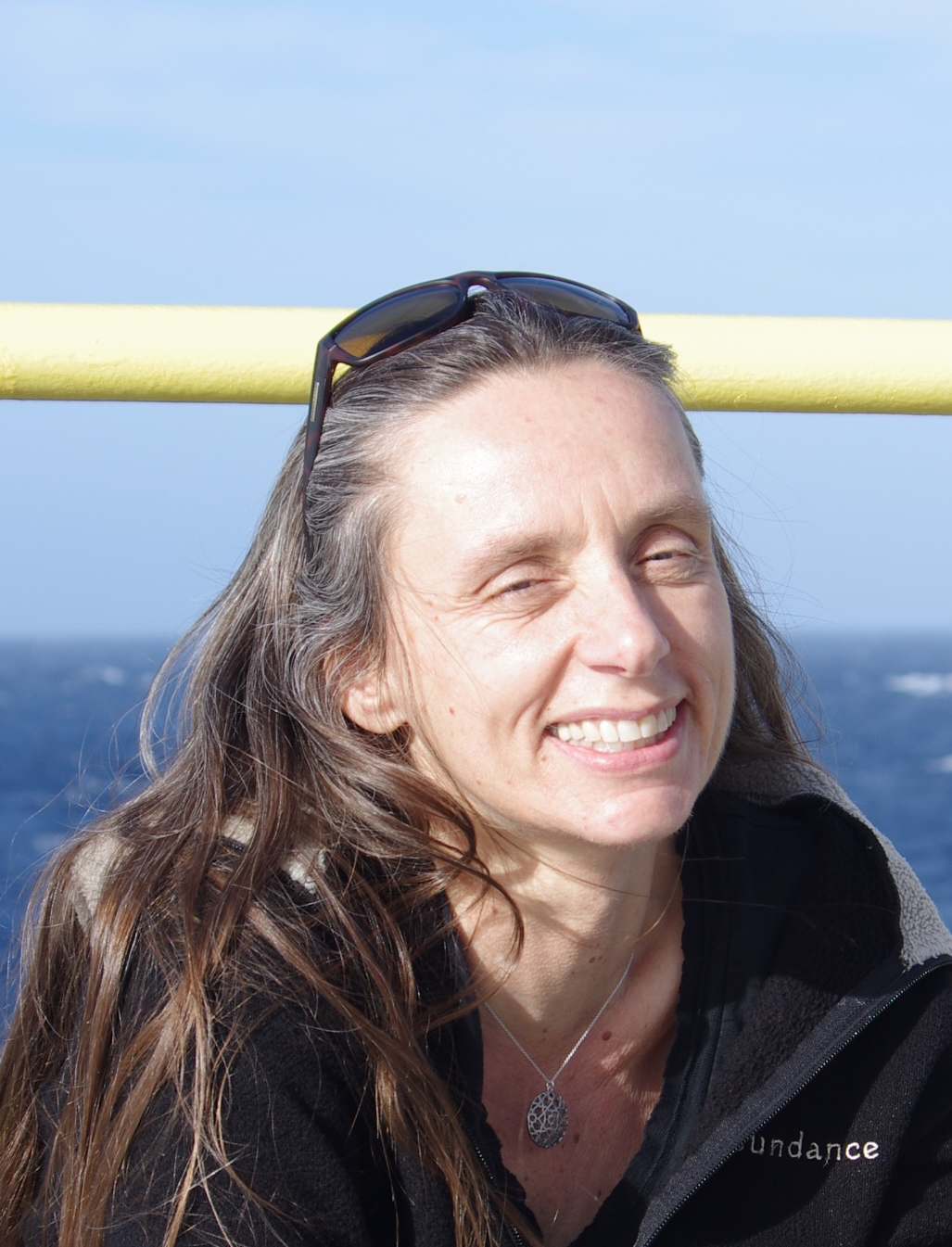
"Gisela Winckler grew up in rural Germany, nowhere near the ocean. As an undergraduate, she chose to major in physics, which she continued to pursue as a Ph.D. at the University of Heidelberg, but she remembers feeling uncertain about how to connect her laboratory studies with something tangible in the real world. It was only when she discovered environmental physics and marine science that her interests started to cohere."
"Now, Winckler is a climate scientist at Lamont-Doherty Earth Observatory and professor of climate at the Columbia Climate School. She focuses on the history and causes of past, present and future climate variability, as well as the ocean's role in the climate system and the carbon cycle. She has sailed on 12 research cruises and led a drilling expedition to the Southern Ocean on the international drill ship Joides Resolution."
"How did you get into science? My path to science was anything but straight. I had no movie-like moment of picking up a shell at the age of four and picturing myself as a future Sylvia Earle or Marie Curie. In fact, I had never heard of either, and I had never met a scientist until attending university. I grew up in rural Germany-far, far away from the ocean."
Gisela Winckler completed bachelor's, master's, and a Ph.D. in physics at the University of Heidelberg before shifting into environmental physics and marine science to link laboratory work with tangible problems. Winckler studies the history and causes of past, present, and future climate variability, emphasizing the ocean's influence on the climate system and the carbon cycle. She has participated in 12 research cruises and led a Southern Ocean drilling expedition aboard the Joides Resolution. Winckler pursues applied connections between research and society, served as Columbia Journalism School’s climate scientist-in-residence in 2023, and became an AAAS fellow in 2024.
Read at State of the Planet
Unable to calculate read time
Collection
[
|
...
]