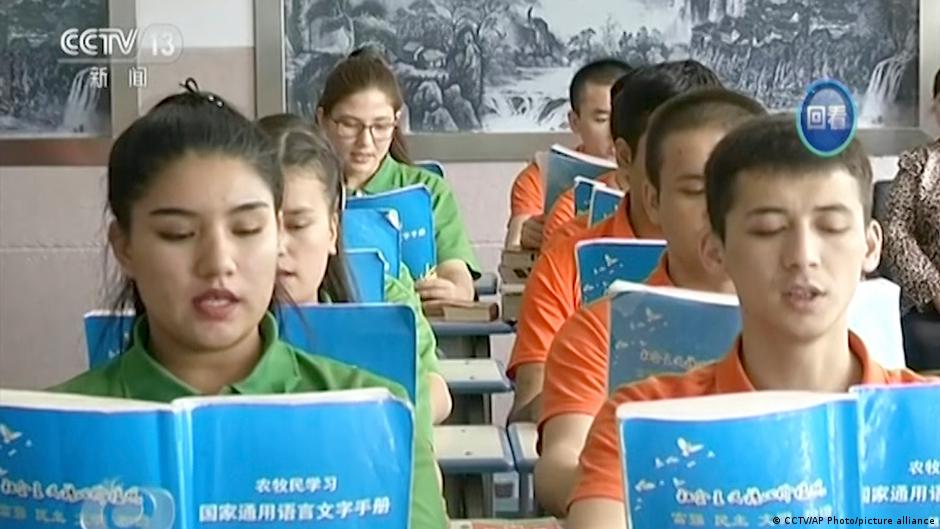
"The law formalizes policies in order to promote Mandarin as the 'national common language' for official purposes such as education and public affairs. As part of the law, educational institutions will now be obliged to teach in Mandarin, with teenagers required to have a 'basic grasp' of Mandarin when finishing their compulsory education."
"It also states that the law can be applied outside China's borders, meaning people outside China who 'engage in activities that undermine ethnic unity' or incite 'ethnic separatism' can be held legally liable."
"At the center of the law is the criminalization of 'violent terrorist activities, ethnic separatist activities, or religious extremist activities.' Its stated purpose is to 'strengthen cohesion' within China in response to what the law describes as unprecedented social change in Chinese society."
China's National People's Congress approved legislation promoting 'ethnic unity' by formalizing Mandarin as the 'national common language' for official purposes including education and public affairs. Educational institutions must teach in Mandarin, with students required to achieve basic proficiency by completing compulsory education. The law applies extraterritorially, holding people outside China legally liable for activities undermining ethnic unity or inciting ethnic separatism. The legislation criminalizes violent terrorist activities, ethnic separatist activities, and religious extremist activities. Human rights groups contend the law furthers marginalization of China's 55 official ethnic minorities speaking hundreds of languages and dialects. Regions with large minority populations, including Tibet and Inner Mongolia, have already implemented Mandarin as mandatory instruction language. Critics argue the policy prioritizes forced assimilation over equitable economic participation for minorities.
#mandarin-language-policy #ethnic-minorities #forced-assimilation #human-rights-concerns #china-legislation
Read at www.dw.com
Unable to calculate read time
Collection
[
|
...
]