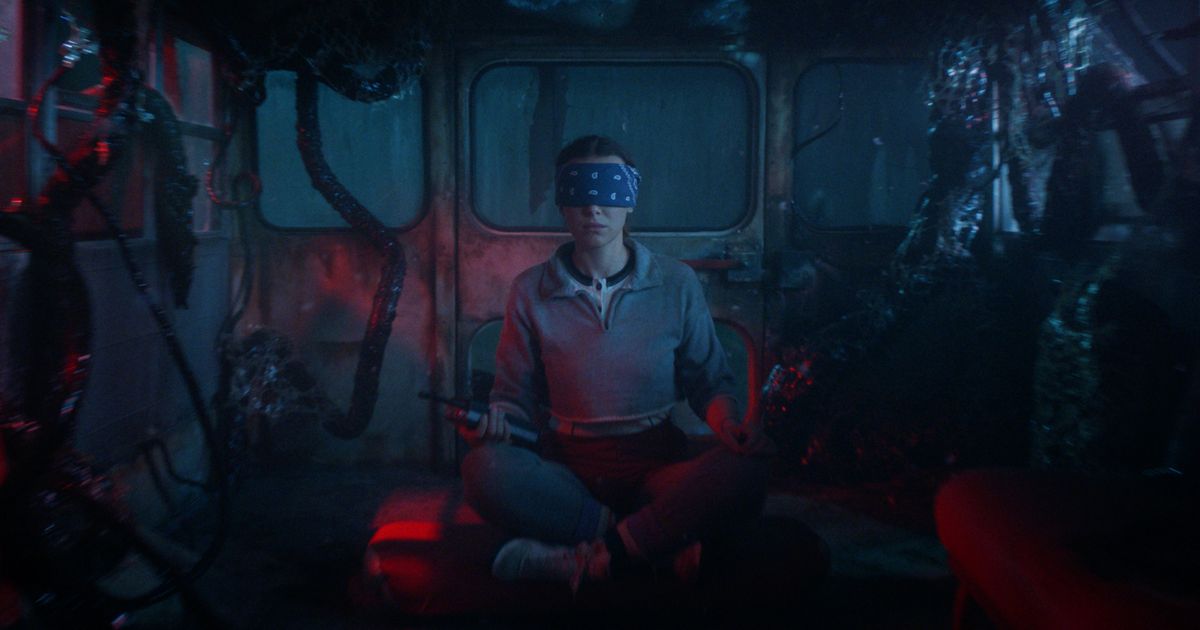
"For a story about a supernatural phenomenon that threatens to pull the entire world into a hellscape of bisexual lighting, omnipresent thunder, and endless tangles of oozing vines, Stranger Things returns for its final season feeling curiously small. After four seasons of an assembly-line approach to maximalism - attach loads of nostalgia here, plug in decadent CGI there, retcon the plot throughout - the show's budget is huge and the final eight episodes are supersized."
"Stranger Things has been part of watercooler culture for almost ten years, spanning a pandemic and two Trump presidencies. But in season five's first volume, we're still not done learning what's up with Vecna, because the in-show narrative has only progressed from 1983 to 1987. Therein lies some of the issues: suspended disbelief over the fact that the actors meant to still be playing teenagers are now in their 20s and 30s, with star Millie Bobby Brown a wife and mother in real life. But it's more than that. Stranger Things is no longer '80s pastiche. It is pastiche of pastiche, a slimy growth that can't keep slinking deliberately outward and has begun retracting inward instead, consuming its own originality in the process."
Stranger Things returns for a final season that paradoxically feels smaller and more myopic despite a huge budget and supersized episodes. The show continues an assembly-line maximalism of nostalgia, CGI and retcons, yet advances the in-show timeline only from 1983 to 1987, straining suspension of disbelief as aging actors still play teenagers. The series shifts from '80s pastiche to a pastiche of pastiche, appearing inward-looking and self-consuming. Season premiere events place the story in November 1987, with Hawkins under U.S. military occupation after Vecna opened dimensional rifts, and only the protagonists resisting the new status quo.
Read at Vulture
Unable to calculate read time
Collection
[
|
...
]