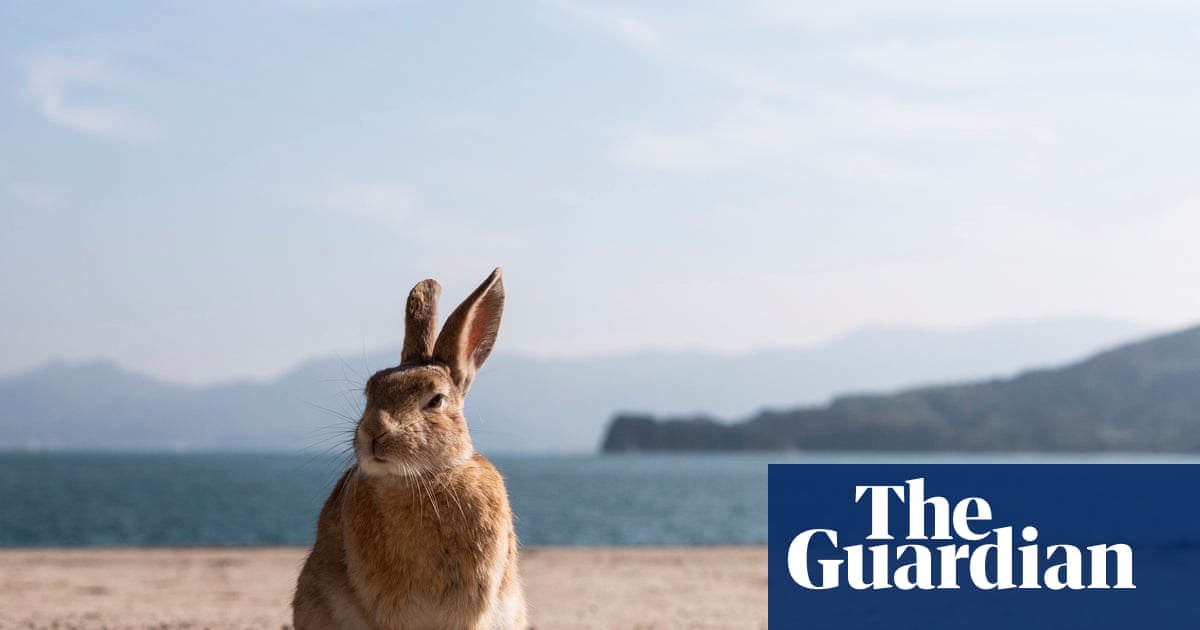
A ferry brings tourists to Okunoshima, where rabbits emerge untroubled and forage near visitors. Groups of grey rabbits return to bushes stripped of leaves while volunteers place shallow bowls of water across the island. The estimated 400–500 rabbits congregate expecting food pellets from visitors because their natural diet of fallen leaves, bark, roots and grass is often absent. The island is uninhabited except for hotel staff and guests and faces an uncertain future. From 1929 until the end of the second world war, the Japanese imperial army ran secret poisonous gas research and production facilities on the island. Workers manufactured mustard gas, teargas and cyanide.
"A short walk along the coast takes visitors deep into rabbit territory on Okunoshima, one of 3,000 islands in Japan's Seto Inland Sea. Half a dozen of the animals chase away another as it attempts to join them in a communal meal of Chinese cabbage. The scene unfolds in front of smiling, camera-toting tourists barely able to believe their proximity to Okunoshima's fabled but troubled furry residents."
"The two grey rabbits that greeted the ferry from the mainland return to bushes stripped of their leaves. Shallow bowls of water left by volunteers dot the island in places where its estimated 400-500 rabbits tend to congregate in expectation of pellets of food left by visitors in the absence of their natural diet of fallen leaves, bark, roots and grass."
"For all its natural beauty and popularity as a tourist destination, Okunoshima uninhabited except for staff working at the solitary hotel and its guests faces an uncertain future, and so do its four-legged inhabitants. From 1929 until the end of the second world war, the island hosted poisonous gas research and production facilities run by the Japanese imperial army. The operation was so secret that Okunoshima was not included in contemporaneous maps of Japan."
Read at www.theguardian.com
Unable to calculate read time
Collection
[
|
...
]