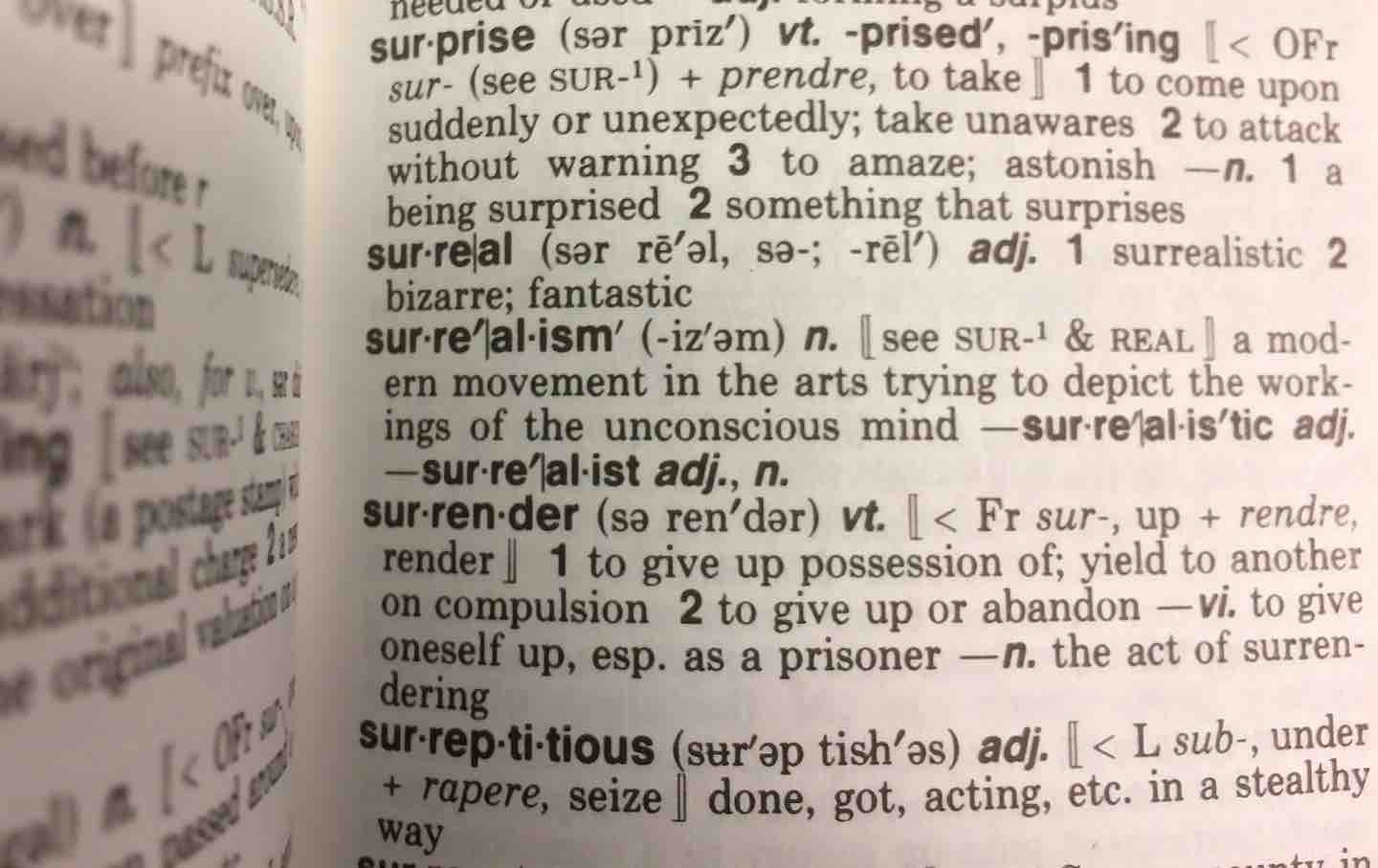
"The Merriam-Webster editor Peter Sokolowski introduced the crowd of assembled nerds to the idea that a dictionary is not a static document but a living object, constantly updated and remade in response to how people write and speak. In a talk titled "The Dictionary as Data," Sokolowski emphasized that the editors at Merriam-Webster look to how the general public uses language to guide their work."
"The totemic reference book that we know as the Merriam-Webster Dictionary, Sokolowski argued, is a dynamic text. The book is formal and highly structured; it seems like something from another, vaguely bygone time. Still, dictionary editors have long paid close attention to how language is used and perused—in signs, in novels, in articles and pronouncements, and lately on the Web."
"We forget that the dictionary, a seeming bastion of objective reality, is compiled by people who use language, too."
Dictionaries function as dynamic, evolving texts rather than static reference materials. Dictionary editors actively monitor contemporary language usage across multiple sources including the web, literature, and public discourse to guide their work. Merriam-Webster editors examine search data and usage patterns to understand how language changes and what words matter to people. This approach reveals cultural moments and emotional responses—editors can track societal events through dictionary lookup patterns. The dictionary's formal, structured appearance masks its responsive nature; it continuously adapts to reflect how people actually communicate. Understanding dictionaries as living documents reveals they are compiled by people who use language themselves, making them products of human observation and interpretation rather than objective, unchanging authorities.
Read at The Nation
Unable to calculate read time
Collection
[
|
...
]