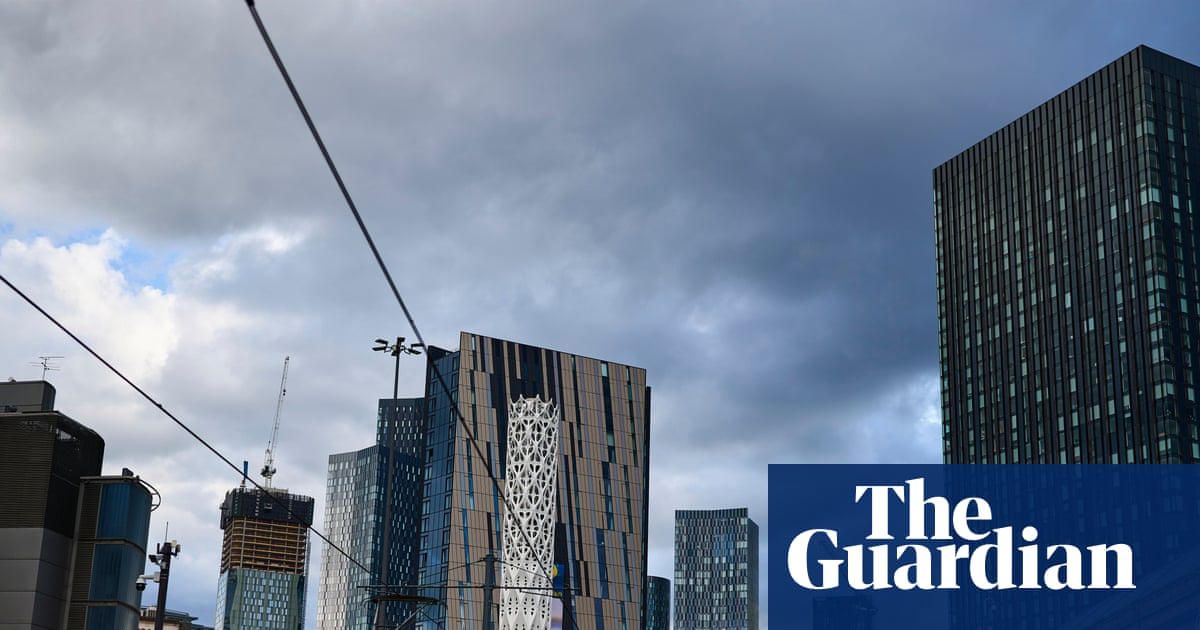
Manchester recorded the biggest fall in inner-city deprivation in Britain since 2010, with deprivation rates dropping sharply in neighbourhoods close to the city centre. The Centre for Cities report used indices of multiple deprivation across England, Scotland, Wales, and Northern Ireland, based on employment, education, health, crime, and other metrics. Between 2010 and 2025, Manchester saw a 17-percentage-point fall in deprivation for neighbourhoods within close proximity to the centre, the largest among 63 UK towns and cities analysed. Across the country, the share of inner-city neighbourhoods in the 20% most deprived places fell from 38% to 31%. The report defined inner city as neighbourhoods immediately adjacent to a centre, using a ring distance from 1.3km to 4.5km for major cities.
"Manchester has recorded the biggest fall in inner-city deprivation in Britain, according to a report, as Andy Burnham stakes a claim that he could replicate the city's revival nationwide. As the frontrunner to replace Keir Starmer, the Greater Manchester mayor has placed the city's economic performance at the heart of his campaign, describing Manchesterism as a political philosophy for a more interventionist approach to the economy."
"Between 2010 and 2025, Manchester recorded a 17-percentage-point fall in deprivation rates for the neighbourhoods within close proximity to its city centre, the largest fall of 63 UK towns and cities analysed by the thinktank. In analysis using the indices of multiple deprivation for England, Scotland, Wales and Northern Ireland benchmarks compiled using data for employment, education, health, crime and other metrics it found that London and Liverpool had also made significant contributions."
"For the country at large, the share of inner-city neighbourhoods in the 20% most deprived places in a combined index for all four nations had fallen by seven percentage points, from 38% to 31%. It said the definition inner city included all the neighbourhoods immediately adjacent to a place's centre. For the biggest cities in the report, such as Manchester, this was set by plotting a ring 1.3km from the centre to 4.5km out, where urban neighbourhoods give way to the suburbs."
"For inner-city Manchester, 58.4% of neighbourhoods in and around the city centre ranked among the most deprived in 2025, down from 75.7% in 2010. Andy Burnham goes canvassing as he prepares to fight the Makerfield byelection before an expected leadership challenge against Starmer."
#inner-city-deprivation #manchesterism #indices-of-multiple-deprivation #economic-revival #uk-political-campaign
Read at www.theguardian.com
Unable to calculate read time
Collection
[
|
...
]