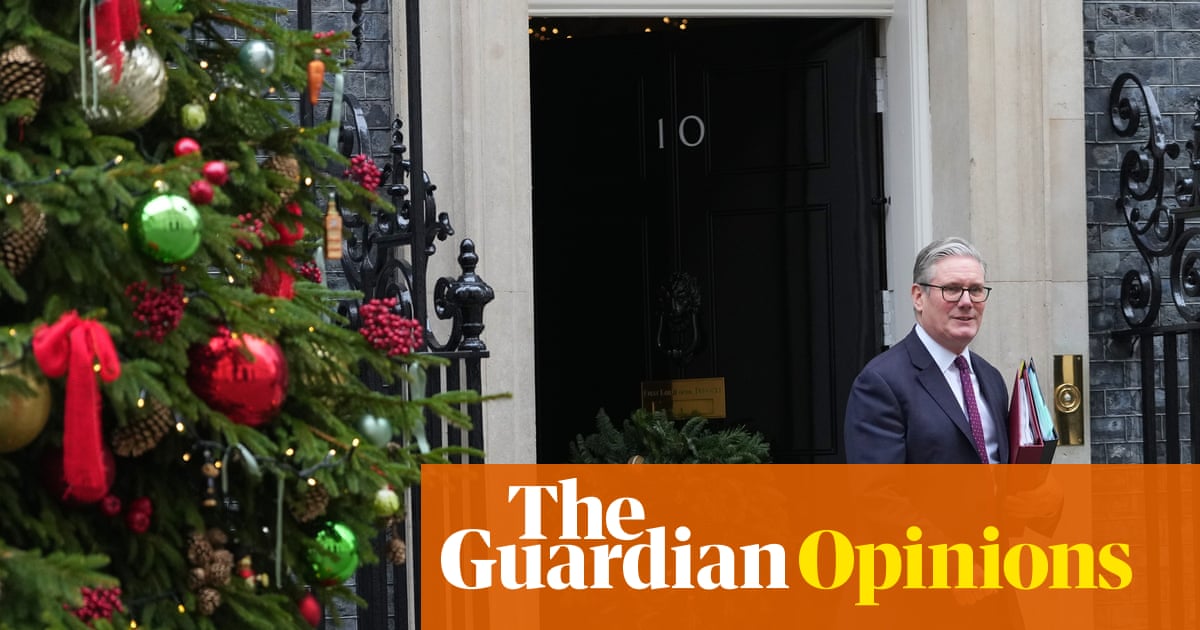
Media and Westminster lobby narratives portray Keir Starmer's position as terminally precarious, but that portrayal is exaggerated. Polling becomes unhelpful for seat-level prediction when party shares fall below about 30%, and first-past-the-post produces large seat disparities relative to vote share. Recent elections and polls illustrate this: Reform won 14% but five MPs, Liberal Democrats 12% and 72 MPs; models produced wildly divergent seat forecasts. Starmer needs roughly a seven-point recovery to lead Parliament again. With five parties clustered between roughly 15–30%, electoral outcomes are unpredictable and popularity can swing rapidly when party affinity is untethered from class or ideology.
"How long had you to go: months, weeks, hours? We all know bad news sells. Political reporters cannot handle prime ministers sleeping soundly at night. But the terminal gloom around Keir Starmer's position is absurd. Not a morning passes without rivals being declared, and not an evening without the BBC's Chris Mason dragged from his supper to stand in the cold. He just frowns and forecasts Armageddon."
"It showed that when a party's share falls below 30%, predicting the outcome of first-past-the-post in any constituency is near worthless. In lobby terms, you can use it to back any story you want to write. At last year's general election, the surging Reform party got 14% of the total vote but won just five MPs; the Liberal Democrats got 12% and 72 MPs."
"Put another way, Starmer needs only to recover seven points to make Labour the largest party in parliament again. Meanwhile, an MRP poll leaked last month had Kemi Badenoch winning just 14 seats. The fact is that when five parties all have between 15 and 30% of the poll, as is roughly the case at present, first-past-the-post makes any election a lottery."
Read at www.theguardian.com
Unable to calculate read time
Collection
[
|
...
]