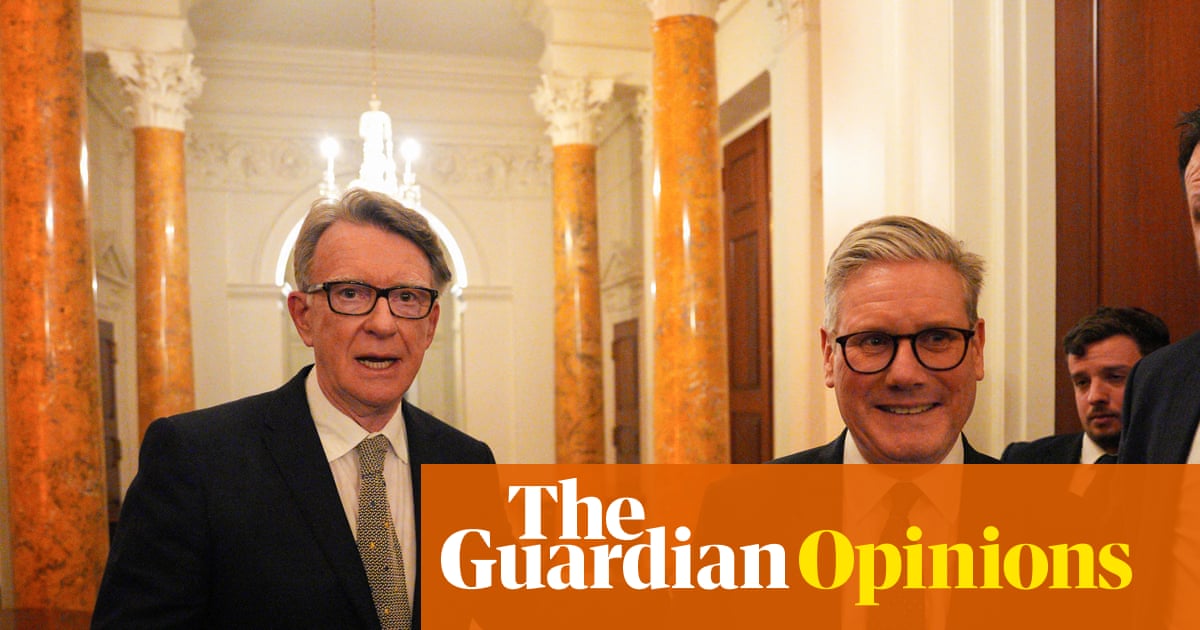
A proposal to appoint Peter Mandelson as UK ambassador to Washington was supported by global connections but rejected by UK security vetters. UKSV raised concerns about links to China’s finance minister, a sanctioned Russian oligarch, a former Israeli military intelligence chief, and a potentially compromising British individual, plus a £1m loan tied to an Israeli startup investment. Despite these flags, Foreign Office top civil servant Sir Olly Robbins granted security clearance with mitigations, describing the case as borderline. The prime minister had already publicly backed the appointment, and Robbins was later sacked after the clearance decision. The process is portrayed as non-neutral, with refusal likely to embarrass the prime minister. The role itself is described as requiring unavoidable exposure to those same sensitive files, making mitigations operationally absurd.
"Whitehall's security vetters, UKSV, looked at the same contacts and thought: this is why he's not. The latest revelations illustrate something rotten about modern politics. What the wealthy and connected think makes them an asset is exactly what makes them a risk. In late 2024, Lord Mandelson was announced as the UK's ambassador to America by Sir Keir Starmer. That posting ended in disgrace last year after US files exposed the depth of his links to the sex offender Jeffrey Epstein."
"But UKSV advised against giving security clearance to Lord Mandelson, flagging concerns over links to China's finance minister, a sanctioned Russian oligarch, a former Israeli military intelligence chief and a British individual described as potentially compromising, as well as a 1m loan connected to an Israeli startup investment. Despite these associations, the top civil servant at the Foreign Office, Sir Olly Robbins, granted him clearance with mitigations, claiming that he understood the peer's case was borderline rather than a clear refusal."
"That led to Sir Olly's sacking by a prime minister who had publicly declared Lord Mandelson the man for the job before he was vetted. This meant the process was not neutral. Refusal would not merely have blocked an appointment; it would have embarrassed the prime minister. Yet once exposed, the whole process appears a charade. The problem is not only that Lord Mandelson had sensitive contacts in China, Russia and Israel."
"It is that being US ambassador is a job in which those three files are obviously unavoidable. This was the point made by Sir Richard Dearlove, the former MI6 chief. He says such mitigations would have been operationally absurd. As he says, it would be totally impossible for a UK ambassador in Washington not to ha"
Read at www.theguardian.com
Unable to calculate read time
Collection
[
|
...
]