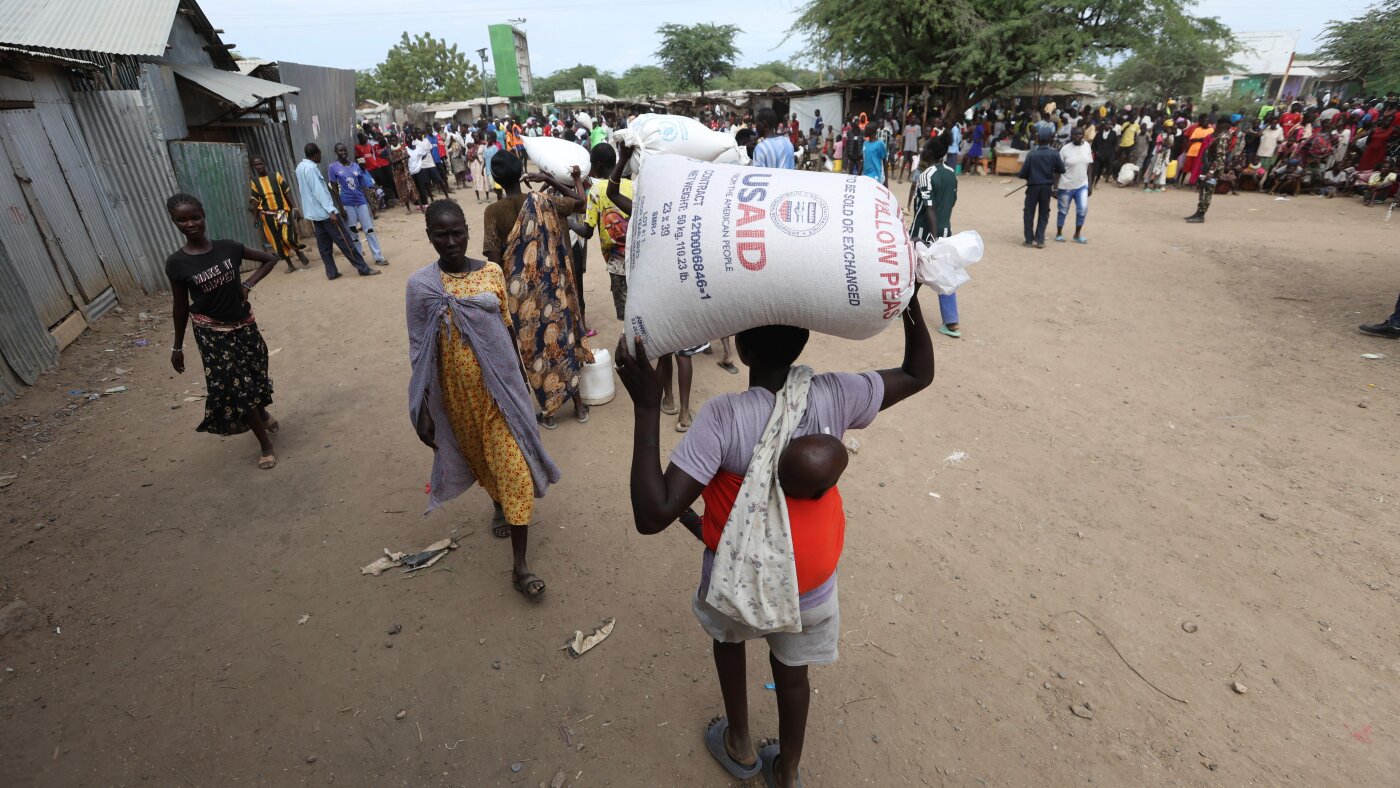
"Aid can provide jobs and resources. And that, in turn, can reduce the incentives for people to engage in violent actions. Yet it can have the reverse effect as well. "Aid can also increase conflict by introducing something to fight over," says Austin Wright, a data scientist at the University of Chicago who works at the intersection of public policy and statistics. He's referring to resources like roads and supplies paid for by the foreign assistance. In other words, "things that are of value to control.""
"The termination of USAID America's premiere aid agency gave researchers another angle to explore. Does the sudden withdrawal of aid funding have an impact on conflict? In a study published in the journal Science, Wright and his colleagues conclude that the abrupt dismantling of USAID led to an uptick in overall conflict in places within Africa that have received aid compared to those that have not. "The rapid collapse of what is probably the most sophisticated humanitarian assistance program in human history had enormous consequences on the ground, undermining livelihoods and therefore leading to a surge in violence," Wright concludes."
""The near instantaneous evaporation of assistance 'took away the livelihoods, it undermined economic productivity,'" he explains, thereby weakening the incentives that people might have to refrain from violence. "And at the same time, 'it did not yet eliminate what the actors were fighting over. And so this is what creates the chaos and the violence that we end up observing.'" By way of example, Wright refers to protests that broke out at the Kakuma refugee camp in northwest Kenya in July 2025. The roughly 300,000 refugees there depended on food and other services paid for by USAID."
Foreign aid affects violence in two opposing ways. Aid can lower incentives for violent action by providing jobs and resources that support livelihoods. Aid can also increase conflict when it introduces valuable items that groups may compete to control, such as roads and supplies funded by assistance. When USAID funding is abruptly dismantled, conflict can rise in aid-receiving areas compared with non-aid areas. The rapid loss of assistance undermines livelihoods and economic productivity, weakening incentives to avoid violence. At the same time, the valuable targets that actors fight over may remain, creating chaos and violence. Kakuma refugee camp protests illustrate how dependence on aid-linked services can shape conflict dynamics.
Read at www.npr.org
Unable to calculate read time
Collection
[
|
...
]